
German company Mehler Protection has unveiled the world’s first active protection system designed exclusively for countering unmanned systems, specifically FPV drones, loitering munitions, and other kamikaze drones.
Given Ukraine’s war experience, where drones have become an integral component ensuring most strikes, the question of how to protect own equipment from kamikaze drone attacks becomes increasingly urgent.
Read more: U.S. Plans Production Expansion for B-21 Raider Bombers With $4.5B Investment  SCILT render installed on APC / Photo credit: Mehler Protection
Such systems are already being actively developed in various countries, including Ukraine, where we have mostly seen specialized automated turrets. However, Mehler Protection decided to follow the path of classical active protection systems, where a counter-munition is fired for interception.
This led to the appearance of the world’s first anti-drone active protection system SCILT. The company reports this system has been under development for a year and a half, during which 48 test campaigns have already been conducted.
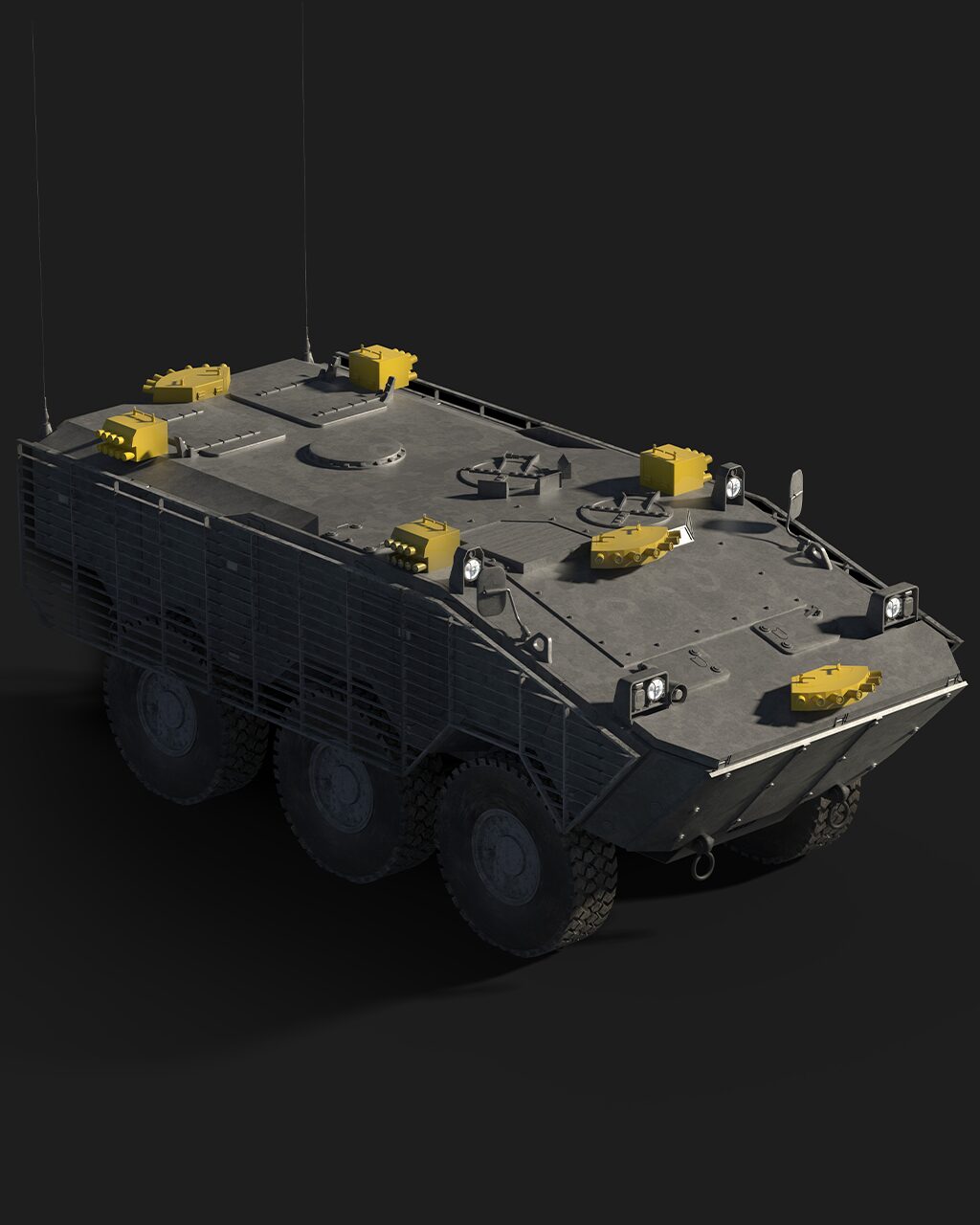 SCILT render installed on APC / Photo credit: Mehler Protection
It can be installed on any equipment, including tanks, APCs, IFVs, armored vehicles, and others. SCILT consists of special modules, each equipped with a set of counter-munitions and built-in threat detection means.
Depending on the equipment type on which this system is integrated, the number of these modules may vary. They are positioned around the perimeter at different angles to protect all sides, including from upper hemisphere attacks.
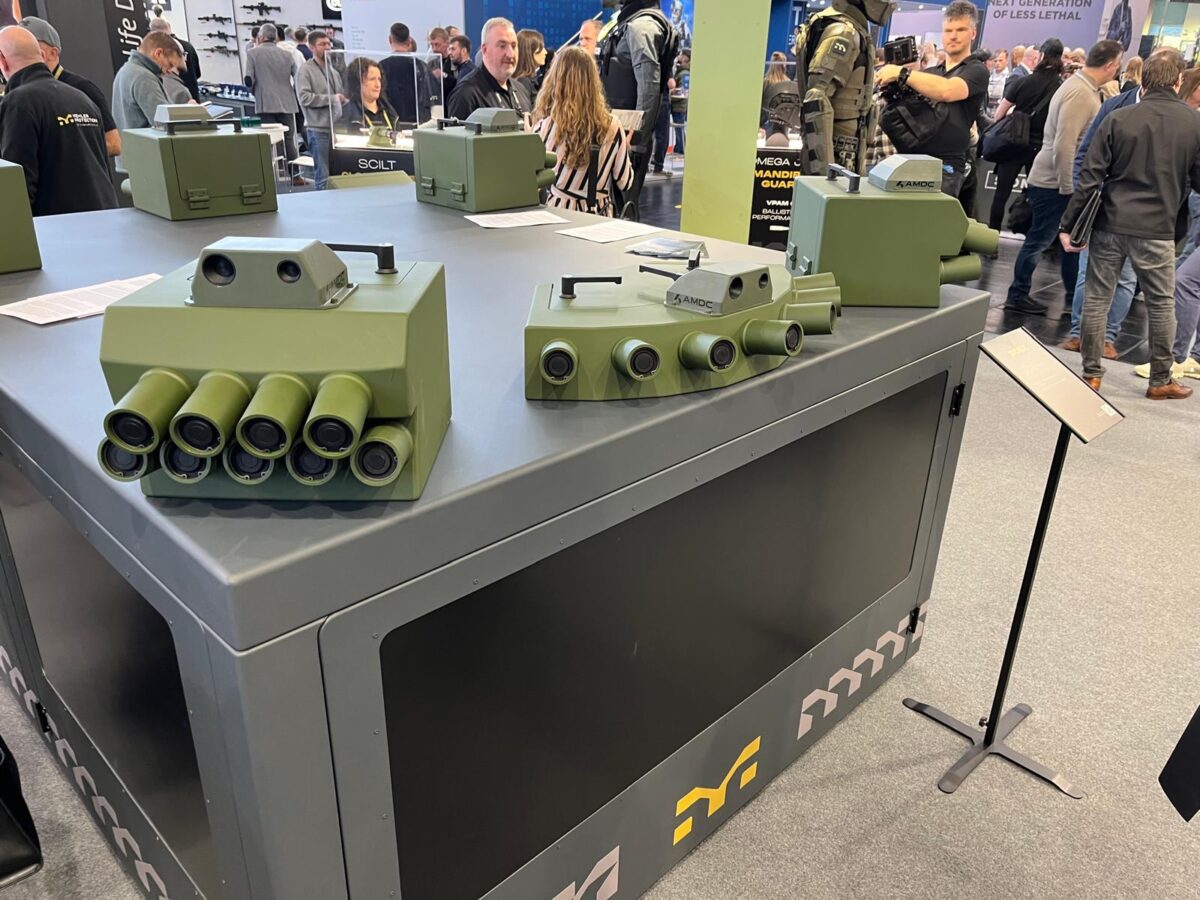 SCILT anti-drone active protection system during Enforce Tac 2026 / Photo credit: hartpunkt / Waldemar Geiger
As mentioned above, each module with counter-munitions is equipped with threat detection means, which is a camera or other system, whereas in conventional active protection systems, small radar stations perform the main target detection function. During the Enforce Tac 2026 defense exhibition, the system was demonstrated precisely with such cameras.
Available images show that each SCILT module has a small unit with two cameras. Two cameras are necessary to determine range to target by combining two images.
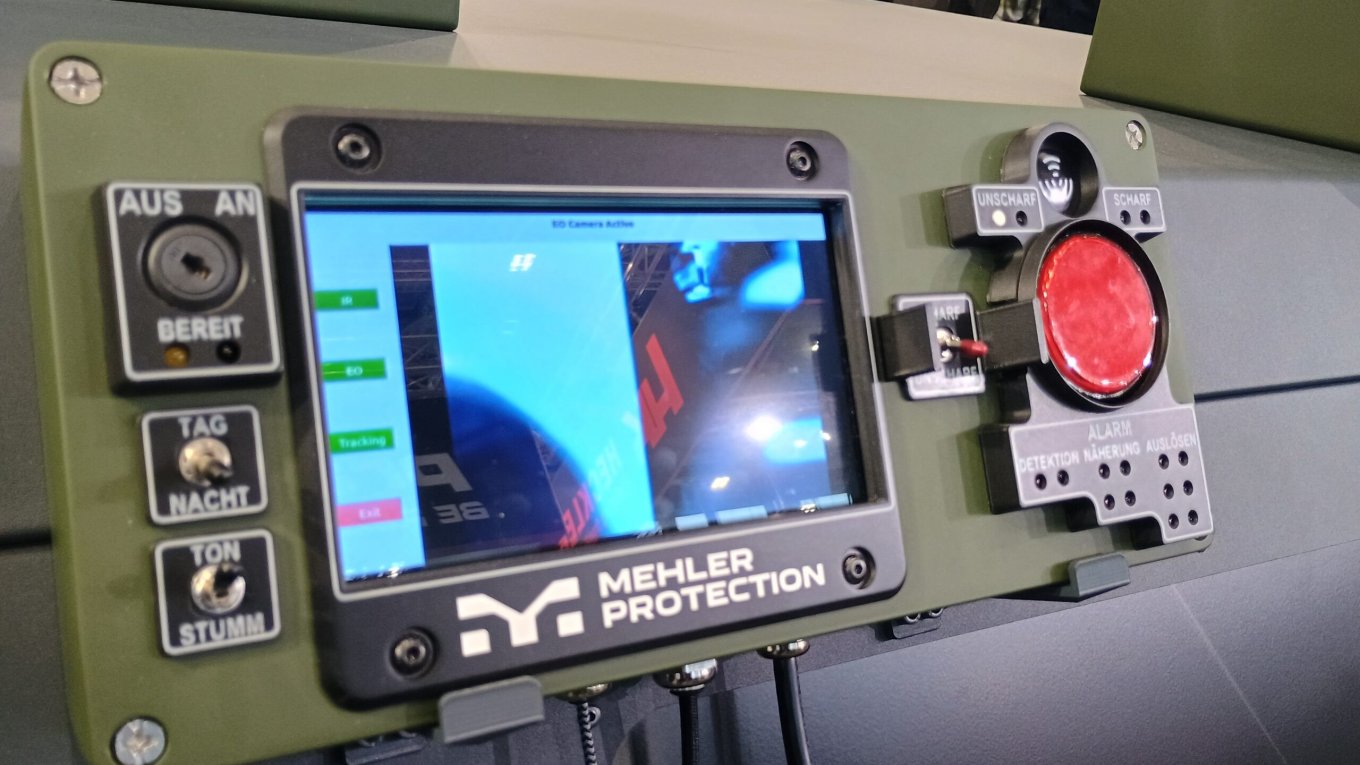 SCILT control panel positioned inside equipment where this active protection system is integrated / Photo credit: Militaer Aktuell
The main advantage of using cameras instead of radar stations is significantly lower cost and the possibility of truly mass production. Additionally, instead of expensive unique munitions, standard 12-gauge shotgun shells with various loads are used as counter-munitions.
The system is not currently fully automatic. It independently detects targets, tracks them, alerts the crew to danger, but requires crew command for interception. It can be assumed this was done to avoid false activations in early system versions. However, fully automatic mode is planned for the future.
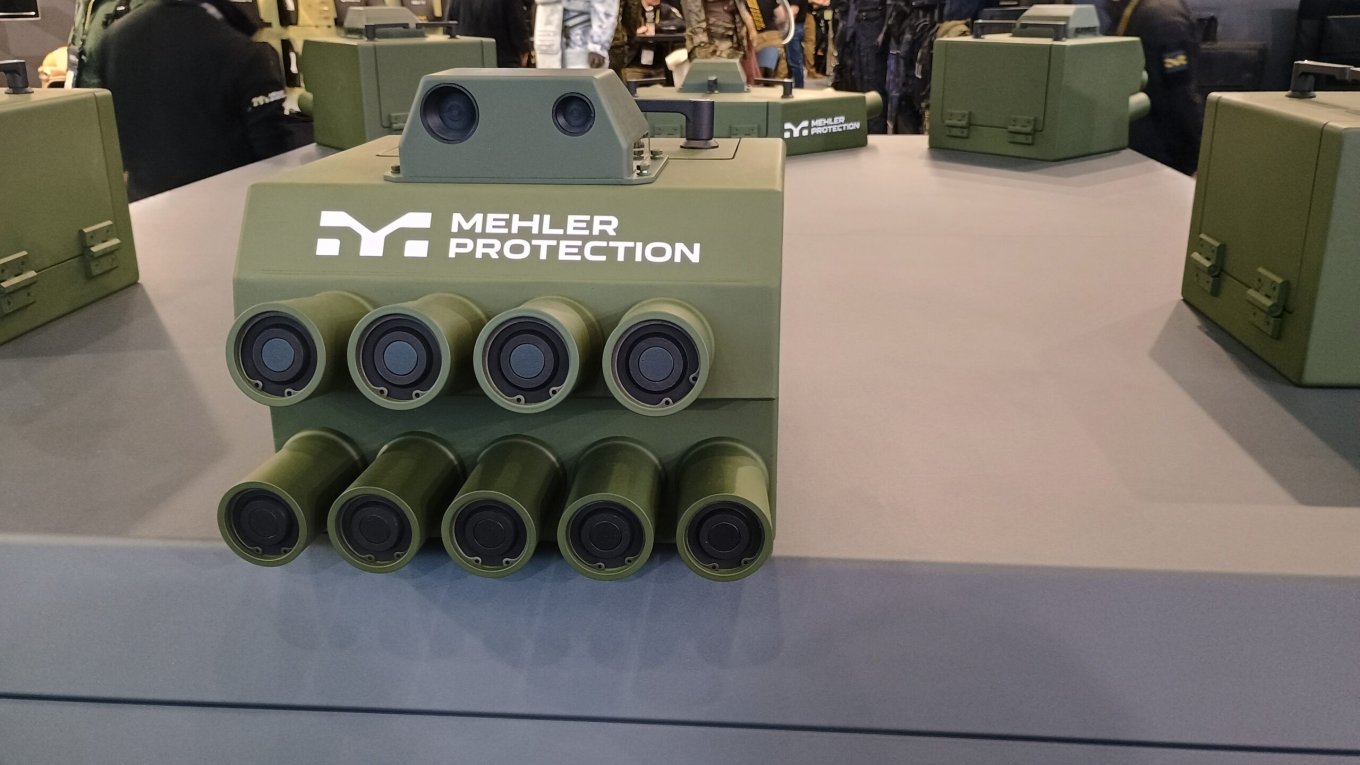 SCILT module with counter-munitions and cameras for target detection / Photo credit: Militaer Aktuell
The company states SCILT can engage unmanned systems at close and very close range. Overall, SCILT appears as an affordable active protection system that can be mass-installed on any vehicles operating near the front line under threat of strikes, from pickups to tanks.
The first SCILT version is reported to go on sale in just a few months this summer 2026. The battlefield in Ukraine could serve as an excellent testing ground for this system, where given low cost and proven effectiveness it could gain particular popularity.
 SCILT render installed on APC / Photo credit: Mehler Protection
Despite this, the design raises questions. Can this system cover all zones from which enemy strike unmanned systems will attack? Also, will the engagement radius of standard 12-gauge shells positioned in fixed launchers suffice for intercepting unmanned systems?
A more reliable option might appear as a special rotating launcher, analogous to Israeli Iron Fist, which when detecting a target rotates precisely toward the target and fires a 12-gauge shell. Such a solution would naturally significantly increase cost.
It is worth noting that conventional active protection systems such as Iron Fist have also recently gained unmanned system interception capability.
However, they have significantly higher cost and were primarily developed for intercepting anti-tank missiles, shells, and grenades from grenade launchers. Therefore, SCILT became the world’s first system of this design intended exclusively for unmanned system interception.
Read more: Ukrainian Drones Knock Out Two Tor Systems in Coordinated Night Operation (Video)