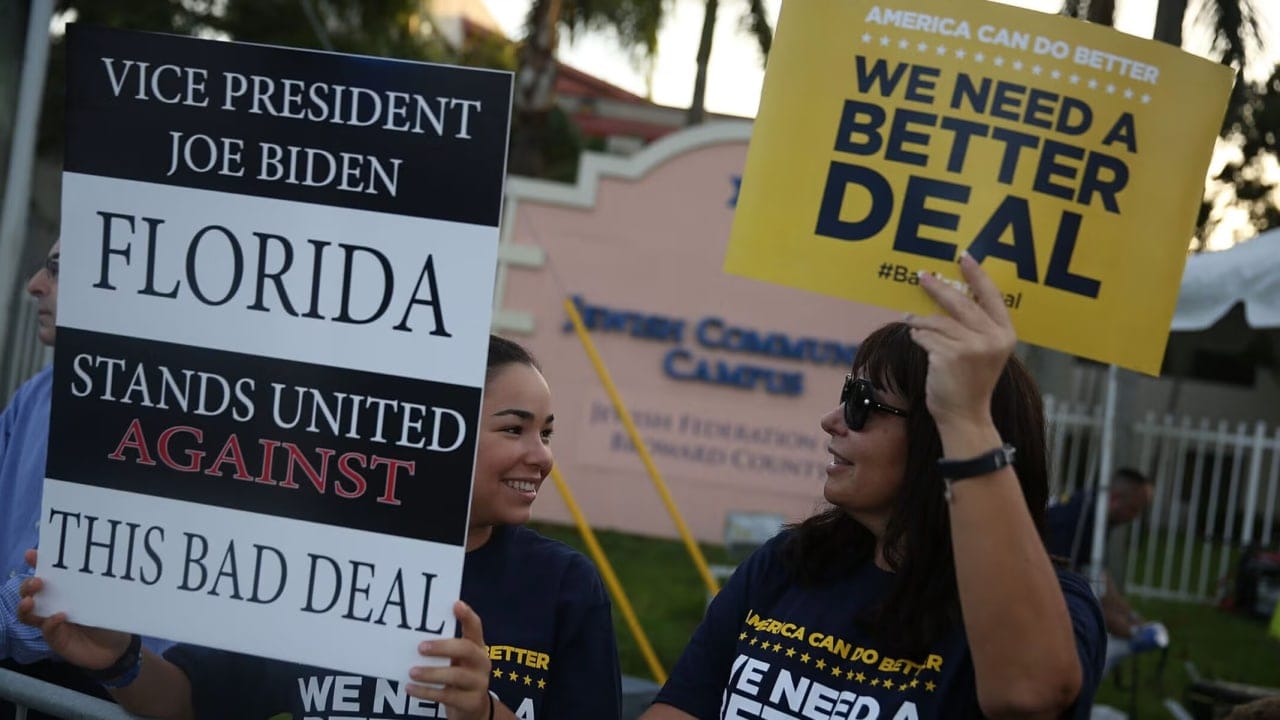
In 2015, when my consulting firm organized the ‘No Nukes for Iran Project’ to support the JCPOA – the Iran nuclear deal – we didn’t do so because we trusted Tehran. We did it because we trusted physics.
Uranium enrichment is not a talking point. Centrifuges don’t care about TV jawboning and politicos’ soundbites. And the mullahs who run the brutal regime might be even more inured to the chest-beating of our own fanatics.
We raised and spent over $1 million dollars to help make the case for the JCPOA back then because a negotiated framework constraining Iran’s nuclear activity was better than the fantasy alternative of total dismantlement on demand. The issue was very fraught, particularly in the American Jewish communal space we inhabit, and so we had to develop a thick skin. But we developed a broad-based coalition to back the Obama administration-negotiated accord, among American Jews and the American public at large, including wavering Congressional Democrats.
We said the deal was imperfect. It didn’t stop Iran’s other nefarious activities in the region nor shut down its ballistic missile programs. We said it was temporary – it would sunset in a decade. But it was the best available mechanism to prevent Iran from acquiring a nuclear weapon for 10 years. And we warned that if you tore it up without a superior replacement, you would not get a chastened Iran; you would get an unleashed Iran.
Donald Trump and his allies, including son-in-law Jared Kushner, waved off our arguments. The agreement, we heard, was “the worst,” “defective,” a humiliation. Maximum pressure, we were told, would produce maximum compliance. The United States would walk away, and Iran would crawl back. The division that resulted dealt a severe blow to American Jewry’s unity, plunging the community into an acrimonious, invective-laden debate that still hampers our ability to reach consensus and take collective action.
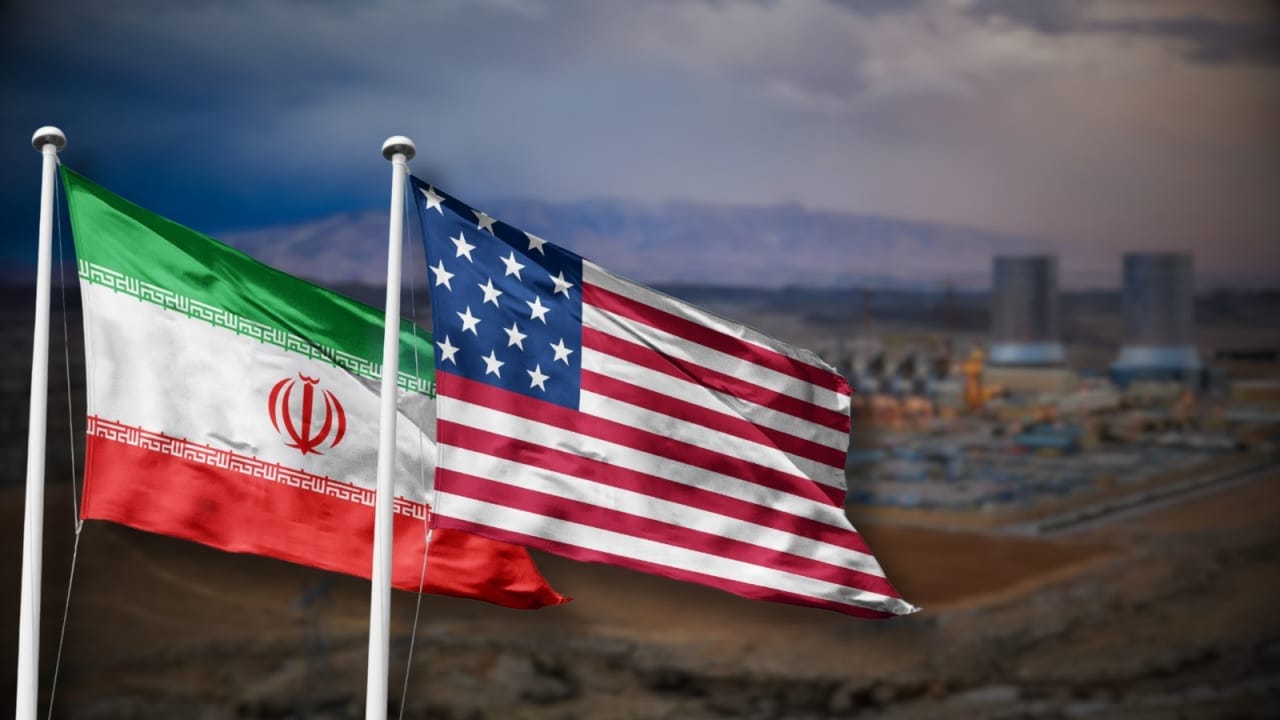
Surveying the world of 2026, Iran has enriched more uranium, installed more advanced centrifuges, and shortened the timeline between capability and weaponization. Analysts now warn that its stockpiles and infrastructure allow it to move toward weapons-grade material with alarming speed. That is not a talking point. That is a balance-of-power problem. And this is after the use of bunker-buster bombs on the Fordo enrichment facility that Iran hawks assured us would obliterate the Islamic Republic’s nuclear program.
President Trump is not exactly the most consistent person. And perhaps that’s actually to his advantage now. The man who once derided diplomacy as weakness now says he wants a “verified nuclear peace agreement” so that “everybody can live together.” In other words: negotiations. Inspections. Constraints. And who’s leading those aggressive – almost desperate – talks, you ask? None other than Kushner, alongside US special envoy Steve Witkoff.
If the future of humanity didn’t hang in the balance, I might flash a wry and knowing smile.
Instead, I will just observe that foreign policy isn’t the blackjack table at the Trump Taj Mahal. It is engineering. The question is never who sounds tougher. The question is who leaves fewer loose wires attached to explosives.
‘Supporting diplomacy with Iran is not anti-Israel’
Let’s be clear about something that gets lost in the shouting. Supporting diplomacy with Iran is not anti-Israel. It is the opposite. Israel’s security depends on preventing Iran from obtaining nuclear weapons. That goal has never been partisan. It has never belonged to one administration nor one political party. It belongs to the category of facts. If Iran crosses that threshold, deterrence becomes exponentially more dangerous, proliferation pressures ripple across the region, and the margin for miscalculation shrinks to a razor’s edge. It is unfortunate that Israel’s leader Benjamin Netanyahu and his Washington allies never understood that. It is largely their fault that the American Jewish establishment cannot speak with a united voice on this issue, even today.
The 2015 agreement did not solve every problem. It did not dismantle every centrifuge, eliminate every long-range missile, or neutralize every proxy militia. But it did something more valuable than rhetorical purity: It imposed verifiable limits. It lengthened breakout time. It gave inspectors access. It turned a shadowy program into a monitored one. That is what responsible policy looks like.
I am glad that Trump and his freelance diplomats want a deal. But what’s galling is the pretense that this is a wholly new idea rather than a return, under harsher conditions, to terrain we once held securely. If today’s negotiators must accept looser restrictions or shorter timelines in order to achieve a quick deal – or because Iran’s program has advanced since 2018 – that is not strategic genius. That is settling for less than we already had.
Some of us warned, a decade ago, that this is where theatrical maximalism would lead. We were told we were weak-kneed, that we were selling out Israel, that we were “bad Jews” and “kapos,” that we were part of the Obama administration’s supposed policy of “managed decline.”
I sincerely hope and pray this administration can secure an acceptable nuclear deal. Again, one that transcends any partisan attachment. It’s a matter of security for the United States, Israel, the global Jewish community and the world. But the self-inflicted damage pains me so much – I won’t even say I told you so.
The views and opinions expressed in this article are those of the author and do not necessarily reflect the views of JTA or its parent company, 70 Faces Media.