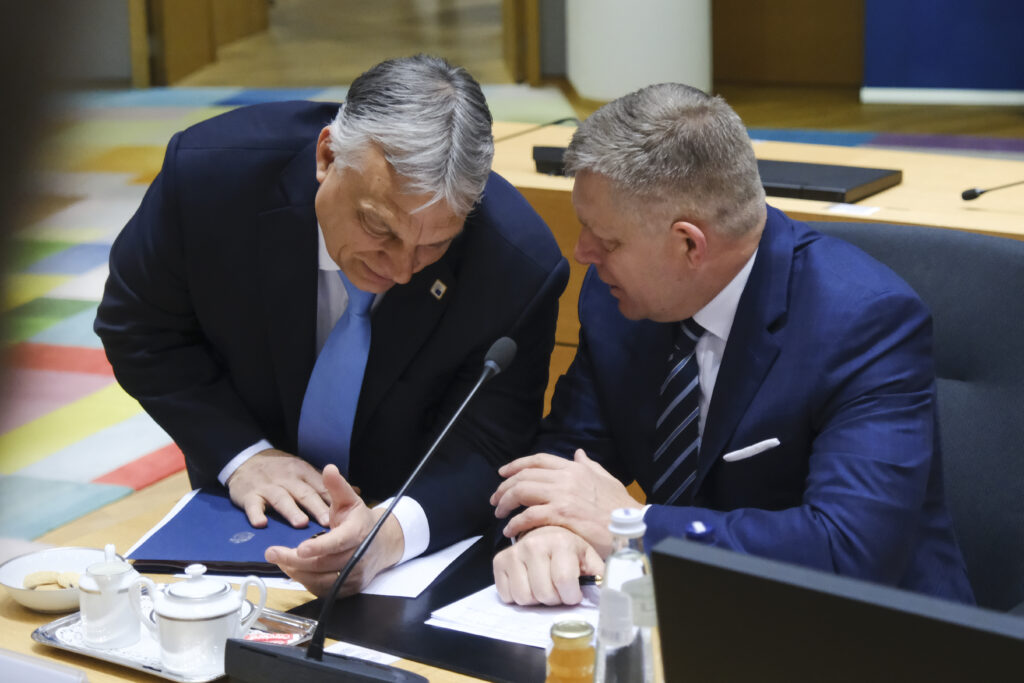
Brussels – Robert Fico and Viktor Orbán, Prime Ministers of Slovakia and Hungary, are digging in their heels over the halt to oil supplies through Ukraine. The two, who are holding up approval of the €90 billion maxi-loan to Kyiv, have announced the establishment of a commission of inquiry to clarify the conditions of the Druzhba pipeline and have proposed to the European Commission that it participate in a joint inspection. “Hungary will accept the results of this mission,” Orbán promised in a letter to European Council President Antonio Costa.
The Soviet-era pipeline pumps Russian crude oil through Ukraine to the two member countries that still enjoy exemptions from the import ban imposed by the European Commission. However, on 27 January, a pumping station was damaged by Russian bombing, and Ukraine interrupted the flow. Budapest has explicitly accused Kyiv of making a ‘political decision’, while Bratislava claims to have information ‘that the pipeline is technically operational’.
A few days ago, European Commission President Ursula von der Leyen asked Volodymyr Zelensky to speed up repairs, while expressing confidence that “one way or another” the support promised to Kyiv for the two-year period 2026-2027, already agreed at the European Council in December, will arrive by April, when the country’s coffers will be empty. Ukraine has not given any indication of the timing of the repairs, but has emphasised the difficulty of carrying out such work under the constant threat of further Russian attacks.
The fear in Brussels is that Orbán will continue his blackmail and use the issue of energy security—as he is already doing—as a key issue in the current election campaign (Hungary will vote to renew its Parliament on 12 April, and the latest polls show Orbán trailing Peter Magyar, leader of the opposition and current MEP for the European People’s Party, by twenty percentage points).
However, the conciliatory tone used by the Hungarian Prime Minister in his letter to Costa and his willingness to accept the conclusions of a possible inspection of the Ukrainian pipeline are “a positive step”, according to the European Commission. “I am fully aware of the political difficulties created by the delay in implementing the European Council’s conclusions on financial support for Ukraine. My initiative also aims to facilitate the timely resolution of this issue,” Orbán wrote to the President of the European Council.
Fico has proposed to “set up a joint inspection team—Slovakia, Hungary and the European Commission—to verify the truth on the ground.” Orbán, in a post on X, called on Zelensky “to allow access to Hungarian and Slovak inspectors and immediately restart the pipeline.” Fico said he would discuss the matter directly with the Ukrainian president today.
For now, neither the format of this mission nor its timing is clear. “We are now in contact with the Ukrainian authorities on this issue and continue to work with our Member States to ensure the security of supplies,” explained European Commission spokesperson for Energy, Anna-Kaisa Itkonen. No comment was made, however, on the possibility of Brussels sending its own experts to participate in the mission announced by Hungary and Slovakia.
English version by the Translation Service of Withub