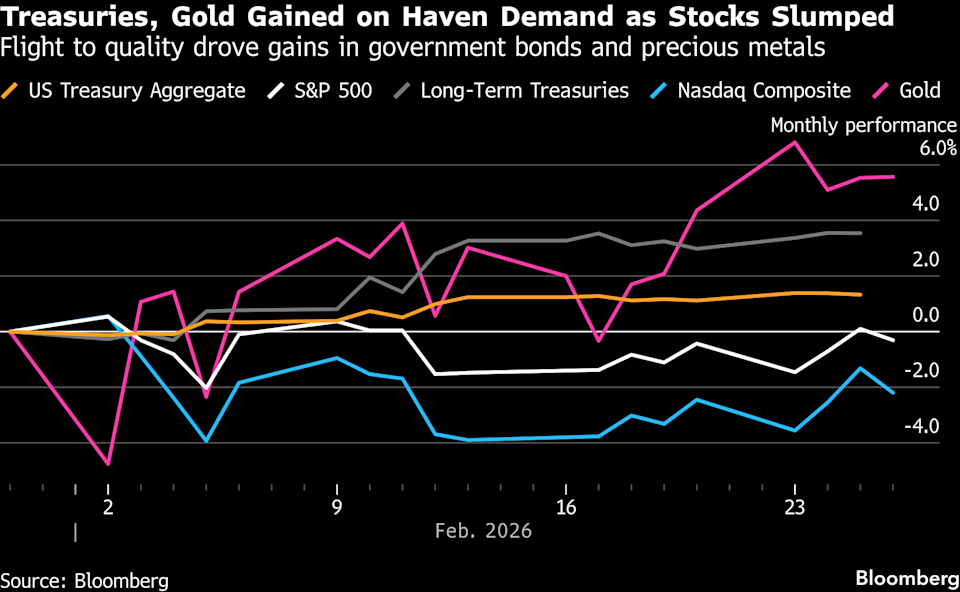
(Bloomberg) — The fast‑moving conflict across the Middle East is heightening investor anxiety and strengthening the case for safe‑haven trades such as Treasuries, gold and the Swiss franc.
Macro traders said all eyes will be on energy markets when trading fully re-opens on Monday. Traders sought haven assets in early trading in Asia, with the US dollar surging and Swiss franc edging higher against major peers while the yen was little changed. The possibility of prolonged turmoil in the Middle East and the ripple effects of higher oil prices are giving money managers fresh reasons to sell equities and shift into safety.
Most Read from Bloomberg
Traders will be adopting the strategy of “haven first, ask questions later,” according to John Briggs, head of US rates strategy at Natixis. “The scale of the attacks and Iranian retaliation is larger than what the market expected,” he said.
Briggs said Treasuries are likely to extend moves from Friday, when short-term yields sank to levels last seen in 2022. Others are watching energy chokepoints. Roundhill Financial’s Dave Mazza said he’s closely tracking what happens to traffic at the Strait of Hormuz, a narrow waterway handling about a quarter of the world’s seaborne oil trade.
“This is about Hormuz risk, not retaliation. If shipping stays open, stocks can work through it,” he said. “If it doesn’t, all bets are off.”
Rich valuations across global equities and credit also make it easier for investors to trim risk, said Ed Al-Hussainy, a portfolio manager at Columbia Threadneedle Investments. Markets have already been on edge over shifting US tariff policy, the disruption from artificial intelligence and stresses tied to private credit.
“The extent of the de-risking is anyone’s guess,” Al-Hussainy said.
Saudi Arabia’s Tadawul All Share Index opened almost 5% lower before paring most of that decline in Sunday trading. Meanwhile, Bitcoin recovered and was trading around $68,000. Put options on the cryptocurrency worth $1.87 billion were concentrated at the $60,000 level on Deribit, signaling persistent demand for downside protection.
Anxiety over the looming military action had started to filter into markets on Friday. Brent crude closed at the highest price since July, while the S&P 500 lost 0.4% on the day, capping its biggest monthly loss since March.