Jock’s mother, Sarah Davies, told the court: “Jock, I am standing here for you today as your proud mum and to honour you and to tell Paul how much his actions have inflicted so much grief to so many people and how our lives have changed forever.
“Paul, you are not a bad man. But on the 5th of July last year, you failed to follow the No 1 rule of hunting: identify your target. Because of this, you have inflicted on me, Pete, George, Tom, and extended family, a life of pain, grief, loss and devastation as we learn to live day by day without Jock.”
Recalling the morning her son left for the trip, Sarah Davies said: “Not in my wildest dreams did I think Jock would not return.
“All those on the island have come back as different people.”
She said that as a wife, a mum, a sister and a friend, trying to absorb the hurt of others had been “heartbreaking and overwhelming”.
Despite the devastation, she said the family would continue to honour Jock and “emulate all that he was in the way we live our lives”.
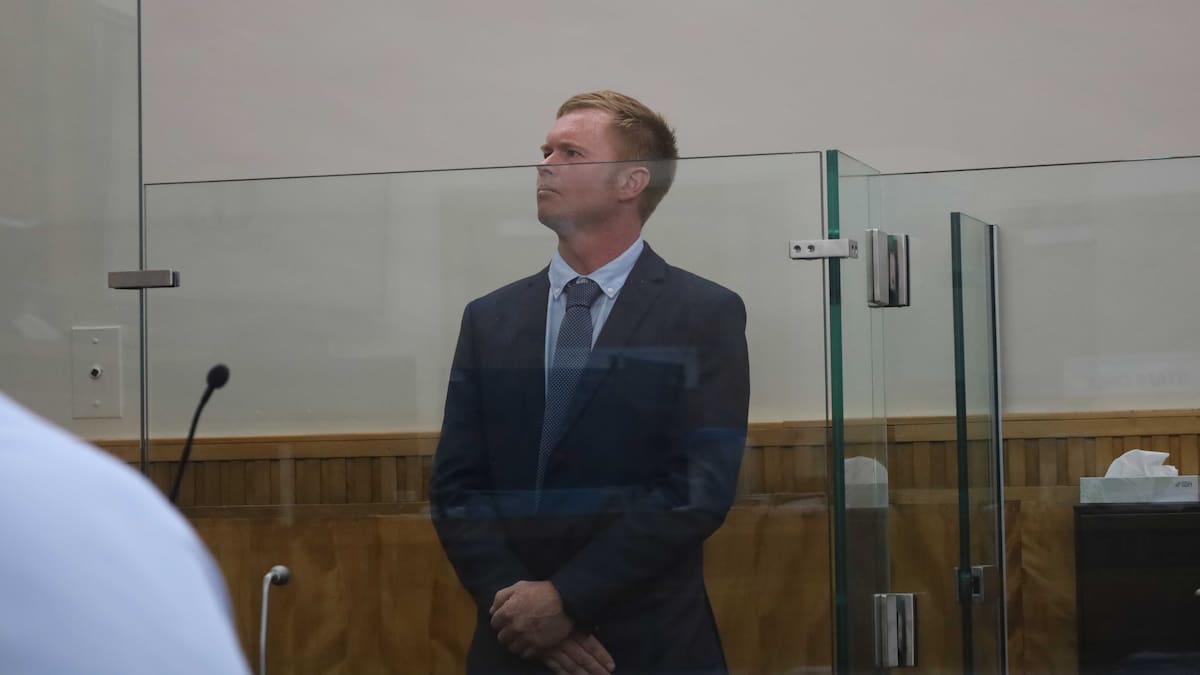
Stevens wept during the victim impact statements, nodding as family members addressed him.
Jock’s father, Peter Davies, told the court his son had “touched many lives, both young and old”, noting more than 1000 people attended his funeral.
He described him as “a special character” who could “walk in the shoes of others”.
He said grief had settled into daily life. Sometimes looking at photos brought “a smile or chuckle”, but “more often” it brought tears.
Shared passions had become painful reminders.
“Hunting, boating, we had such similar interests … I can’t even bring myself to do silly things like watch Clarkson’s Farm.”
He described making “the worst call a husband can even make”, replaying it “over and over” while trying to look after his other sons, George and Tom.
He said his sons had been forced to take on responsibilities no one should have to, including telling others what had happened.
Jock’s older brother George told the court: “There’s nothing I can say that can bring my brother back. My heart will never be full again.
“Paul, I know there was no harm intended, but as a gun licence holder, you have failed. And now our family is facing the lifelong effects of your actions.”
George said carrying his brother’s body after the shooting on the island was something he would live with forever.
“For me, the impact of having to carry my dead brother up the hill for help is something I’ll have to live with forever, and it’s something no person should ever have to do.”
Tom described the months since Jock’s death as a “living nightmare”.
“I looked at Jock as more of a best mate,” he said. “It hurts knowing that there are so many adventures left to explore.”
He told the court he had found himself “in a dark hole” and had not been looking after himself.
“My sleep pattern was horrendous. Some days I could barely remember what I had done.”
He had been living in Christchurch at the time but moved back south to be closer to family.
“It still leaves a huge ache in my bones and soul,” he said.
He said it hurt to know Jock had intended to join him at Teachers College in Christchurch this year.
The first time he played cricket after his brother’s death, “the field just felt empty. It wasn’t right without Jock”.
“For me, a life sentence has already been served. The damage is done,” Tom said.
“I don’t want to see another family back here.”
In sentencing, Judge Williams said nothing the court could do would make up for the loss of Jock.
“Nothing I can say or do today will in any way make up for the loss and grief that everyone has suffered,” he said.
“It is clear from the words of his family how Jock’s life was full of love, life and character, and the impact his loss will have.”
Judge Williams said one of the “seven rules of firearm safety” was to “identify your target beyond all doubt”.
“This rule is critical for shooters to follow, as the consequences of failure to do so can be immediate and catastrophic.”
He said Stevens had “completely failed to identify your target, instead shooting through the bush”, because he “did not want to miss the opportunity to shoot a deer”.
“You simply saw a dark, shadowy image … walk into view through the bush and shot at it,” he said.
“The excitement of pursuit and possible conquest do not justify the firing of a lethal weapon when the target has not been clearly identified.”
Judge Williams said the need to deter others from falling short of “the highest standards of safety when hunting” was a key factor.
“All those who use a firearm have the responsibility of clearly identifying their target before they pull the trigger.”
The court heard Stevens was part of a hunting group of eight on a planned seven-day trip, which included Jock’s father and brothers. A police scene examination confirmed the fatal shot was fired from about 20m away.
Stevens activated an emergency beacon after the shooting and an air ambulance was dispatched, but Jock died at the scene.
“You told the police that it was a dumb move shooting through the bush, and you should have identified your target,” Williams said. “You said that what you did was simply a mistake.”
Williams adopted a starting point of 18 months’ imprisonment and applied a 25% discount for the guilty plea, along with further allowances for remorse and personal circumstances.
After discounts, the sentence was reduced to 10 months’ imprisonment, which was converted to five months’ home detention.
Stevens’ home detention will start on Thursday, March 5, to allow him to travel home.
The judge also ordered $20,000 emotional harm reparation – $10,000 to a scholarship fund in Jock’s name for tertiary students from West Otago, and $10,000 to the New Zealand Deer Stalkers Association to sponsor young people through its hunter safety course.
His rifle and ammunition were forfeited.
Stevens was supported in court by his wife and parents.
Defence counsel Grant Fletcher said Stevens’ remorse was “utterly and completely profound”.
“At the end of the day, this is a man who cannot regret more than what he’s done,” he said, adding Stevens “would do anything to make it right, but obviously he can’t”.
He said a sentence needed to “remind the wider hunting community” about safety obligations.
Fletcher said offering money in such circumstances was “always a difficult submission” because it could never reflect the gravity of what had occurred.
“But for [Stevens] it’s the only way he can do it, and that is truly from the heart. In fact, he would pay more.”
He said the two $10,000 payments had been accepted by the family.
Ben Tomsett is a multimedia journalist based in Dunedin. He joined the Herald in 2023.