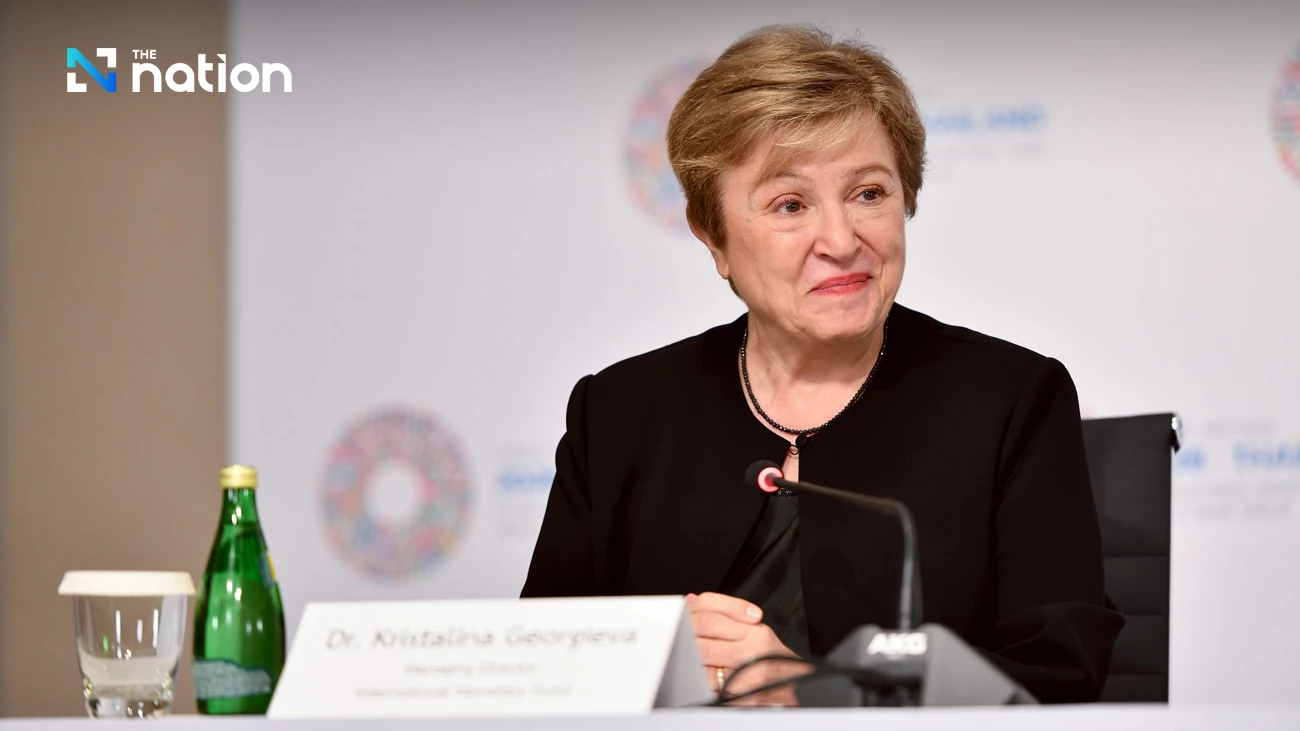
Georgieva builds on Thailand’s Finance Minister’s remarks to outline a three-point global blueprint for lifting productivity — and leaves Bangkok impressed by its canals and temples.
When asked how Thailand could restore international confidence in its economic prospects, Finance Minister Dr Ekniti Nitithanprapas pointed to infrastructure investment, human capital development and the application of digital and artificial intelligence technologies as the country’s principal levers of growth.
It was a response that prompted the International Monetary Fund’s managing director, Kristalina Georgieva, to offer a broader prescription — one she said applied not just to Thailand, but to the entire world.
Georgieva opened by setting the global scene.
The world, she explained, is growing more slowly than it did before the Covid-19 pandemic. Average global growth, which ran at around 3.7 to 3.8 per cent in the pre-pandemic era, has since slipped to approximately 3.2 to 3.3 per cent. The root cause, she argued, is a persistent shortfall in productivity growth.
“If we want to see faster growth, we have to focus on what are the obstacles to productivity growth,” she said.
Against that backdrop, she outlined three concrete steps that countries — Thailand among them — could take to lift their economic potential.
1. Deepen Capital Markets
The first recommendation centres on broadening access to capital, with a particular emphasis on moving beyond traditional bank lending. Georgieva called for a deepening of capital markets and a greater role for equity investment, arguing that businesses — from individual entrepreneurs to large corporations — need access to risk capital, not merely loans, if they are to grow at pace and innovate with confidence.