52
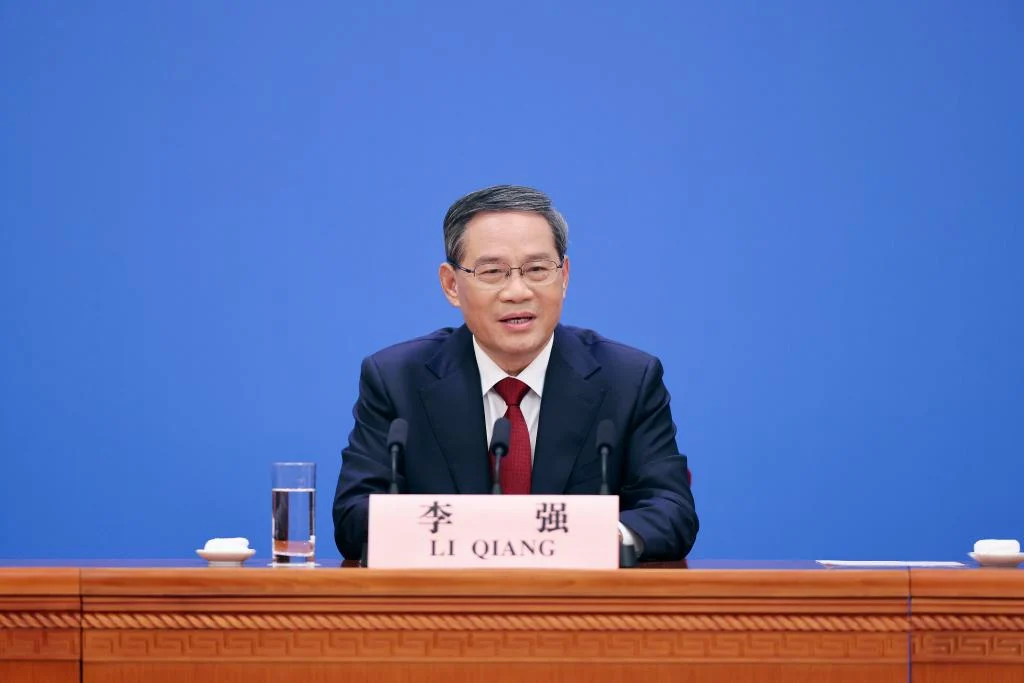
China reaffirmed its commitment to the “one China” principle today and pledged to combat separatist forces promoting “Taiwan independence,” said Chinese premier Li Qiang.
The statements were made during the presentation of the annual government work report at the session of the National People’s Congress (NPC), China’s legislative body, inaugurated today at the Great Hall of the People in Beijing.
Li stressed that Beijing will continue to advance “national reunification” and to apply “in depth the Communist Party’s overall strategy for resolving the Taiwan question in the new era.”
According to the report presented to the NPC, the Chinese government will act in accordance with the “one China” principle and the so-called 1992 Consensus, while opposing what it described as “interference by external forces.”
The premier added that Beijing intends to promote the “peaceful development of relations between the two sides of the strait” and encourage exchanges, cooperation and integration between Taiwan and the mainland.
The Taiwan question remains one of the main sources of tension in the region. Last month, Beijing accused the Taiwanese leader of being a “warmonger,” after William Lai Ching-te warned of the regional impact that could result from possible Chinese control of the island.
Taiwanese analysts cited by local media outlets consider a short-term Chinese military action unlikely, however, given the current international context, also marked by tensions related to the conflict with Iran.
According to these experts, Beijing continues to maintain so-called “peaceful reunification” as its official objective.
Chinese authorities consider Taiwan an “inalienable part” of their territory and do not rule out the use of force to achieve reunification with the island, which has been self-governed since 1949.
The Taiwanese government maintains, in turn, that Taiwan already functions as a de facto country and argues that the island’s future should be decided solely by its roughly 23 million inhabitants.