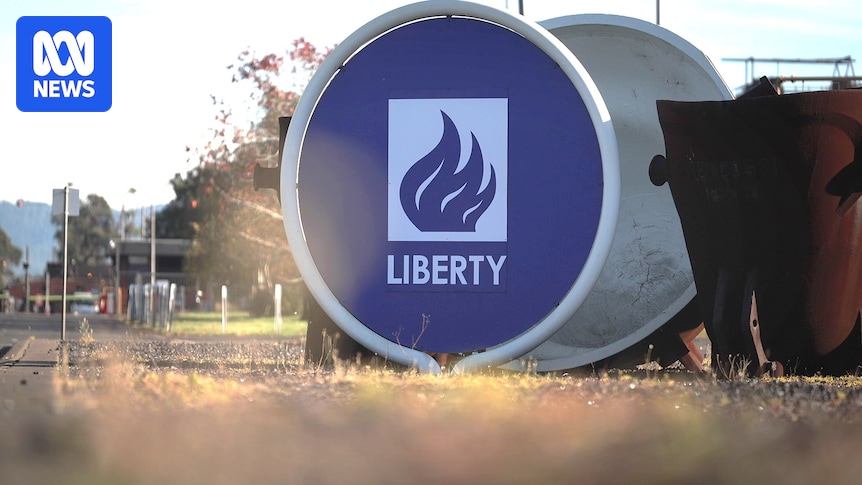
The corporate regulator has moved to wind up the Liberty Bell Bay manganese smelter in northern Tasmania, citing the company’s repeated failure to lodge financial statements.
The Australian Securities and Investments Commission (ASIC) said in a statement this morning that Liberty Bell Bay, which is owned by British businessman Sanjeev Gupta’s GFG Alliance, had failed to lodge annual reports for the past five years.
The regulator applied in the NSW Supreme Court yesterday to wind up the business.
GFG Alliance is in financial turmoil and last August the Tasmanian government loaned the company $20 million to allow Liberty Bell Bay to buy a shipment of manganese ore so the smelter could restart processing.
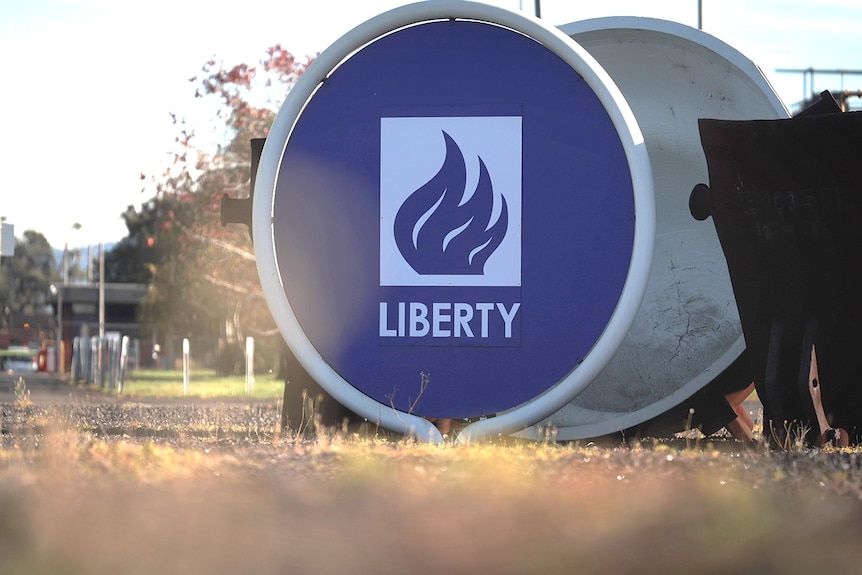
The smelter entered a period of limited operations in May last year. (ABC News: Owain Stia-James)
However, the smelter did not resume operations and at the end of January the state government appointed receivers and managers to protect the 23,000-tonne ore stockpile.
Minister for Business, Industry and Resources Felix Ellis said at the time the move had been made following ongoing defaults under the state’s loan agreement.
“Unfortunately, GFG has not delivered on its promises to Tasmanians and to its workers to restart operations, and the loan [has] not been repaid,” he said.
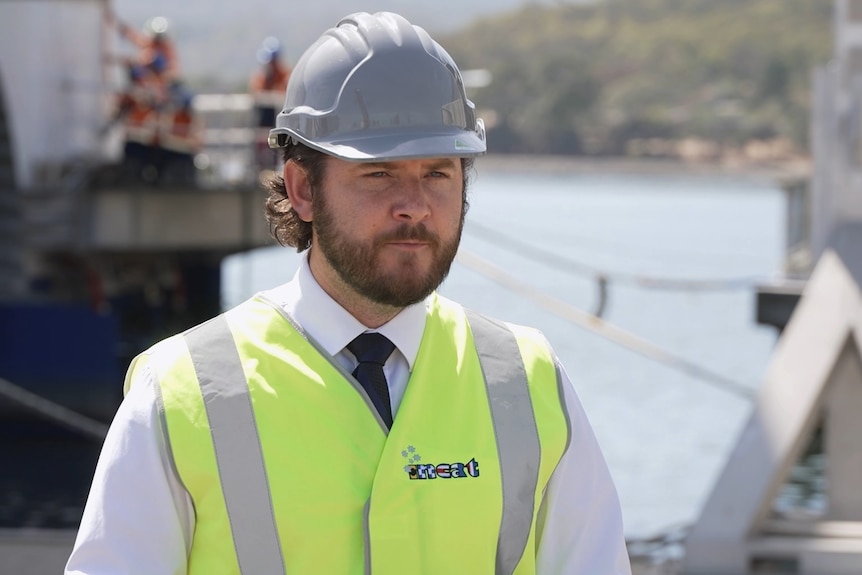
Felix Ellis said at the time the government must “act responsibly to protect public funds”. (ABC News)
This morning Mr Ellis said news of the Liberty Bell Bay wind-up would be “challenging for the workers, their families, and the wider community”.
“To the workers and their families: we are in your corner.”
Uncertain future for GFG Alliance workers
In its statement this morning, the ASIC said last June it had obtained court orders forcing Liberty Bell Bay to lodge annual reports for the financial years ending in 2021-24, but the company had failed to comply.
ASIC alleges Liberty Bell Bay has also failed to lodge reports for the financial year ending in 2025.
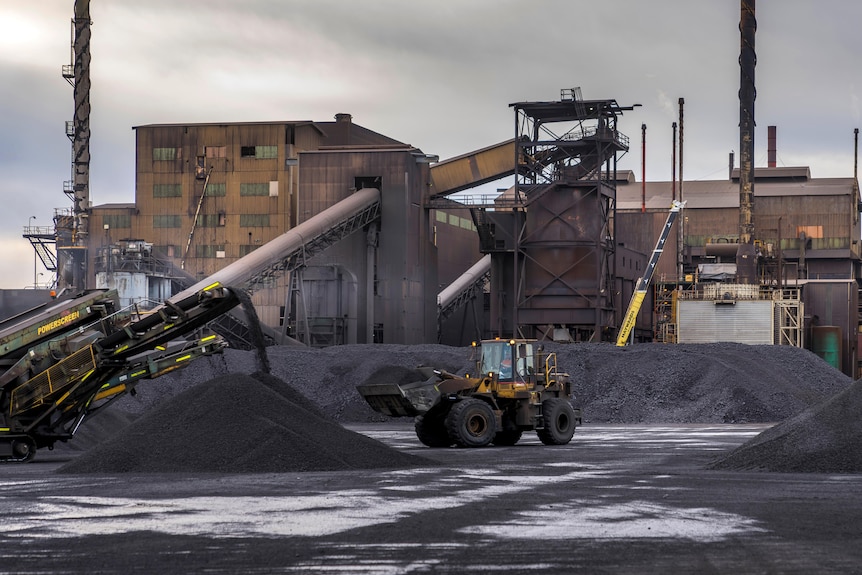
Liberty Bell Bay is Australia’s only manganese alloy smelter and has been in limited operations since May, which has placed uncertainty over the future of about 250 jobs.

Liberty Bell Bay is a major industrial employer that accounts for about 7 per cent of the state’s energy usage. (ABC News: Kate Nickels)
International company may lease smelter to keep it going
Australia Workers Union assistant secretary Rob Flanaghan said at this stage, he does not see this action impacting the facility’s workers.
“While that’s all taking place, the employees are continuing to be paid and the company has been involved, the current owner, in detailed discussions about a new owner taking over the business,” he said.
“So we’re hoping that [a] new owner will take on the operation, that production will resume and that the ASIC application doesn’t interfere with that process.”
Rob Flanaghan hopes a new owner will take on Liberty Bell Bay. (Supplied: Liberty Steel Group)
GFG has signed a memorandum of understanding (MOU) with Steel International Trading Company (SITC), an exports company based in Georgia, to operate the smelter on a lease arrangement for up to five years.
As well as Liberty Bell Bay, GFG Alliance’s operations in Australia include the Whyalla steelworks in South Australia and Tahmoor Coal in NSW — both of which are under administration — and steel recycling and manufacturing business InfraBuild.
Ray Mostogl, CEO for the Tasmanian Minerals, Manufacturing and Energy Council, said ASIC’s action was a legacy of Mr Gupta’s financial troubles.
Does Liberty Bell Bay have a future?
“There’s plenty of evidence in South Australia to show how bad that has turned out. That is probably tarnishing the willingness to jump in here,” he said.
He said Liberty Bell Bay’s best hope for survival lay in its MOU with SITC, which was optimistic it could resume operations at the smelter.

Ray Mostogl says it is unlikely Sanjeev Gupta will receive assistance from the federal government. (Supplied)
Federal Industry Minister Tim Ayres today supported the wind-up action taken by ASIC.
“There are consequences for businesses that don’t comply with Australian law — this is the independent regulator working as it should.
“I know this is more uncertainty for workers and the community — GFG must continue to front up and honour all obligations including wages and entitlements. We won’t accept anything less.”
Bell Bay Advanced Manufacturing Zone CEO Susie Bower says the filing is no surprise given the failings to provide documents.

Susie Bower says Liberty Bell Bay is a key part of the local steelmaking industry. (ABC News: Kelsey Reid)
She says the conflict in the Middle East has highlighted the power of local supply chains, with the manganese facility a key part of the local steelmaking industry.
“This is a sovereign capability for Australia,” she said.
“We’ve seen what happens in the world right now, you know the disruption … that can happen when you don’t have supply chain certainty and that sovereign capability to produce things.
“And I wouldn’t like to see this added to that list.”
GFG Alliance has been contacted for comment.