This story has been updated.
By Gary Gately
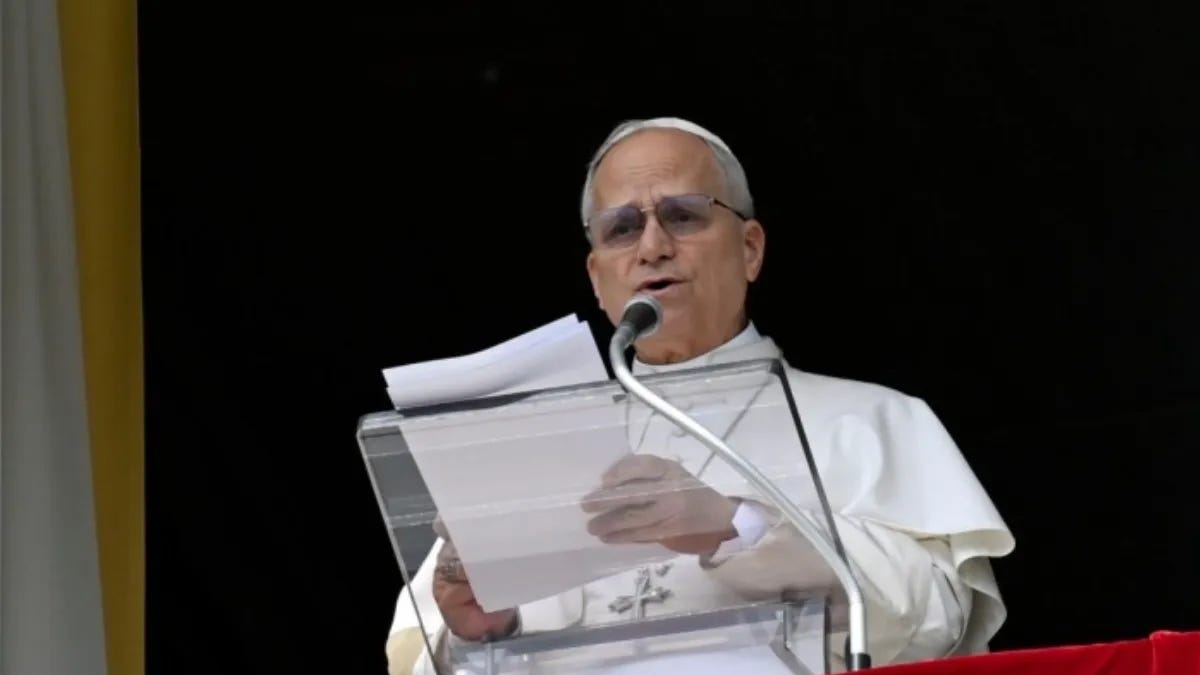
Pope Leo XIV expressed “profound consternation” Sunday over the escalating conflict in Iran and across the Mideast while renewing his appeal for dialogue and praying that “weapons may fall silent.”
The first U.S.-born pope also once again warned of the risks of a broader regional conflict as he spoke to about 15,000 of the faithful gathered in St. Peter’s Square for his Angelus address.
It marked the latest of Pope Leo’s fervent appeals for peace since the U.S. and Israel launched a series of strikes across Iran nine days ago.
“From Iran and from the whole Middle East, news continues to reach us that gives rise to profound consternation,” the leader of the 1.4 billion-member Catholic Church said from the window of his study in the Apostolic Palace.
Leo lamented the “episodes of violence and devastation as well as the widespread climate of hatred and fear.” He expressed concern that the conflict will expand and intensify, inflicting more death and destruction in countries including “beloved Lebanon,” where Lebanese authorities report at least 120 people have been killed and more than 450,000 displaced.
With no compromise in sight Sunday, the death toll in Iran climbed to more than 1,300, and the Islamic Republic intensified drone and missile attacks across the Mideast, its targets including Israel and U.S. Gulf allies Saudi Arabia, the United Arab Emirates, Qatar and Bahrain. Iran, meanwhile, named as the nation’s new leader hardliner Mojtaba Khamenei, to succeed his father, Ayatollah Ali Khamenei, who was killed in the initial February 28 strikes.
For his part, President Donald J. Trump continued demanding Iran’s unconditional surrender while escalating the conflict.
“At some point, I don’t think there will be anybody left maybe to say, ‘We surrender,’” Trump told reporters aboard Air Force One Saturday night hours after attending a solemn ceremony as the remains of six U.S. soldiers killed in the conflict arrived at Dover Air Force Base in Delaware. (The U.S. confirmed a seventh military casualty Sunday.)
Against that ominous backdrop, the 70-year-old Leo prayed: “We lift up our humble prayer to the Lord, so that the thunderous sound of bombs may cease, weapons may fall silent and a space for dialogue may open up in which the voice of the people can be heard. I entrust this intention to the Blessed Virgin Mary, Queen of Peace, that she may intercede for those who suffer because of war and lead hearts along the paths of reconciliation and hope.”
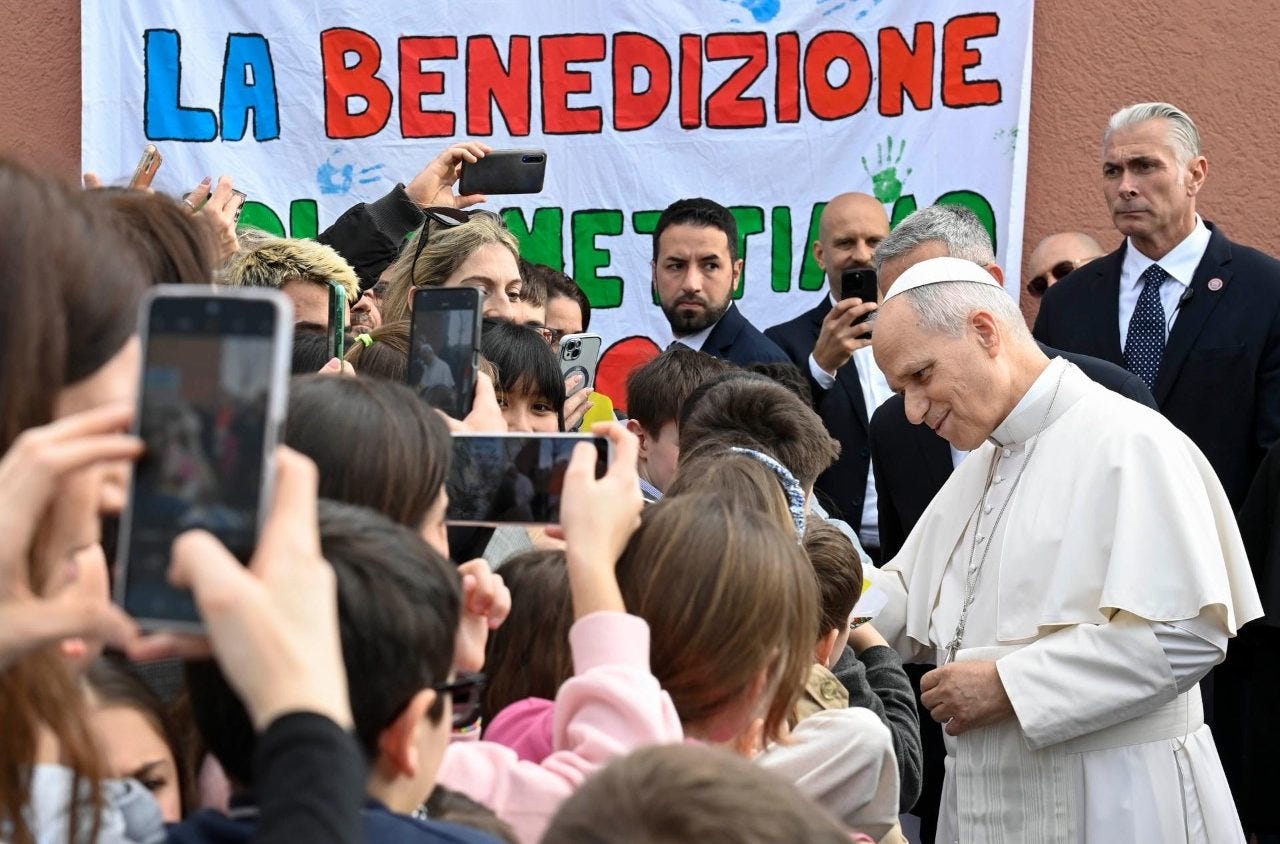
Later Sunday, at the Church of St. Mary of the Presentation in the western suburbs of Rome, Pope Leo urged children to seek peace — starting with relationships with their classmates — and, more broadly, to serve as messengers of peace in the world.
“We can seek and find agreement in a way, let’s say, of peace, and not of war, not of violence — never,” he told the children. “Reject all those forms of violence, of hatred, things that cause division and strive to be, all of us, promoters of peace, promoters of reconciliation in today’s world…. From an early age, we can all learn to be peacemakers, something truly necessary in our world today.”
Leo has spoken out forcefully against the U.S.-Israel war on Iran, dating to the day after the initial strikes on Iran, when the pope urged leaders to live up to their “moral responsibility” to pursue diplomacy to avert “a tragedy of enormous proportions.”
On Saturday, Leo wrote in a message to an international peace conference at Loyola University in his native Chicago that peace is not “imposed with violence and deception” and called for “the engagement and commitment of the international community for the sake of the common good, which transcends borders, faith traditions and cultures.”
And on Thursday, in his monthly prayer intention for March, Leo said: “Today, we lift up our prayer for peace in the world, asking that nations renounce weapons and choose the path of dialogue and diplomacy…. Help us understand that true security does not come from control fueled by fear, but from trust, justice, and solidarity among peoples.”
But the 70-year-old pontiff has not publicly referred to specific countries or world leaders since the Mideast fighting began, preferring instead quiet diplomacy.
“He will approach this war mostly through diplomacy, not in front of the cameras,” Catholic scholar, journalist and author Massimo Faggioli told The Catholic Observer in an interview.
“It’s an incredibly dangerous war, and the Vatican knows this,” said Faggioli, who had served as a theology professor at Pope Leo’s alma mater, Villanova University, for nearly a decade, and has been a professor since last August at the Loyola Institute at Trinity College in Dublin.
“At the Vatican, I think they are trying to figure out what to say — and how — because we’ve crossed several important red lines here: the red line of internationalism, the red line of violating Catholic just war theory, the red line of wrapping wars in a religious narrative while invoking Christianity, the red line of committing a war crime on video in Iran” (the strike on a southern Iran school that killed more than 165 people, mostly young children).
The war on Iran has drawn widespread condemnation and appeals for peace among Catholic and other faith leaders across the world.
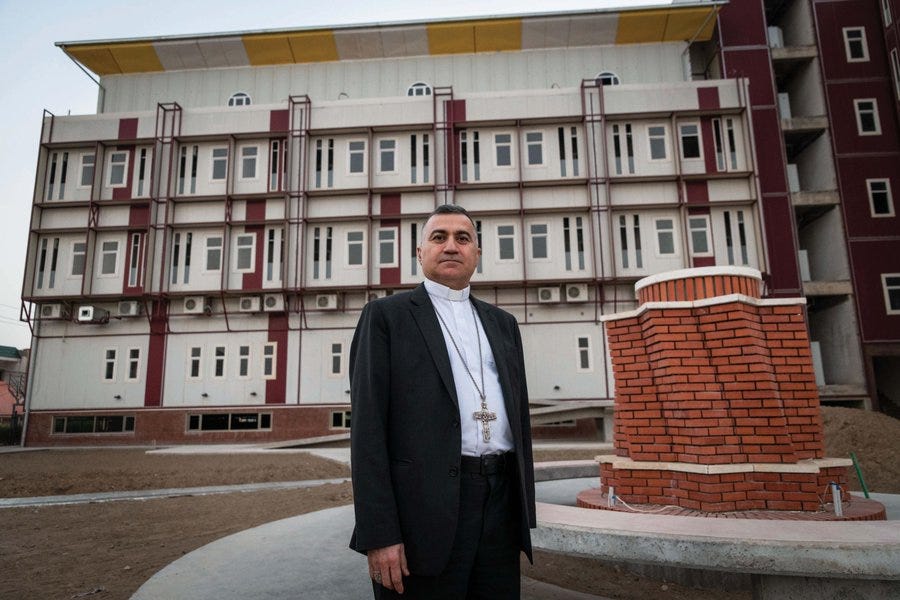
Chaldean Catholic Archbishop Bashar M. Warda lamented Sunday that a daily barrage of drones targeting northern Iraq, many of them launched by Iran and Iranian-backed militias, had forced the closings of the Archdiocese or Erbil’s four Christian schools, its university and a catechist center.
“War,” Archbishop Warda said in an X post, “lacks dialogue, wisdom & understanding . We form & educate our children to be leaders, critical thinkers in dialogue, wisdom & understanding as Jesus instructed us.”
A day earlier, Cardinal Blase J. Cupich, the archbishop of Chicago, denounced the White House for posting on its official X account Thursday night a video — captioned “JUSTICE THE AMERICAN WAY” — featuring scenes from popular action movies spliced with footage of strikes on Iran.
“A real war with real death and real suffering being treated like it’s a video game — it’s sickening,” Cardinal Cupich said in a statement Saturday. “Hundreds of people are dead, mothers and fathers, daughters and sons, including scores of children who made the fatal mistake of going to school that day. Six U.S. soldiers have been killed. They are also dishonored by that social media post.
Cupich, a close ally of Leo, continued: “The moral crisis we are facing is not just a matter of the war itself, but also how we, the observers, view violence, for war now has become a spectator sport or strategy game…. Our government is treating the suffering of the Iranian people as a backdrop for our own entertainment, as if it’s just another piece of content to be swiped through while we’re waiting in line at the grocery store. But, in the end, we lose our humanity when we are thrilled by the destructive power of our military.”
Leo’s comments Sunday came a day after he appointed Italian Archbishop Gabriele Giordano Caccia, a seasoned Holy See diplomat, as his ambassador to the U.S. amid strained relations between the Vatican and the White House over the war on Iran, U.S military aggression in Venezuela and what Leo has condemned as “inhuman” Trump administration immigration policies.
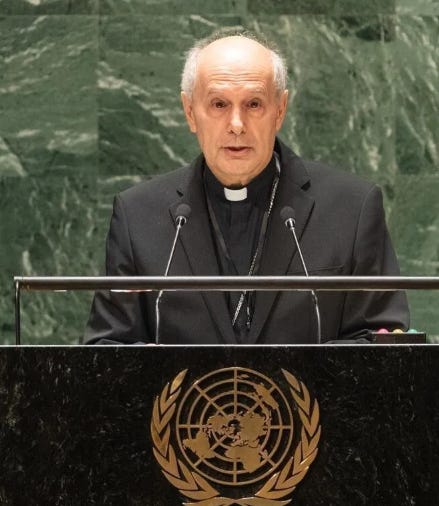
As the permanent observer of the Holy See to the United Nations since 2019, the 68-year-old Caccia, had often called on nations to choose diplomacy over military might.
“I receive this mission with both joy and a sense of trepidation,” Caccia said through the Holy See Press Office, framing his new role as a “mission at the service of communion and peace.”
Caccia — who succeeds retiring Cardinal Christophe Pierre, who had held the post since 2016 — has also expressed the Holy See’s strong stances on nuclear weapons, poverty, climate change and migration under Leo and his predecessor, Pope Francis.
Oklahoma City Archbishop Paul S. Coakley, the president of the U.S. Conference of Catholic Bishops, welcomed Caccia’s appointment.
“On behalf of my brother bishops, I wish to extend our warmest welcome and our prayerful support to him as he carries out his responsibilities across the United States, and we look forward to working with him,” Coakley said in a statement.
See related story: Pope Leo Decries “Spiral of Violence,” Urges Diplomacy to Stave Off a “Tragedy of Enormous Proportions”