
Immigration, Refugees and Citizenship Canada (IRCC) is set to off-load housing costs of asylum seekers to municipalities, including the possible future operating costs of a reception centre in Ottawa, according a new report.
The Interim Housing Assistance Program (IHAP) is set to be off-loaded from the federal government to municipalities.
With it, it seems the City of Ottawa could be on the hook for the operating costs of a likely new reception centre in a vacant downtown hotel that could amount to $15 million to $25 million a year, the report said.
In the new report from the left-leaning think tank the Canadian Centre for Policy Alternatives, it was revealed that IRCC cuts will include slashes to program budget for the housing program, supports for economic migrants and health care cuts that were announced earlier this year.
The report found that four municipalities — Toronto, Montreal, the Peel Region and Ottawa — will likely face increasing costs to house asylum seekers, likely in the millions of dollars.
Funding remains for municipalities for the next two years, but additional funding beyond that is uncertain.
Ottawa has received around 10 per cent of the IHAP funds that has amounted to millions over the past few years.
The report says that the IHAP was developed as an “ad hoc program” that was already seeing decreases in its funding.
However, the ramping down of funds to a point where cities and the federal government would split the cost, but with Prime Minister Mark Carney’s spending review, the government will now “stick cities with the full cost,” the report said.
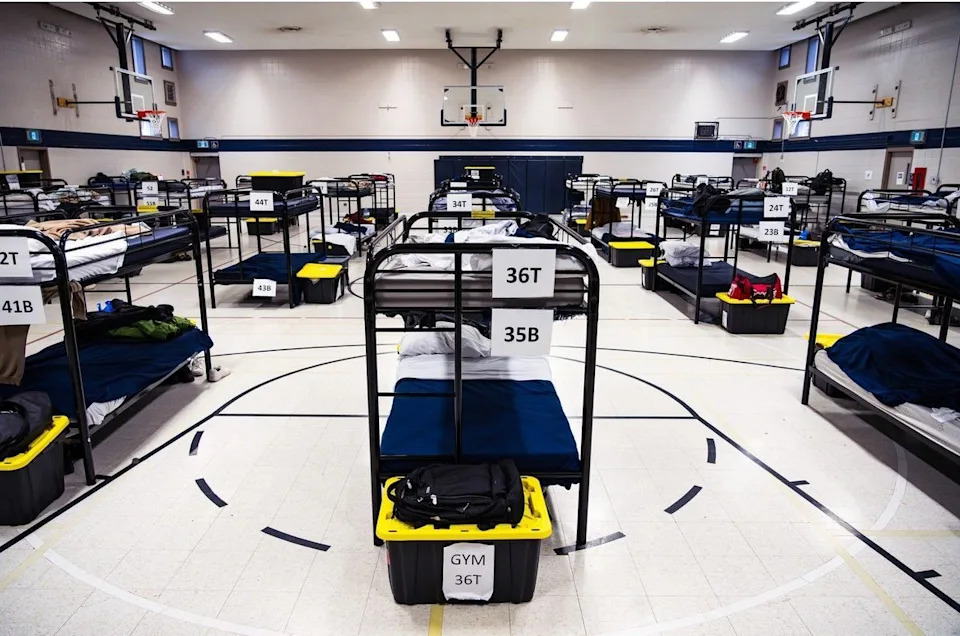
Inside the Heron Road Community Centre, used for refugees and newcomers in 2024. In two years time, the city of Ottawa could be stuck with the bill to house asylum seekers due to IRCC cuts.
The spending review is set to cut billions across most federal departments and agencies in order to fund more defence spending and tax cuts.
Details about what the slashes to departments will mean have slowly started to trickle out, revealing impacts to social programs.
On Feb. 18, a previous report from the Canadian Centre for Policy Alternatives published a report that revealed that nearly half of cuts to IRCC will be cutting health benefits for asylum seekers who don’t yet receive provincial or territorial health benefits.
Those cuts will amount to a copayment for dental and prescription coverage, which could end up being costly for a demographic that is often more lower-income.
Critics worry that the cuts will mean asylum seekers will skip dental work and go without prescription drugs.
The federal government is still backstopping visits to the emergency room and doctor’s offices for asylum seekers, raising questions about possible downstream costs and impacts of cutting preventive care.
In a statement to the Ottawa Citizen, IRCC spokesperson Jeffrey MacDonald said that the cuts were made to “protect the sustainability of the program” and “in fairness to taxpayers.”
MacDonald added that the department is “currently working on developing copayment assistance.”
“The Government of Canada will closely monitor the effect of this change to protect public health, while honouring our international and humanitarian legal obligations.”
IRCC have defended their cuts by pointing to reductions in new asylum claims in 2025, which were down by one third. The department is also projecting more modest asylum targets within the department.
The federal government has taken measures to tamp down the number of asylum claims. They have restricted visa requirements for Mexican nationals and put claims processing and visa decisions under a closer microscope.
Still, in an interview, report author David Macdonald says that the war in Iran and further international instability creates more unpredictable conditions for worsening refugee crises.
“The world is an unpredictable place,” he said.
Part of the cuts also include slashes to support for “economic migrants” who immigrant through official channels, often with skill sets coveted by Canada.
The settlement program is designed to integrate new Canadians into the economy through language training and other supports.
The cut will amount about $338 million, or approximately 30 per cent of the program funding, in two years time.
Québec will be insulated from those cuts, due to an accord on immigration signed decades ago.
In total, cuts to health benefits and the settlement program will amount to around two thirds of the cuts at IRCC, while around a tenth of the cuts will come from the housing program off-load.
Related
Our website is your destination for up-to-the-minute news, so make sure to bookmark our homepage and sign up for our newsletters so we can keep you informed.