France has long had a reputation for bureaucratic complexity; the kind of place where you need a form to get a form. So when the government decided in 2017 to streamline its notoriously sluggish vehicle registration system, it must have felt like a rare win. Fewer queues, faster paperwork, happier citizens. What could go wrong?
Quite a lot, as it turns out.
According to a damning new report from the Cour des Comptes — France’s top state auditor — approximately 1 million vehicles are currently on French roads with fraudulent registrations. That’s not a rounding error. That’s roughly the population of San Jose driving cars that, for all legal intents and purposes, do not exist.
The Privatization That Came Back to Haunt Everyone
Before 2017, getting your vehicle registration in France meant standing in a government queue for about two hours while a civil servant methodically verified everything. Tedious? Absolutely. Effective? Also yes.
Then came the reform. Around 2,000 civil servants were reassigned, and the job of issuing registration documents was handed over to car dealerships, who were granted direct access to the national vehicle licensing database — known as the SIV. The logic was sound on paper: dealers handle registrations all day, so let them do it themselves and cut out the middleman.
What the government apparently didn’t account for was that some people are not acting in good faith. Shocking, we know.
The Ghost Dealer Business Model
It didn’t take long for opportunists to spot the opening. All you had to do was set up a shell company, apply for SIV access — which was, by the auditor’s own description, granted more or less automatically — and suddenly you had the keys to France’s entire vehicle registration kingdom. The fraudsters, now apparently nicknamed “SIV-eurs” by police (a name that somehow sounds both technical and vaguely Bond-villainish), found a thriving market for their services.
The Cour des Comptes identified nearly 300 fictitious companies operating completely outside state oversight, responsible for registering around a million vehicles. When a police officer pulls over one of these cars, the paperwork looks perfectly legitimate. But try to trace the vehicle afterwards? Good luck — it effectively vanishes into the administrative ether.
The Price Tag: Half a Billion Euros and Counting

Image Credit: Mercedes-Benz.
For the years 2022 through 2024 alone, the financial damage is estimated at €550 million — roughly $639 million — in unpaid registration fees, speeding fines, and parking tickets that could never be collected because the registered owners simply don’t exist. The auditors catalogued 30 distinct types of fraud connected to the scheme, which is impressive in the same way that a very large fire is impressive.
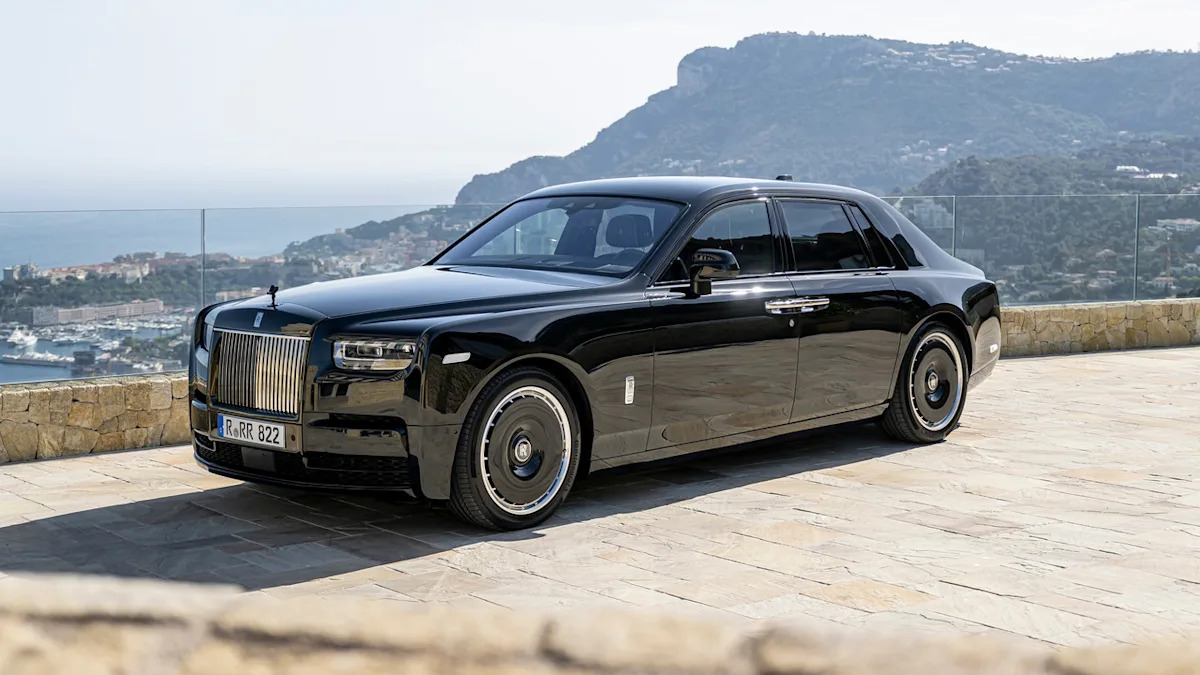
Some of the more creative applications included registering Rolls-Royces and Mercedes-Benzes as specially adapted vehicles for disabled people; a classification that conveniently exempts them from import and environmental taxes. So while the rest of us are paying extra to drive a slightly older diesel hatchback, someone was apparently gliding through customs in a Rolls with paperwork that said “mobility aid.”
Stolen vehicles have been re-registered to wipe their histories clean. Drug trafficking organizations have been using SIV-ed cars for high-speed deliveries on motorways — the so-called “go-fast” runs. And environmental levies on high-polluting vehicles? Largely evaded. The scheme also allowed people to bury a car’s previous ownership history, which opens up its own set of unsettling possibilities.
How Did Anyone Notice?
Credit where it’s due: the unraveling began when police noticed something strange in the speeding data. Very-high-speed violations — the kind that get a vehicle flagged — jumped by 160% between 2016 and 2022. When investigators pulled the registration details on many of those vehicles, they kept hitting dead ends. Fake companies. Nonexistent owners. Cars that existed in reality but not in any meaningful legal sense.
At that point, someone presumably said “ah” in a very French way, and the investigation began in earnest.
Where Things Stand Now
France’s Interior Ministry has acknowledged the scale of the problem and says steps are being taken. An action plan rolled out last year has led to more fraud detections, and the number of authorized SIV access points has been significantly reduced. Progress, in other words, though the auditor’s report makes clear this is a problem that festered for years before anyone with sufficient authority decided to treat it as a crisis.
One insider, speaking to Le Monde with the air of someone who had been saying “I told you so” for several years, offered perhaps the most concise summary of what went wrong: before the reform, people had to queue for two hours. Everyone complained. But at least everything got properly checked.
There’s a lesson in there somewhere about the difference between efficiency and thoroughness — and about what happens when you design a system around the assumption that everyone using it has honest intentions. Bureaucratic friction, it turns out, was doing some real work.
For now, an estimated million vehicles continue to operate in a legal grey zone while authorities work to close the loopholes. If you’re in France and a Rolls-Royce cuts you off on the motorway with a disabled parking placard in the window, you may want to let that one go.