
KC-135 crash in Iraq: the human and operational cost of Operation Epic Fury
NATO’s first fatality: a French Alpine hunter killed in Erbil
Mojtaba Khamenei’s first message: the Strait of Hormuz will remain closed
The exemption from sanctions on Russian oil: when consistency bends to the energy bill
Canada bets on the Arctic: $25.7 billion – too little, too late?
Al-Quds Day: a waning show of force and the London ban
Brief introduction
13 March 2026 marks the fourteenth day of Operation Epic Fury, the joint military strike by the United States and Israel against the jihadist oligarchy in Tehran.
The day has left a trail of incidents of extraordinary gravity, confirming that the conflict is expanding geographically and systemically far beyond Iran’s borders. A US Air Force aerial refuelling aircraft, a KC-135 Stratotanker, has crashed in western Iraq under circumstances that have not yet been fully clarified. A French soldier has been killed in Erbil, in Iraqi Kurdistan, the victim of a drone attack attributed to pro-Iranian militias, making France the first NATO nation to suffer a fatality outside Iranian territory.
At the same time, Iran’s new Supreme Leader, Mojtaba Khamenei, has issued his first public statement, in which he reiterates the blockade of the Strait of Hormuz and threatens to open new fronts. On the economic-strategic front, the Trump administration has granted a temporary sanctions exemption for the purchase of Russian oil on the high seas, confirming that pressure on energy markets is forcing decisions contrary to Western geopolitical coherence. Canada, for its part, has announced an ambitious investment in Arctic defence, albeit with an unacceptable delay of several years. Finally, Al-Quds Day has turned out to be a mere act of diminished propaganda: the war has laid bare the seams of Tehran’s theocratic hegemonic project.
KC-135 crash in Iraq: the human and operational cost of Operation Epic Fury
Facts
A US Air Force KC-135 Stratotanker crashed in western Iraq on the night of Thursday into Friday. The US Central Command (CENTCOM) confirmed the loss of the aircraft and reported that search and rescue operations were underway. The aircraft was carrying at least five or six crew members. CENTCOM’s official statement was unequivocal in asserting that the crash was not the result of hostile fire or friendly fire. A second KC-135 involved in the same operation managed to land without incident. However, the Islamic Resistance in Iraq, the umbrella organisation for pro-Iranian terrorist militias in the country, claimed to have shot down the aircraft with ‘the appropriate weapon’, in flagrant contradiction to the official US account.
Implications
This incident, whatever its ultimate technical cause, represents the most serious accident suffered by the US Air Force since the start of Operation Epic Fury on 28 February 2026. The KC-135 is the backbone of the US Air Force’s aerial refuelling operations, and its loss in such an active theatre of operations inevitably casts a shadow over the air campaign’s logistics chain. The ambiguity surrounding the causes of the crash — given the immediate claim of responsibility by a pro-Iranian terrorist militia and CENTCOM’s denial — creates a space of informational uncertainty that Tehran will exploit for propaganda purposes. It is worth recalling that in the early days of the conflict, three F-15 Eagle fighter jets were already lost as a result of friendly fire from Kuwaiti air defences, meaning that the accidental cost of the operation is beginning to take on political significance in the US Congress and among a public that, according to YouGov polls, is largely sceptical about the war.
Outlook and scenarios
If the CENTCOM investigation confirms that the loss was purely accidental, Secretary of War Pete Hegseth will have to appear before Congress with solid arguments in the midst of an escalation. If, on the other hand, any form of direct or indirect responsibility on the part of Iranian militias in Iraq were to emerge, the White House leadership would come under pressure to respond militarily within Iraqi territory, which would further complicate Baghdad’s position and the mission of the anti-jihadist coalition. In any case, the cumulative human toll of the operation — seven killed in action, 140 wounded and now the potential casualties from this aircraft — makes it clear that President Trump’s triumphalist rhetoric has no counterpart in the operational reality on the ground.

Un Boeing KC-135 Stratotanker de la Fuerza Aérea de los Estados Unidos rueda por la pista de la base aérea de Morón, en Morón de la Frontera, en el sur de España – REUTERS/ MARCELO DEL POZO
NATO’s first fatality: a French Alpine hunter killed in Erbil
Facts
President Emmanuel Macron publicly confirmed on Friday the death of Senior Warrant Officer Arnaud Frion, of the 7th Alpine Hunters Battalion of Varces, during a drone attack in the Erbil region of autonomous Iraqi Kurdistan. The attack, carried out by at least two drones against the Mala Qara base, located some forty kilometres from the regional capital, also left six French soldiers wounded. Macron described the attack as “unacceptable” and stressed that the French presence in Iraq has been “strictly focused on the fight against terrorism” since 2015, and that “the war in Iran cannot justify these attacks”. The pro-Iranian Iraqi group Ashab Ahl al-Kahf posted on Telegram that French interests “in Iraq and the region are under fire”, linking the attack to the arrival of the aircraft carrier Charles de Gaulle in the CENTCOM area of operations. Meanwhile, an Italian base in Erbil was hit by an air strike without causing any casualties; Rome responded by temporarily withdrawing its troops.
Implications
This death marks a major turning point in the conflict: it is the first fatality of a NATO member outside Iranian territory since the start of Operation Epic Fury, and raises a question of the utmost importance regarding the international law of collective self-defence. Pro-Iranian terrorist militias in Iraq have deliberately decided to expand their sphere of action, attacking not only US targets — already targeted from day one — but also European allies whose presence in the country is part of the anti-ISIS coalition mandate. The explicit threat by the Ashab Ahl al-Kahf group against French interests, timed to coincide with the deployment of the Charles de Gaulle, is a direct response to the France-CENTCOM strategic axis and constitutes a declaration of hostilities that forces Paris to rethink its position. Macron has insisted that the French position is “strictly defensive”, but internal pressure and the explicit threat to his troops place him before an extremely uncomfortable political dilemma.
Outlook and scenarios
France faces three realistic options. First: to maintain its defensive stance and absorb the political cost of casualties without responding autonomously. Second: invoke NATO’s solidarity mechanism, although the nature of the attack — non-state militias on Iraqi soil — complicates the literal application of Article 5 of the Washington Treaty. Third: respond militarily in a limited and coordinated manner with CENTCOM against the infrastructure of pro-Iranian militias in Iraq, at the risk of further internationalising the conflict. What is beyond doubt is that the jihadist oligarchy in Tehran has given precise instructions to its Iraqi tentacles to expand the European front. The message to the coalition allies is crystal clear: no state that supports the US operation, even if only logistically or symbolically, will be spared the reprisals of Iranian proxies.

French President Emmanuel Macron wears sunglasses whilst attending the 56th annual meeting of the World Economic Forum (WEF) in Davos, Switzerland, on 20 January 2026 – REUTERS/DENIS BALIBOUSE
Mojtaba Khamenei’s first message: the Strait of Hormuz will remain closed
Facts
On Wednesday 12 March, Iranian state television broadcast what it presented as the first public statement by the new Supreme Leader, Mojtaba Khamenei, elected last Sunday 8 March by the Assembly of Experts to succeed his father, Ayatollah Ali Khamenei, who was killed during the first airstrikes of Operation Epic Fury. Significantly, the message was not read by Mojtaba Khamenei himself, but by a television presenter, whilst a still photograph of the new leader was shown on screen. No video or audio of Khamenei himself has been released in the fifteen days since the start of the conflict, fuelling reports of a possible serious injury — including the amputation of a leg — sustained in the attacks that killed his father, his wife and his sister. In his statement, the new Supreme Leader asserted that the blockade of the Strait of Hormuz must continue as a “lever of pressure” against the enemy, threatened to attack US military bases in neighbouring countries if they did not close them voluntarily, announced the possibility of opening “new fronts” in areas where the enemy “has little experience and is highly vulnerable”, and demanded war reparations from the United States.
Implications
Far from the signal of moderation the White House had hoped for from a new Iranian leadership less ideologically entrenched than his father’s — Trump himself had hinted that Iran would follow “the path of Venezuela” by electing someone willing to negotiate — Mojtaba Khamenei has opted for maximum intransigence in his first message. The statement coincides with the day Brent crude once again surpassed $100 a barrel on Asian markets, lending the threat to the Strait of Hormuz the dimension of a major global energy blackmail. The strait is not technically closed—Iranian oil continues to flow to China at a rate of 1.5 million barrels a day, and Beijing effectively benefits from the geopolitical buffer provided by a warring Iran—but pressure on tanker traffic from third countries has dramatically reduced the volume of crude oil passing through the strait, threatening the greatest energy disruption in modern history, as warned by the International Energy Agency (IEA).
Outlooks and scenarios
Mojtaba Khamenei’s first message paints a picture of prolonged conflict, not resolution. The fact that it was read out by a third party rather than broadcast directly via video or audio raises well-founded doubts about the new leader’s state of health and the extent of his actual control over the apparatus of the jihadist oligarchy. One must ask whether we are facing an Iran in which the dynastic succession has truly been consolidated, or an IRGC (Islamic Revolutionary Guard Corps) speaking on behalf of an incapacitated leader. In any case, the rhetoric of opening new fronts — possibly cyberattacks on critical infrastructure or the activation of sleeper cells in Europe and Central Asia — must be taken with all the seriousness it deserves. The vulnerability of the Leviathan and Karish gas fields in the Eastern Mediterranean, threatened by the IRGC itself, adds a dimension of energy risk on which the European Union must urgently take a stance.
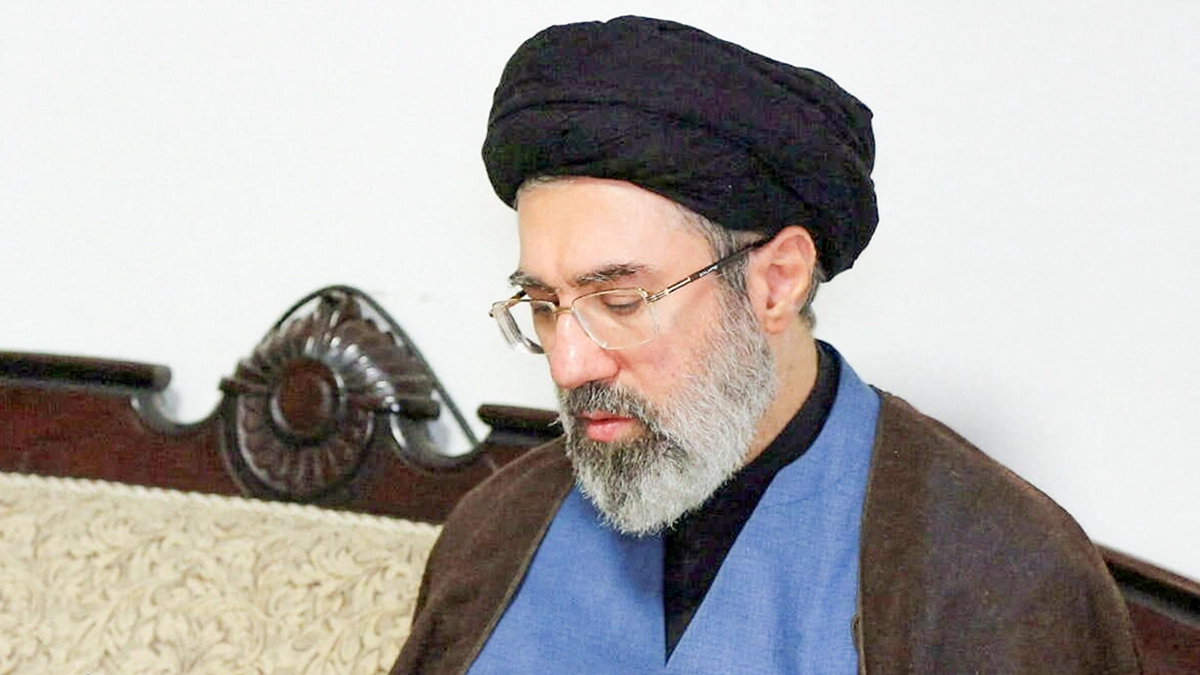
Mojtaba Khamenei, the second son of Iran’s Supreme Leader, Ayatollah Ali Khamenei, visits the Hezbollah office in Tehran, Iran, on 1 October 2024 – Office of the Iranian Supreme Leader/WANA (West Asia News Agency)/Via Reuters
The exemption from sanctions on Russian oil: when consistency bends to the energy bill
Facts
The US Treasury Secretary, Scott Bessent, announced on Wednesday 12 March the granting of a temporary 30-day exemption from the sanctions regime on Russian oil, allowing importing countries to purchase shipments of Russian crude oil and petroleum products currently on the high seas. The measure, which is technical in nature but carries enormous symbolic weight, remains in force until 11 April 2026, and explicitly aims to “promote stability in global energy markets” in the face of the shock caused by the de facto closure of the Strait of Hormuz. Asian stock markets closed lower on Friday after it emerged that Brent crude, the global benchmark for oil, remains above $100 per barrel despite the exemption and the historic release of 400 million barrels by the IEA and its member countries.
Implications
This decision is politically and strategically devastating, though economically understandable in the short term. It confirms a pattern already established by the Biden administration — which partially lifted sanctions on Venezuela and Iran in 2022 to curb rising oil prices following Russia’s invasion of Ukraine — and which the Trump administration is now replicating with regard to Moscow itself, which is a belligerent party in a war that Washington’s allies continue to suffer. Sending a signal of flexibility on sanctions at a time when the West is militarily engaged in the Persian Gulf amounts to validating Russia’s strategy of using oil as a geopolitical weapon. Vladimir Putin will view this exemption with immense satisfaction: his crude is flowing back into the global market, his revenues are recovering, and the price he pays—without any concessions in return—is practically zero. The most serious issue is that, as initial market data suggests, the measure has failed to visibly curb the rise in the price per barrel, leaving the Trump administration in the worst of situations: the political cost without the immediate economic benefit.
Outlook and scenarios
The exemption expires on 11 April. If by then the conflict with Iran has not found a negotiated solution and the Strait of Hormuz remains de facto blocked, the pressure on energy markets will not have eased and the Trump administration will face the dilemma of renewing the exemption — further undermining the sanctions regime — or letting it expire and accepting a fresh spike in oil prices. Neither option is favourable for Washington. Russia’s energy leverage will have once again demonstrated its effectiveness in dividing the West in times of crisis. The underlying issue is that the strategic design of the operation against Iran did not sufficiently account for the impact on energy markets, and that omission is now being paid for with decisions that contradict the very principles of the sanctions regime that the democratic world has painstakingly built since 2022.

A view showing oil pump derricks on the outskirts of Almetyevsk, in the Republic of Tatarstan, Russia, on 14 July 2025 – PHOTO/REUTERS
Canada bets on the Arctic: $25.7 billion – too little, too late?
Facts
Canadian Prime Minister Mark Carney announced in Oslo, during a trilateral meeting with German Foreign Minister Friedrich Merz and his Norwegian counterpart, an additional investment of $25.7 billion in defence and infrastructure in the Arctic. “We are taking full responsibility for defending our sovereignty,” Carney declared, in a message aimed squarely at both Russian threats in the region and President Trump’s expansionist rhetoric regarding Greenland and the Canadian Arctic. The meeting in Oslo between the leaders of Canada, Germany and Norway is in itself a major geopolitical message, given the growing strategic importance of the Arctic region and the three countries’ ties to the Atlantic Alliance.
Implications
Carney’s initiative comes against a backdrop of an urgent rediscovery of the Arctic dimension by Western allies, driven both by Russian aggression since the invasion of Ukraine in 2022 and by President Trump’s statements regarding the “acquisition” of Greenland and control of Arctic routes. The Arctic is ceasing to be a geostrategic periphery and becoming a theatre of first-rate competition: accelerated ice melt is opening up new sea routes, making reserves of hydrocarbons and strategic minerals of enormous value accessible, and turning the coastal countries —Russia, Canada, the United States, Norway, Denmark/Greenland and Finland— into front-line players in the global competition. That Canada and Germany are meeting in Oslo with Norway to coordinate a joint Arctic response is, in itself, a positive step in the right direction towards rearmament and the reaffirmation of allied sovereignty.
Outlook and scenarios
The legitimate question is whether 25.7 billion Canadian dollars, spread over a multi-year budget period, is sufficient to remedy decades of systematic disinvestment in Ottawa’s Arctic capabilities. For years, Canada has postponed decisions on the procurement of submarines capable of operating under polar ice, frigates with Arctic capabilities, forward logistics bases in the north of the country, and satellite surveillance assets. The Canadian Arctic is an area of nominal sovereignty that the Canadian state has failed to occupy militarily in any meaningful way for decades. Carney’s initiative, moreover, comes at a time of dual pressure: Trump’s rhetoric regarding the ‘acquisition’ of Canada has forced Ottawa to demonstrate defensive credibility to Washington, and the war in Iran has reminded all allies that security gaps are paid for with casualties. The decision is welcome, but history will judge whether it came before or after the damage became irreversible.

Canadian Prime Minister Mark Carney attends the 56th annual meeting of the World Economic Forum (WEF) in Davos, Switzerland, on 22 January 2026 – REUTERS/DENIS BALIBOUSE
Al-Quds Day: a waning show of force and the London ban
Facts
13 March 2026 coincides with Al-Quds Day, the annual demonstration promoted by Tehran’s jihadist oligarchy since 1979 to mobilise Muslims worldwide in support of the Palestinian cause and against Israel. This year, however, the event is particularly revealing of the internal fissures within the Iranian regime: the new Supreme Leader, Mojtaba Khamenei, is forced to go into hiding for security reasons and cannot preside over the proceedings. In the United Kingdom, the Home Secretary, Shabana Mahmood, banned the Al-Quds march in London — originally scheduled for 15 March — at the request of the Commissioner of the Metropolitan Police, citing the risk of “serious public disorder”. The march, which has been held in London for over forty years, was banned under a restriction in force from 11 March to 11 April. In Iran itself, the demonstrations were noticeably smaller compared to previous years.
Implications
The contrast between Tehran’s propaganda rhetoric—which presented Al-Quds Day as “the largest annual mobilisation in support of the Palestinian cause”—and the reality of scaled-back events, held without the visible presence of its new supreme leader, in a country living under active aerial warfare and a deep internal rift, is politically devastating for the regime. Wikipedia’s own real-time data on the 2025–2026 internal protests in Iran documents a crackdown of unprecedented violence—with between 7,000 and 32,000 confirmed deaths according to various sources, with a figure of 12,000 deaths widely cited—which has generated a mobilised Iranian diaspora across the globe precisely against the regime, not in its favour. The fact that Mahmood’s Labour government has been forced to ban an Al-Quds march in London—denounced by MPs across the political spectrum as a ‘hate march’ by supporters of a dictatorship ‘that has massacred 36,000 of its own citizens’, according to Lord Austin—is an indicator of how much the political climate in Western Europe has changed.
Outlook and scenarios
The gradual loss of significance of Al-Quds Day as an instrument of Iranian soft power — at a time when Tehran is literally at war and its power-legitimising structure has fragmented — is a positive sign, but it should not lead to an underestimation of the capacity of jihadist radicalisation networks to regroup in the long term. The Iranian diaspora movement, with demonstrations of 350,000 people in Los Angeles and Toronto and 250,000 in Munich on 14 February, constitutes the genuine antithesis of the regime’s narrative and deserves the backing of Western democratic governments. It is time for European democracies, including Spain, to recognise that supporting the Iranian people in their legitimate aspiration for freedom is not interference: it is consistency.

An image of Iran’s new Supreme Leader, Mojtaba Khamenei, is displayed on a screen in Tehran, amid the conflict between the United States and Israel and Iran, in Tehran, Iran, on 9 March 2026 – Majid Asgaripour/WANA (West Asia News Agency)/Via Reuters
International media coverage over the last twenty-four hours reflects profound differences in approach and emphasis depending on the editorial lines and the geopolitical proximity of each publication to the conflict.
Anglo-Saxon press
The Washington Post and the Wall Street Journal lead their digital editions with the crash of the KC-135 in Iraq as their top story, highlighting the ambiguity between CENTCOM’s official account and the Islamic Resistance in Iraq’s claim of responsibility. The WSJ emphasises the impact of oil prices on Asian financial markets, with Brent crude nearing $103 at the close of trading in Tokyo. The New York Times devoted its front-page analysis to Mojtaba Khamenei’s first statement, questioning his actual state of health and the extent of his control over the Iranian military apparatus. The Times and The Telegraph in London prominently highlight the ban on Al-Quds Day in the British capital, with separate editorials supporting Mahmood’s decision. The Guardian adopts a more critical tone towards the military operation as a whole and gives space to voices questioning the exit strategy. The Financial Times focuses its front-page analysis on the contradiction between the exemption from sanctions on Russian oil and the stated objectives of the G7 countries’ energy and sanctions policy.
French and German press
Le Monde opens with the death of the Alpine hunter Arnaud Frion as the edition’s lead story, featuring a report from Erbil and an interview with the Quai d’Orsay spokesperson on France’s position. Le Figaro published a strongly worded editorial against the Ashab Ahl al-Kahf group and called for a forceful response from the coalition. Libération, predictably, focused its criticism on Trump’s military strategy and the lack of an exit plan. The Frankfurter Allgemeine Zeitung (FAZ) and Die Welt highlighted the Oslo meeting between Carney and Merz as a positive sign of Atlantic defence coordination, although both publications questioned the adequacy of the funds committed by Ottawa. Die Zeit offered an in-depth analysis of the risk of an energy crisis in Germany if the Strait of Hormuz remains blocked for more than four weeks.
Arab and Israeli media
The Jerusalem Post and Yedioth Ahronoth reported in detail on the more than 200 Iranian targets struck by the Israeli Air Force (IAF) in the last twenty-four hours, including ballistic missile launchers and air defence systems. Israel Hayom highlighted Netanyahu’s statement—his first press conference since the start of the war—regarding the aim of helping the Iranian people topple the regime. Haaretz maintained its critical stance towards the Netanyahu government, pointing out the collateral damage and questioning the effectiveness of the air campaign in bringing about regime change. Al-Jazeera, as was to be expected, presented the downing of the KC-135 as a “triumph of the resistance” and devoted considerable space to Mojtaba Khamenei’s statement, presenting it as proof of “Iranian resistance”. Al-Arabiya and Asharq Al-Awsat, which are closer to the perspective of the Gulf states, highlighted the ongoing exchanges of drones and missiles over Saudi Arabia, the United Arab Emirates and Oman, with particular attention to the explosions heard in Dubai’s financial district on Friday morning.
Russian, Chinese and other media
Russia Today (RT) and TASS made the most of the exemption from sanctions on Russian oil as an argument that “the Western sanctions regime is a selective political tool and not a policy of principles”. Hong Kong’s South China Morning Post and China Daily highlighted that Iranian oil continues to flow into China at a rate of 1.5 million barrels a day despite the conflict, in what amounts to an implicit endorsement of Beijing’s decision to remain on the sidelines of the conflict without relinquishing its energy advantages. Ukrainian Pravda and the Kyiv Post expressed concern over the impact of the exemption from sanctions on Russian oil regarding economic pressure on Moscow, fearing that the Iranian conflict could become an escape route for the Kremlin. Reuters, AFP and AP maintained factual coverage of the day with hourly updates on the various fronts of the conflict.
13 March 2026 ends with a painful certainty: Operation Epic Fury, fourteen days after its launch, has entered a phase of geographical and systemic expansion that its architects did not anticipate, or miscalculated, in their original planning.
The crash of the KC-135 in Iraq, the death of the Alpine hunter Arnaud Frion in Erbil, the explosions in Dubai, the attacks on Saudi Arabia and Oman, the de facto blockade of the Strait of Hormuz and the first belligerent statement by Mojtaba Khamenei paint a picture of conflict that is a far cry from the image of a swift and clean victory that President Trump has sought to project. To declare “we won” when allies are still suffering casualties and the price of oil exceeds $100 a barrel is, at the very least, a rhetorical blunder with real consequences for the markets and the cohesion of the coalition.
The most revealing episode of the day, in terms of Western strategic coherence, is not the military one but the economic one: the exemption from sanctions on Russian oil granted by Scott Bessent is a partial capitulation to energy pressure that sets a dangerous precedent. Biden did it with Venezuela and with Iran itself in 2022, and now Trump is repeating it with Russia in 2026. The message to hostile actors is invariably the same: if you apply enough pressure on oil prices, the West will blink. The sanctions architecture painstakingly built since the Russian invasion of Ukraine is accumulating cracks that Moscow and Beijing observe with a satisfaction they need not conceal.
The death of the French soldier in Erbil is, at the same time, a criminal act by the terrorist tentacles of Tehran’s jihadist oligarchy and a demonstration that Macron’s ‘strictly defensive posture’ strategy does not protect his soldiers from attacks by Iranian proxies. The pro-Iranian terrorist militias in Iraq make no distinction between combatants and non-combatants: they attack anyone who, in their eyes, belongs to the opposing camp. The Charles de Gaulle has arrived in the CENTCOM area of operations; therefore, France is a target. That is the logic of jihadist terrorism, and pretending to rise above it with diplomatic statements is a self-deception that costs lives.
Mojtaba Khamenei’s first statement — read out by a third party, without video or audio, with a still photograph on screen whilst rumours about his health multiply — is the perfect image of the true state of Tehran’s jihadist oligarchy: a power that speaks through intermediaries, that hides underground for fear of bombing, that threatens with “new fronts” because the current ones are not favourable to it, and which uses the Strait of Hormuz as a lever for global energy blackmail because it is the only thing left with real coercive power. The subdued Quds Day, with the new leader out of sight and the streets of Tehran far removed from the fervour of previous years, confirms what images of the internal protests were already showing: that the Iranian population does not share the bellicose enthusiasm the regime needs to project cohesion.
Canada has today taken a step in the right direction in Oslo by committing 25.7 billion to the Arctic. This is welcome, though it comes late and one wonders whether it was necessary for Trump to threaten to ‘acquire’ Canada for Ottawa to rediscover its Arctic sovereignty. The Carney-Merz-Norwegian meeting is also a sign that the Northern European Atlantic axis is realising that the Arctic cannot remain a space of nominal sovereignty. History — and the facts of the present — do not forgive power vacuums.
Meanwhile, Spain looks on from a position of unacceptable ambiguity. The Sánchez and Albares government still fails to offer a clear stance of Atlantic solidarity with the allies who are paying in blood to defend an international order that protects us too. ‘Double standards’—verbal criticism of Iran combined with resistance to any operational commitment—is ostrich politics disguised as pragmatism. When a French Alpine hunter dies in Erbil defending Europe from jihadist barbarism, Spain cannot continue to look the other way. The values of Atlanticism that we defend are not abstract: they are embodied in the soldiers of our allies who fall under the drones of the proxies of the Tehran oligarchy.