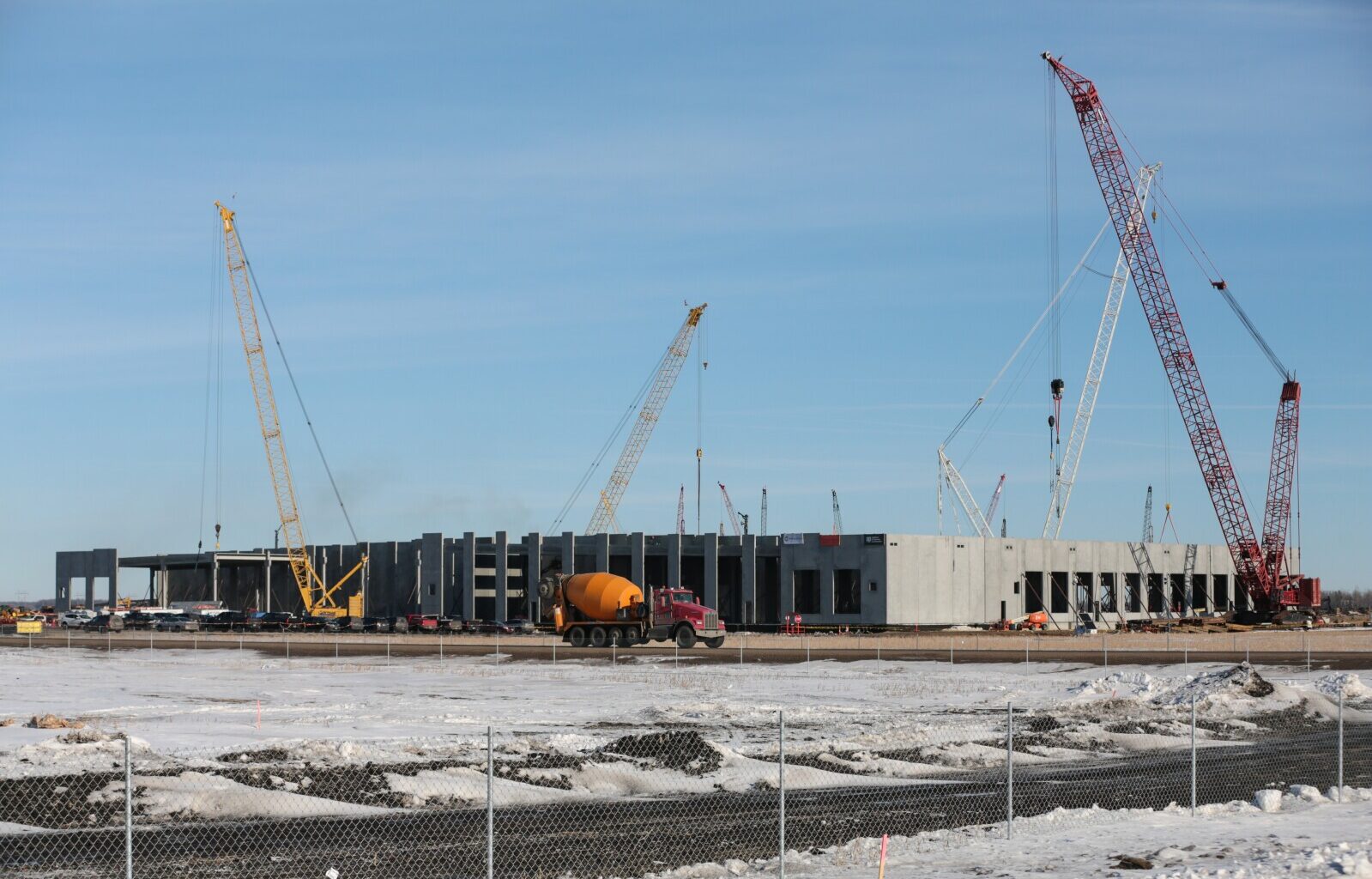
BROOKINGS, S.D. — Hyperscale data centers moving to upper Midwest communities is a growing concern for many rural residents.
Across the region, such data centers already are in operation, are under construction or have been in consideration. Both the South Dakota Legislature and the Minnesota Legislature have had bills regarding the construction and operation of data centers introduced. While supporters of such projects point toward potentials for tax revenue and jobs, not everyone is on board with their construction. Because data centers use huge amounts of energy and water, their placement in and around rural communities — including the outskirts of larger communities in the region — has raised concerns for some rural residents who often already struggle with maintaining resources.
Among the projects in South Dakota, Gemini Data Center LLC is looking to build a facility using over 150 acres of land rezoned by Sioux Falls but near the town of Brandon.
The bill was in response to concerns from the people of Brandon, South Dakota, who have had no say in the location of the Gemini Data Center, which will be on land very near Brandon that was rezoned by Sioux Falls for the use.
Sioux Valley Energy said the Gemini Data Center isn’t in their coverage area; however, they have had past inquiries from companies looking to build a facility like this.
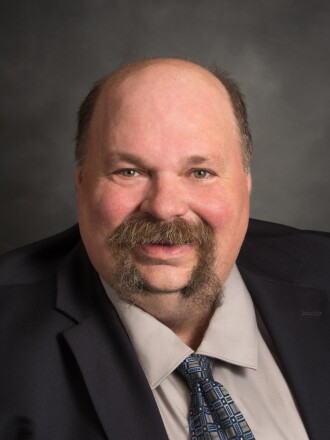
“We’ve gotten multiple inquiries and I know the rest of the cooperatives within the Basin Electric footprint have also had more inquiries,” said Ted Smith, vice president of engineering and operations at Sioux Valley Energy. “They’re out there. They’re looking for spots.”
Ariana Schumacher / Agweek
Smith said hyperscale data centers are looking to build in northern climates.
“They tell us they like this northern climate because a lot of their costs goes into cooling, so, they don’t have to cool 12 months of the year like they may have to if they’re in Texas or Florida or Arizona or something like that,” Smith said. “That’s why they’re looking at this area.”
Data centers would use about 6 to 10 times as much electricity as the city of Brookings, South Dakota, uses, Smith said. As of 2025, the population of Brookings is 25,031 residents. The city also is home to South Dakota State University, which enrolls more than 12,000 students, along with several large manufacturing facilities, including 3M and Daktronics.
“So, it’s a significant amount of electricity that they’re going to use,” he said. “They’re going to require some dedicated facilities that, you know, they’re going to have to pay for.”
As data centers make their way into states like South Dakota, new infrastructure will be needed.
“Not a lot of on-site infrastructure, you know, maybe a substation, but that’s about the extent of what’s needed on-site. Then it will all be on their property from that point,” Smith said. “But, there will be transmission lines and generation needed. The generation, you know, might be regional, it might not be right next door to it, it might be where the fuel is, which might be coal plants, might be natural gas plants, you know, it’s kind of hard to build a hydroelectric dam nowadays, that wouldn’t be the case, but it’s going to be needed to be built somewhere.”
If electric companies don’t handle things correctly, Smith said having these data centers could negatively affect the costs for other electric users. But, Sioux Valley Energy has put in precautions to make sure this doesn’t happen for their customers if a data center were to move into their area.
“We’ve created special rates. We’ve created special processes within the cooperative to ensure that they’re paying their fair share for generation and transmission lines,” Smith said. “We are not going to connect them on the backs of our other members.”
Smith said it’s important to make sure that data centers are charged correctly for their energy usage.
“That’s why we are being very diligent to try and charge them the actual prices that they’re going to be needing for the electricity they use,” Smith said.
Around a year ago, Basin Electric, which Sioux Valley Electric is under, put a policy in place to ensure prices are not negatively impacted for other users when data centers are built.
“We’re out in front of it. It may not be what the data centers like necessarily, but we are definitely out in front and charging them what they’re costing the cooperative to provide electricity,” Smith said.
As a cooperative, Smith said they are committed to supporting responsible investment that benefits both their communities and members.
“Now, not everybody is going to agree what that is. But, if there is investment coming and economic development coming, we want to make sure that it doesn’t electrically negatively affect our other members,” he said.