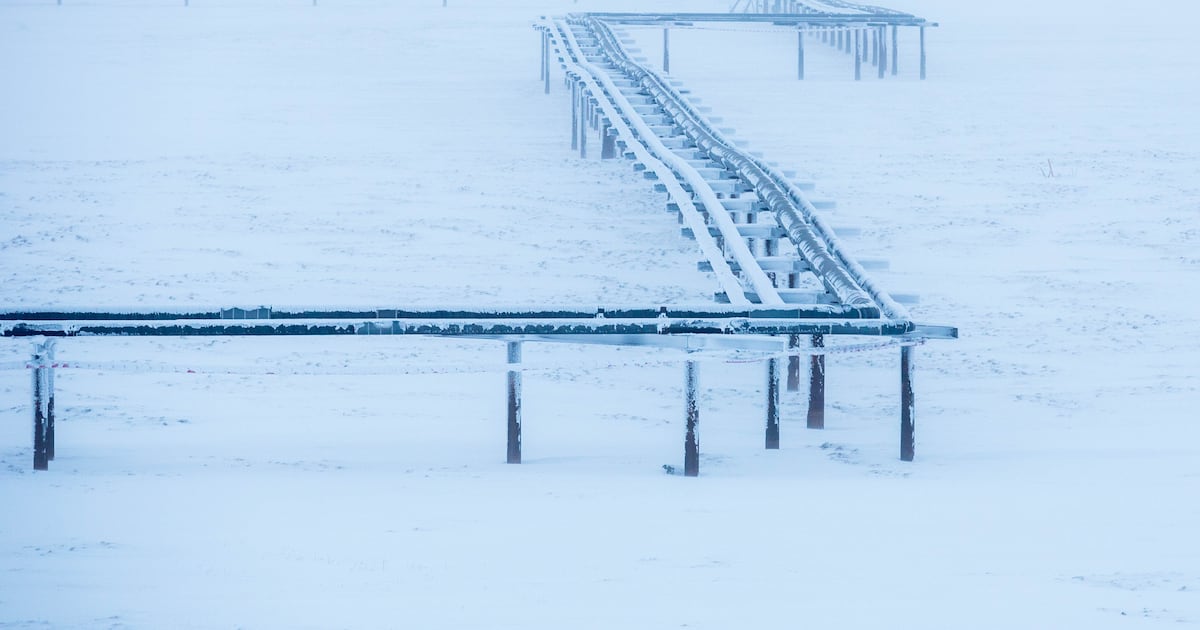
 Pipes leaving from ConocoPhillips’ CD5 drill site on Feb. 9, 2016. CD5 is the first drill site on Native-owned land within the boundaries of the National Petroleum Reserve-Alaska. (Loren Holmes / ADN)
A lease sale in the National Petroleum Reserve-Alaska on Wednesday generated $163 million in high bids, marking a record auction for a hot oil prospect that could significantly boost oil and gas activity in Alaska’s North Slope.
Kevin Pendergast, state director for the Bureau of Land Management in Alaska, called the sale “historic.”
“This is the strongest sale we have ever had in the National Petroleum Reserve-Alaska by nearly every measure,” he said. “It makes clear that for the NPR-A, despite all the successes to date, the best days are still ahead.”
Pendergast said the sale, the first since 2019, generated 430 bids from oil and gas companies. The bids, seeking 10-year leases that could lead to oil and gas activity, covered 1.3 million acres.
Several oil companies submitted bids, including major players such as ExxonMobil, ConocoPhillips, Oil Search Alaska, Repsol and Shell Frontier Oil and Gas, a subsidiary of Shell.
The 23-million-acre reserve in northern Alaska is home to ConocoPhillips’ giant Willow discovery and other prospects. Considered a hot prospect for oil discoveries, it has drawn increasing industry interest over the last decade.
But leasing there has so far has largely been limited to the reserve’s eastern portion, with oil companies already holding 1.6 million acres before Wednesday’s sale.
Bidding companies on Wednesday significantly expanded the industry’s position in the reserve, often bidding well over $2 million for single tracts that sometimes drew up to six bids.
The bidding involved sensitive and controversial areas such as the Teshekpuk Lake region in the reserve.
The lake is the largest lake on the North Slope and home to populations of caribou and migrating birds that are important to Alaska Native subsistence hunters.
The Biden administration, though it approved the Willow prospect for development, increased environmental protections in the reserve. It did not hold a lease sale in the region.
But the administration of President Donald Trump has moved aggressively to resume regular oil and gas lease sales that before 2019 were held regularly for many years.
The Bureau of Land Management under Trump has opened 82% of the reserve to potential leasing, including areas near Teshekpuk Lake that had never been offered.
Wednesday’s sale put 5.5 million acres on the table for potential leasing.
Conservation and some Alaska Native groups have filed lawsuits in federal court to challenge the lease sale and the agency’s management of the reserve.
In one case, U.S. District Court Judge Sharon Gleason ruled Monday in favor of a Biden-era land agreement involving the Nuiqsut Trilateral Inc., consisting of entities from the city and Native village of Nuiqsut located in the reserve. The land involves acreage around Teshekpuk Lake, raising questions about whether a relatively small number of the leases will be awarded.
A separate lawsuit involved an Alaska Native group called Grandmothers Growing Goodness had joined the Wilderness Society in one of those lawsuits.
Rosemary Ahtuangaruak, head of Grandmothers Growing Goodness, said in a statement Wednesday that the sale included areas that are vital to caribou, including their calving grounds.
“Industrial infrastructure and drilling in these areas threaten to trap caribou in between roads, pipelines, and rigs — putting herds at risk and deflecting them from our hunting grounds,“ she said. ”For us, caribou aren’t expendable; they are central to our subsistence, culture, and food security.”
“Our elected officials should have never included such fragile and irreplaceable lands in this lease sale,” she said.
This is a developing story. Check back for updates.