Despite all the uncertainty, threats and hostilities stirred up by US President Donald Trump, also against his own allies, it’s been business as usual at NATO’s annual winter exercises in Norway and Finland. NATO’s boss was full of praise and good will as the “Cold Response” exercises to protect the Arctic were winding down this week.
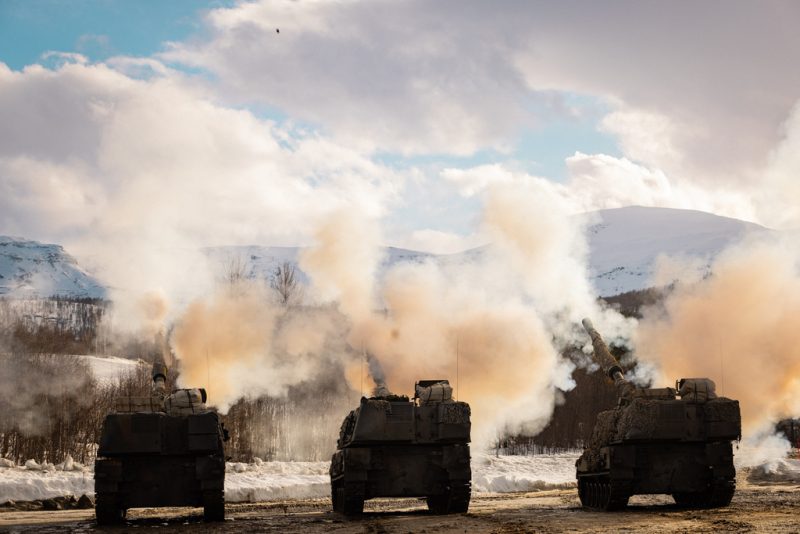 Plenty of fire power was on display when NATO Secretary General Mark Rutte visited troops from 14 nations at this year’s Cold Response winter exercises in Northern Norway. PHOTO: Magnus J. Horne / Forsvaret
“Norway plays a key role in NATO’s security in the north,” said the alliance’s secretary general, Mark Rutte, while visiting troops at Setermoen in the northern Norwegian county of Troms. After a breakfast meeting at the prime minister’s residence in Oslo on Wednesday morning, he flew north together with Norway’s foreign- and defense ministers.
Rutte has been criticized for flattering Trump and appealing to the US president’s ego, in an attempt to keep the NATO alliance together. No one complained about how he hailed both Norway and the NATO troops at Cold Response. While Trump has resorted to threatening NATO allies including Norway, Rutte strongly supported the 32,500 soldiers from 14 NATO countries taking part in the exercises co-led by Norway and Trump’s own US.
And even though Trump often complains that US allies like Norway aren’t spending enough on defense, Rutte views it differently. He claimed Norway is “abolutely” investing in defense personnel and military equipment, with a “clear plan” for more. He noted how Norway is among the biggest supporters of Ukraine, four years after it was invaded but not conquered by Russia. Norway is “also in the front seat,” he said, “when it comes to protecting the Arctic and NATO’s eastern flank.”
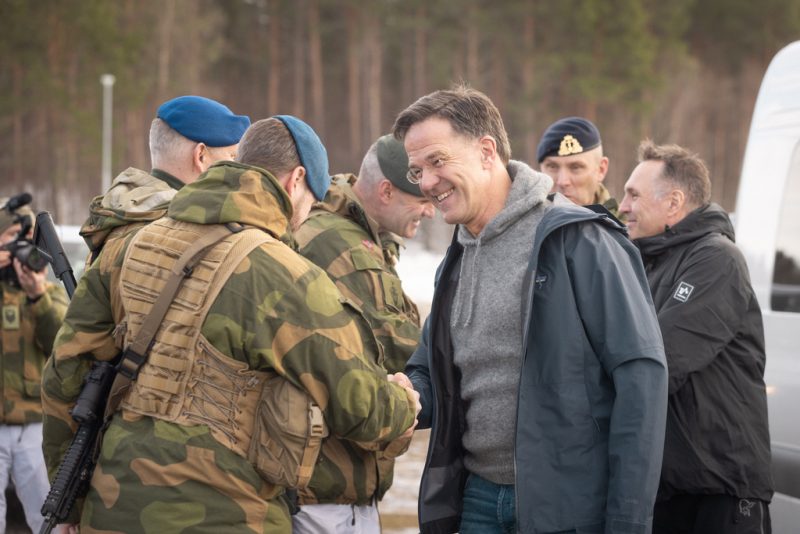 NATO Secretary General Mark Rutte greeting soldiers at this year’s Cold Response exercises at Setermoen in Northern Norway. At far right, Norwegian Defense Minister Tore O Sandvik. PHOTO: Magnus J. Horne / Forsvaret
Most significant is how Norwegian and American officers and soldiers have worked together at the exercises. At a meeting earlier this winter, Norwegian Defense Minister Tore O Sandvik talked about how Norway has long been protecting the Arctic, and told foreign correspondents in Oslo that it was “business as usual” among military brass from the US and their NATO allies. Asked how US officers were themselves responding to Trump’s threats and criticism, not least in regards to Greenland and the Arctic, Sandvik smiled and responded only that “they’re very professional.”
That’s how Rutte seemed to view things, too, as NATO’s Cold Response exercises came to a close. He called it “an honour” to be at the Setermoen military base and observe the troops in action. The exercises took place in both Northern Norway and Northern Finland, on land and at sea, and emphasized a “total defense” that includes civilian authorities like police and medical personnel in the event of an emergency.
The US- and Norwegian-led soldiers “have developed unique forces that not only can operate under cold conditions,” Rutte said. They also “make sure NATO gets the correct training arenas for Arctic operations.”
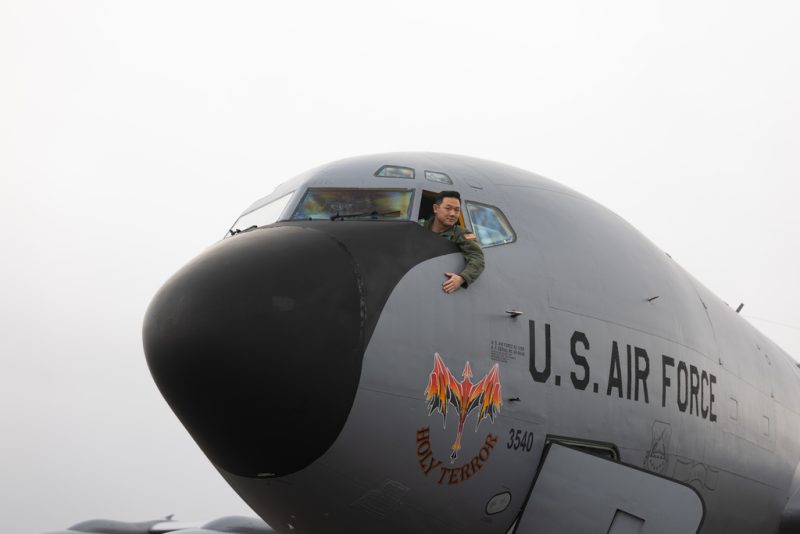 A US Air Force KC-135 tanker plane at the Sola airfield in Norway prepares to take part in the NATO exercises, with Detachment Commander Captain Jeff Chae in the cockpit. PHOTO: Onar Digernes Aase / Forsvaret
Norway has earlier led the Cold Response exercises alone, but teamed up with the US this year. The US was second only to Norway in providing troops for the exercises, around 4,000 American soldiers who in turn faced scenarios that according to defense officials were “more complex, demanding and realistic” than they’d been for a long time. New NATO member Finland was also playing a major role, in exercises that involved “an enemy attacking from the east.”
Jonny Karlsen, a Norwegian officer and spokesman for the defense operative headquarters in Bodø, told newspaper Klassekampen before the exercises began that he couldn’t say why there was co-leadership this year. He added, though, that the US participation was “considerable” even after Trump launched a new war against Iran just before the exercises began. The exercises also involved use of drones in an Arctic climate, drawing on experience from Ukraine.
It was made clear, though, that despite lots of top officers from many NATO countries at headquarters in Bodø, Norwegian Vice-Admiral Rune Andersen was in command. US officers later told Klassekampen that it was important for the Norwegians to understand that the US still believes security in the Arctic and Norway itself is in the US’ own interests. “We’re here to be prepared for crises in the Arctic,” Lt Stephen Sewell of the US Marine Corps, told the newspaper. “We’re taking part along with colleagues in NATO. For the USA, a free Arctic is extremely important.”
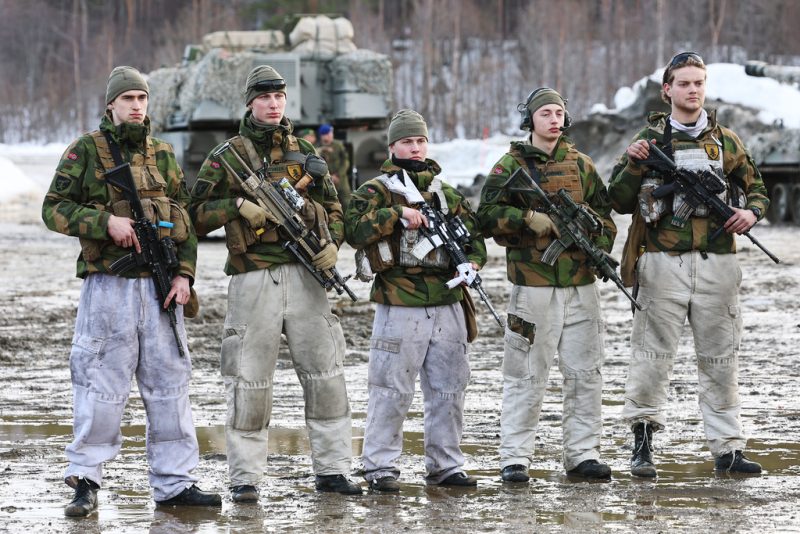 A sudden rise in temperatures after weeks of bitter cold made for a wet and muddy experience for these Norwegian soldiers at Cold Response. PHOTO: Torbjørn Kjosvold / Forsvaret
Operative leader Andersen said the “signals we get from the US is that cooperation in the north will continue.” Norway has long been NATO’s “eyes and ears” in the Arctic and that will continue, too. “No one wants to be surprised by Russian warships in the area,” Andersen added. Norway’s defense chief Eirik Kristoffersen has long maintained that Norway is strategically important for the US and that the US remains Norway’s most important ally. At the same time, he says, the US needs friends in the NATO alliance.
Lots of the US Marines taking part in Cold Response had to train on ice, on steep mountainsides and in cold wet weather in order to learn how to survive in an Arctic climate. That’s long been part of the annual exercises, where soldiers also practice how to drive on very slippery roads.
Both the Norwegian defense minister Sandvik and Foreign Minister Espen Barth Eide were glad so many countries took part in Cold Response this year, especially given all the tensions in the world at present. “It allows NATO to really demonstrate its Arctic capacities and abilities,” Eide said while visiting the exercises with Rutte.
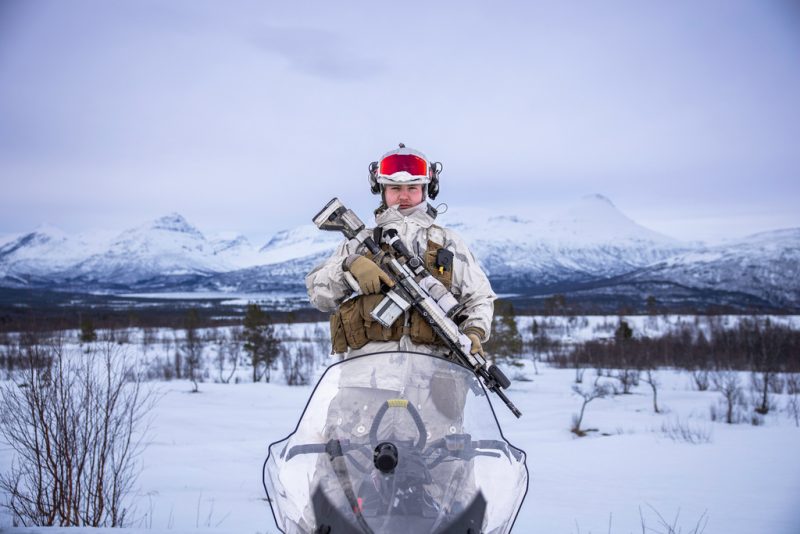 NATO soldiers were involved in winter military exercises on land, at sea and in the air, training to defend both Northern Norway and Northern Finland from attack. PHOTO: Sigrid Tvedt / Forsvaret
Karsten Friis, a foreign policy expert and researcher at the Norwegian peace institute NUPI in Oslo, wrote in newspaper Dagsavisen this week that when the US’ political leaders “are full of testoserone” and started bombing Iran without consulting their allies or having a clear plan, it’s more important than ever that NATO itself keeps functioning and remains professional.
“Almost everything is as before, despite all the chaos in the White House,” Friis wrote. He noted that the US Congress is asserting itself again and limiting what the Trump Administration can do, regarding any reduction of forces in Europe. There’s still grave concern over how Trump often seems to help Russian President Vladimir Putin, even easing sanctions against Russian oil after his bombing sent oil prices skyrocketing.
“Norway and Europe have great relations with the US at the military and defense level,” Friis added, “but at the political level there’s now constant chaos and deep differences in values.” He accused the Trump Administration of trying to split Europe, build up ultra-right-wing policy and even normalize relations with Russia.
“If that’s the way the USA will go, harmony within NATO could hardly continue,” Friis wrote. “Most Europeans probably think it’s just a matter of holding out, first until the mid-term elections this fall, and then another two years, in the hopes the next president will have a more common global outlook with Europe. But that’s far from certain.”
 German soldiers lined up in their winter camouflage gear for a demonstration of their artillery batallion at Cold Response 2026. PHOTO: Magnus J. Horne / Forsvaret
Most NATO countries have already claimed that Trump’s war on Iran and its resulting closure of the Straits of Hormuz have created new problems but “it’s not NATO’s war,” as Germany’s foreign minister put it. NATO is an alliance to defend its own members’ territory, with no mandate to send NATO forces to Hormuz.
Norway is among the many NATO allies agreeing with that assessment despite earlier involvement in both Libya and Afghanistan. Norway’s large shipping fleet includes oil tankers caught inside the Persian Gulf, but Prime Minister Jonas Gahr Støre is not sending forces to the area.
“I think it’s very important for the Americans (to understand) that if they want support from other countries, they have to consult more with them and involve them more,” Støre told newspaper Aftenposten this week. Trump did neither before bombing Iran along with Israel, and now is seeing the consequences. In the meantime, Norway will continue to concentrate on efforts to keep the Arctic safe, as it has for decades.
NewsinEnglish.no/Nina Berglund