
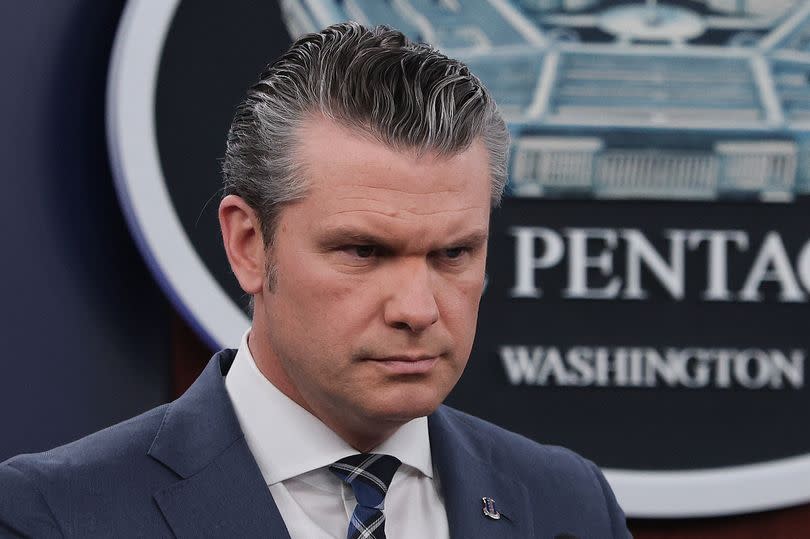
The New York Times sued the Pentagon and Hegseth in December, claiming the policy violates the journalists’ constitutional rights to free speech and due process -Credit:Getty Images
(Getty Images)
A federal judge on Friday ruled that Defense Secretary Pete Hegseth’s policy barring journalists from the Pentagon who did not agree to report only the news he approved of violates the U.S. Constitution, arguing it was designed to weed them out from others “willing to serve” the Trump administration.
“Those who drafted the First Amendment believed that the nation’s security requires a free press and an informed people and that such security is endangered by governmental suppression of political speech. That principle has preserved the nation’s security for almost 250 years. It must not be abandoned now,” wrote U.S. District Judge Paul Friedman, siding with The New York Times, who sued the Pentagon and Hegseth in December.
The decision comes as Hegseth, President Donald Trump and other top administration officials have grown increasingly agitated toward what they perceive as unpatriotic media coverage of the deeply unpopular war in Iran. Though he has yet to offer a clear cause, objective or projected end date for the war, Trump and Hegseth have attempted to bully American news outlets into covering issues only in ways that reflect positively on them.
• DHS walks back new domestic terrorism category found in leaked document draft
• DHS contracting AI companies to surveil Americans, hackers reveal
Media outlets that published unfavorable information about the president were denied office space in the Pentagon last year by Hegseth, who replaced them with outlets that had not requested the space, nearly all of which leaned conservative: Newsmax, the Washington Examiner, The Daily Caller, The Free Press, One America News Network, the New York Post, Breitbart News and HuffPost.
Hegseth later issued orders to members of the press covering the Pentagon, requiring them to receive his personal approval before publishing information obtained while on the beat. Dozens of reporters, some of whom had covered the Pentagon for decades, turned in their press badges rather than agree.
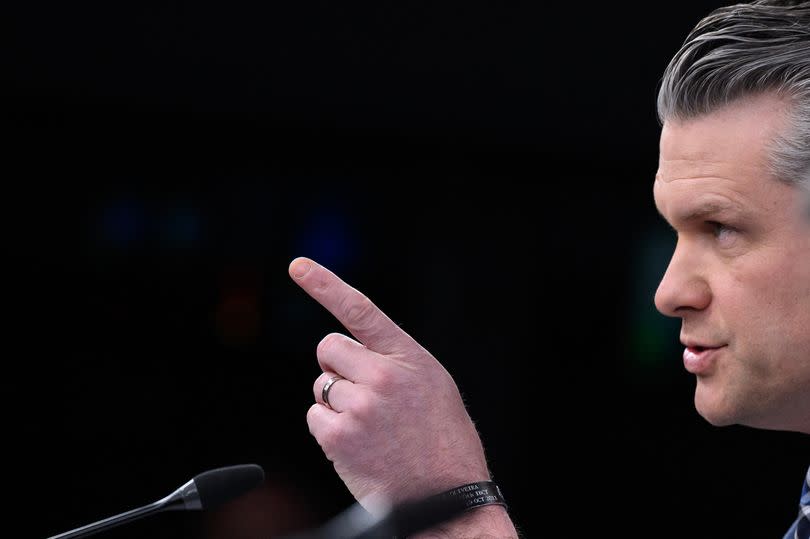
The judge ordered the Pentagon to reinstate the press credentials of seven Times journalists -Credit:AFP via Getty Images
“The new media policy is not about any one person or any one outlet,” the Pentagon told The Times at the time. “It is about preventing leaks that damage operational security and national security. It’s common sense.”
The Times sued the Pentagon and Hegseth in December, claiming the credentialing policy violates the journalists’ constitutional rights to free speech and due process.
Friedman, who was nominated to the bench by Democratic President Bill Clinton, said the policy “fails to provide fair notice of what routine, lawful journalistic practices will result in the denial, suspension, or revocation” of Pentagon press credentials. He ruled that it violates the First and Fifth amendment rights to free speech and due process, The Associated Press reported.
Pentagon spokesperson Sean Parnell posted late Friday on X, “We disagree with the decision and are pursuing an immediate appeal.”
New York Times spokesperson Charlie Stadtlander said the newspaper believes the ruling “enforces the constitutionally protected rights for the free press in this country.”

Times attorneys claim the policy is designed to silence unfavorable press coverage of Trump’s administration -Credit:Getty Images
“Americans deserve visibility into how their government is being run, and the actions the military is taking in their name and with their tax dollars,” Stadtlander said in a statement. “Today’s ruling reaffirms the right of The Times and other independent media to continue to ask questions on the public’s behalf.”
Theodore Boutrous, an attorney who represented The Times at a hearing earlier this month, said in a statement that the court ruling is “a powerful rejection of the Pentagon’s effort to impede freedom of the press and the reporting of vital information to the American people during a time of war.”
Click here to follow the Mirror US on Google News to stay up to date with all the latest news, sports and entertainment stories.
The judge ordered the Pentagon to reinstate the press credentials of seven Times journalists. He also said his decision to vacate the challenged policy terms applies to “all regulated parties.”
Times attorneys claim the policy is designed to silence unfavorable press coverage of Trump’s administration.

The Pentagon had asked the judge to suspend his ruling for a week for an appeal, but he refused -Credit:Anadolu via Getty Images
“The First Amendment flatly prohibits the government from granting itself the unbridled power to restrict speech because the mere existence of such arbitrary authority can lead to self-censorship,” they wrote.
The judge said he recognizes that “national security must be protected, the security of our troops must be protected, and war plans must be protected.”
“But especially in light of the country’s recent incursion into Venezuela and its ongoing war with Iran, it is more important than ever that the public have access to information from a variety of perspectives about what its government is doing — so that the public can support government policies, if it wants to support them; protest, if it wants to protest; and decide based on full, complete, and open information who they are going to vote for in the next election,” Friedman wrote.
Friedman said the “undisputed evidence” shows that the policy is designed to weed out “disfavored journalists” and replace them with those who are “on board and willing to serve” the government, a clear instance of illegal viewpoint discrimination.
The Pentagon had asked the judge to suspend his ruling for a week for an appeal. Friedman refused. He gave the Pentagon a week to file a written report on its compliance with the order.