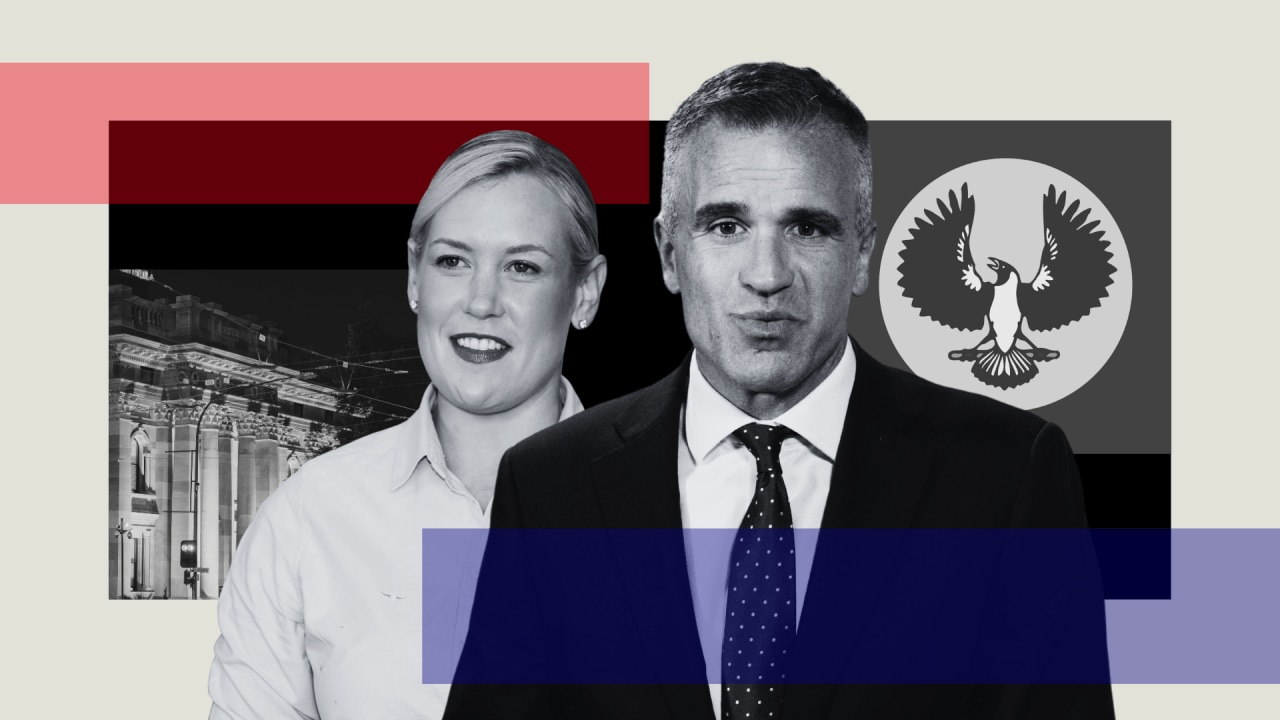
Labor has claimed a decisive victory in South Australia, securing a second term for Premier Peter Malinauskas while capitalising on a fractured opposition.
The result marks the party’s fifth state election win in six contests, extending its dominance to 20 of the past 24 years.
Mr Malinauskas acknowledged the scale of the triumph at Labor headquarters but urged restraint.
“More than anything else, tonight, I’m overwhelmed with a sense of gratitude,” he told supporters on Saturday night.
He framed the result as a mandate to continue delivering for the state rather than a moment of celebration.
“Although this is a historic result … it’s very important that nobody confuses tonight’s result as modulation,” he said.
“Instead, we should see it as only being an invitation to continue to work our guts out for the next four years.”
Labor’s primary vote dipped slightly to around 38 per cent, but strong polling in Adelaide helped the party secure key suburban seats.
With 30 of 47 electorates achieved by midnight, the party strengthened its hold on the lower house, while regional challenges were offset by a splintered conservative vote.
One Nation breaks into SA politics
One Nation made history by claiming its first lower house seat in South Australia, capturing Hammond southeast of Adelaide.
One Nation candidate Robert Roylance gained the lower house seat for Pauline Hanson’s party, a first for the minor party in South Australian history.
Party leader Pauline Hanson celebrated the result as a milestone for her party, describing it as “just the start” of a broader national movement.
“It’s not just a protest vote … there’s a movement, there’s an undercurrent and it’s people saying we’ve had a gutful, we want our country back, we want to have a voice,” Hanson told Sky News.
Former Liberal senator Cory Bernardi secured a seat in the upper house for One Nation, reinforcing the party’s presence in parliament.
Bernardi said voters were seeking representatives willing to challenge the traditional parties. “I think people have voted for One Nation because people have been left behind by uni-party politics,” he told Sky News.
Hanson also sent a pointed warning to Premier Malinauskas.
“I will say to Peter Malinauskas … I’m leaving you some landmines … they’re called One Nation Members of Parliament,” she said.
“So, I suggest don’t step on them, because they will explode.”
She framed the party’s rise as part of a nationwide shift, promising to support candidates in Victoria and beyond.
“Where we are tonight, just to let you know, this is the low tide … I believe that our vote will rise even more.”
Liberals crushed but resilient
The Liberal Party suffered heavy losses, with early counts placing its primary vote at around 19 per cent – down nearly 16 points from the previous election.
Leader Ashton Hurn conceded defeat but maintained a cautiously optimistic tone.
“The pundits said we wouldn’t win a single seat, but we will prove them wrong,” she said.

“There are thousands of supporters who are backing the Liberal Party and as counting continues, our position continues to improve as well.”
Hurn acknowledged lessons for the party.
“It’s a tough night for the Liberals and lessons must be learned but now is not the time for that. There is still hope for the Liberals in South Australia.”
Changing dynamics
The election has produced a more diverse crossbench, with One Nation claiming a significant role alongside independents.
Malinauskas signalled a willingness to work across party lines.
“Cory Bernardi in One Nation also deserve recognition … for getting a very significant result at the ballot box, which does deserve credit,” he said.
“My government stands ready to work with each and every one of you for as long as it is in the interests of South Australians.”
Final tally
Labor is expected to hold around 34 lower house seats, with the Liberals reduced to five or six.
One Nation has one lower house seat and at least two upper house positions. Complex preference flows mean several seats will remain undecided for now, with early voting accounting for more than a third of the electorate.