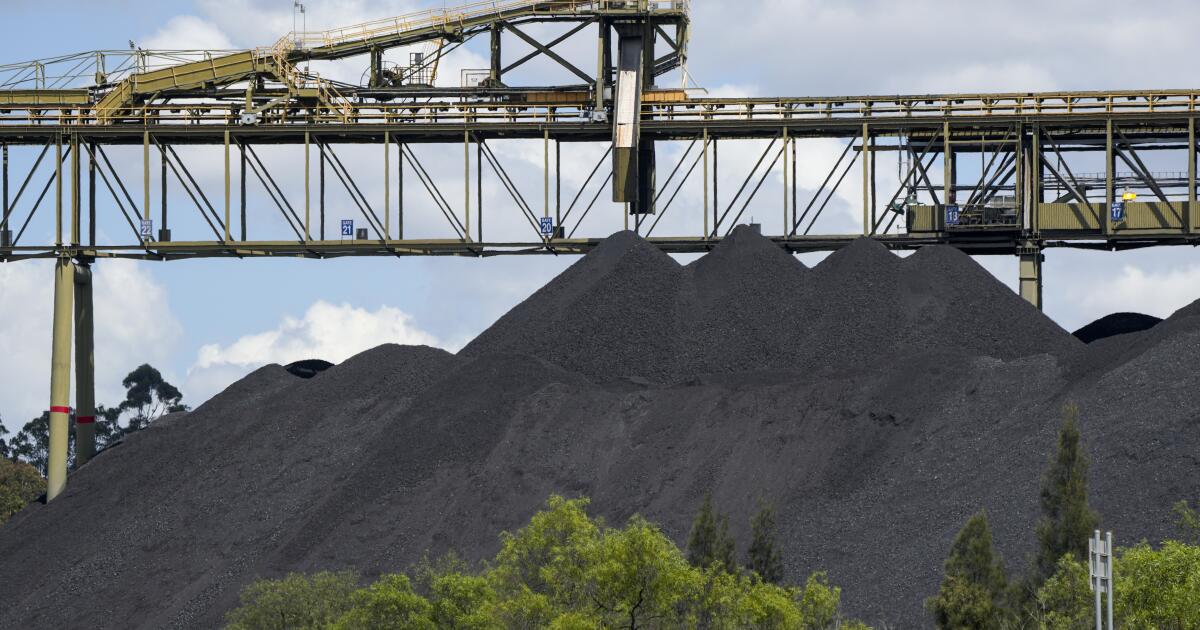
New South Wales, Australia’s second-biggest coal-producing state, will ban new mine applications for the fossil fuel and impose rules to reduce methane emissions from existing projects.
The state government will not approve so-called greenfield coal mines, which are developed from scratch, in a move designed to meet its net zero target, it said in a statement. The ban will not affect existing coal mines or their expansion.
The government will continue to “support coal production where it is already occurring,” and ensure New South Wales “can meet its commitments to key trading partners,” it said in the statement.
Coal is the state’s biggest export, worth around $23.4 billion (U.S.) a year, according to the government. The majority of its shipments are the type of coal burned in power plants and is sent to power stations in Japan, China and Taiwan.
“As the need for thermal coal declines, we are planning for future jobs and energy in coal-dependent regions,” Australian Minister for Planning and Public Spaces Paul Scully said in the statement.
The industry employs about 26,000 people and the government will establish a Future Jobs and Investment Authority to help transition workers into new careers, officials said.
The largest coal miners in New South Wales include Glencore Plc, Yancoal Australia Ltd., and Whitehaven Coal Ltd. The world’s biggest miner, BHP Group, also has some operations there, although much less than in neighboring Queensland, the country’s biggest coal-producing state.
Those miners will also need to “capture, treat or convert” methane gas from their coal mines to stop it from being released into the atmosphere, according to new rules announced separately by the state environmental regulator. Large mines will need to drain the gas from the seams they intend to mine, or flare it. Old mines with leaks will need to be resealed, the NSW Environment Protection Authority said.
“Coal mining is the largest source of fossil methane in New South Wales, producing around 30% of the state’s methane emissions and contributing about 11% of total greenhouse gas emissions,” the environmental regulator said in a statement.
Methane is present in coal seams as a byproduct of the fossil fuel’s geological formation and is a significantly more potent greenhouse gas than carbon dioxide.
Hunt writes for Bloomberg.