
Last week, Amazon India reported a surge in sales of ready-to-eat meals on its e-commerce platforms. A spokesperson attributed it to customers “relying on instant meals to navigate the current fuel uncertainty”.
Workers employed at the tech giant’s warehouse in Manesar, Haryana, however, are struggling to pay for meals. Hundreds of migrants from Punjab, Rajasthan, Uttar Pradesh and Bihar work in the warehouse in the industrial town to the south of Delhi.
With cooking gas cylinders running out, many are unable to cook food in their rented homes and have instead turned to local dhabas. The eateries, facing the same shortage of gas, have raised their prices.
“In the dhabas near the warehouse, rotis that cost Rs 8 earlier are now being sold for Rs 12,” said Pawan Singh Sisodiya, general secretary of Amazon India Workers Union. “If prices keep increasing like this, workers will be forced to go back home.”
Already, there are news reports of an exodus of migrant workers from Gujarat’s textile and ceramics industries. The paucity of gas forced some industrial units, which depend on fuels such as liquefied petroleum gas and liquefied natural gas, to shut down. In other instances, workers decided to leave despite the availability of work because they had to go days without food.
In Delhi and surrounding areas, too, the shortage of LPG cylinders is fast snowballing into a cost-of-living crisis for migrant workers who typically don’t own gas connections and depend on the black market.
Labour supervisor Yash Dixit, who helps small-scale manufacturers in Noida source cheap manpower, said, “Half the workers I know have gone home for this reason. They say that at least they get food to eat when they are at home.”
Even those who have found cooking gas for now are using it sparsely. A 25-year-old worker at the Amazon warehouse in Manesar said he no longer makes rotis and curries every day as he used to before. “Sometimes I eat Maggi [instant noodles] because it is quicker to prepare,” he explained.
Although he had to pay three times the regular price for gas, he was still holding off from planning a return to Uttar Pradesh, his home state. “I have to get by somehow,” he said. “I have given four years to this job so I would rather wait for some more time.”
On March 17, Sisodiya, the union leader, put out a press release urging Amazon to review wages because the gas crisis was “pushing workers toward hunger and severe financial distress”. The company has not acted on the demand so far.
Social scientist Pushpendra Kumar, who has written extensively about the challenges faced by migrants, said the Covid-19 pandemic had clearly shown that migrants in India possessed the least “capacity to cope” with disasters, both manmade and natural.
“Any sincere government would have been thinking about rationing supplies and starting community kitchens at this time,” Kumar said. “But the government can’t be seen.”
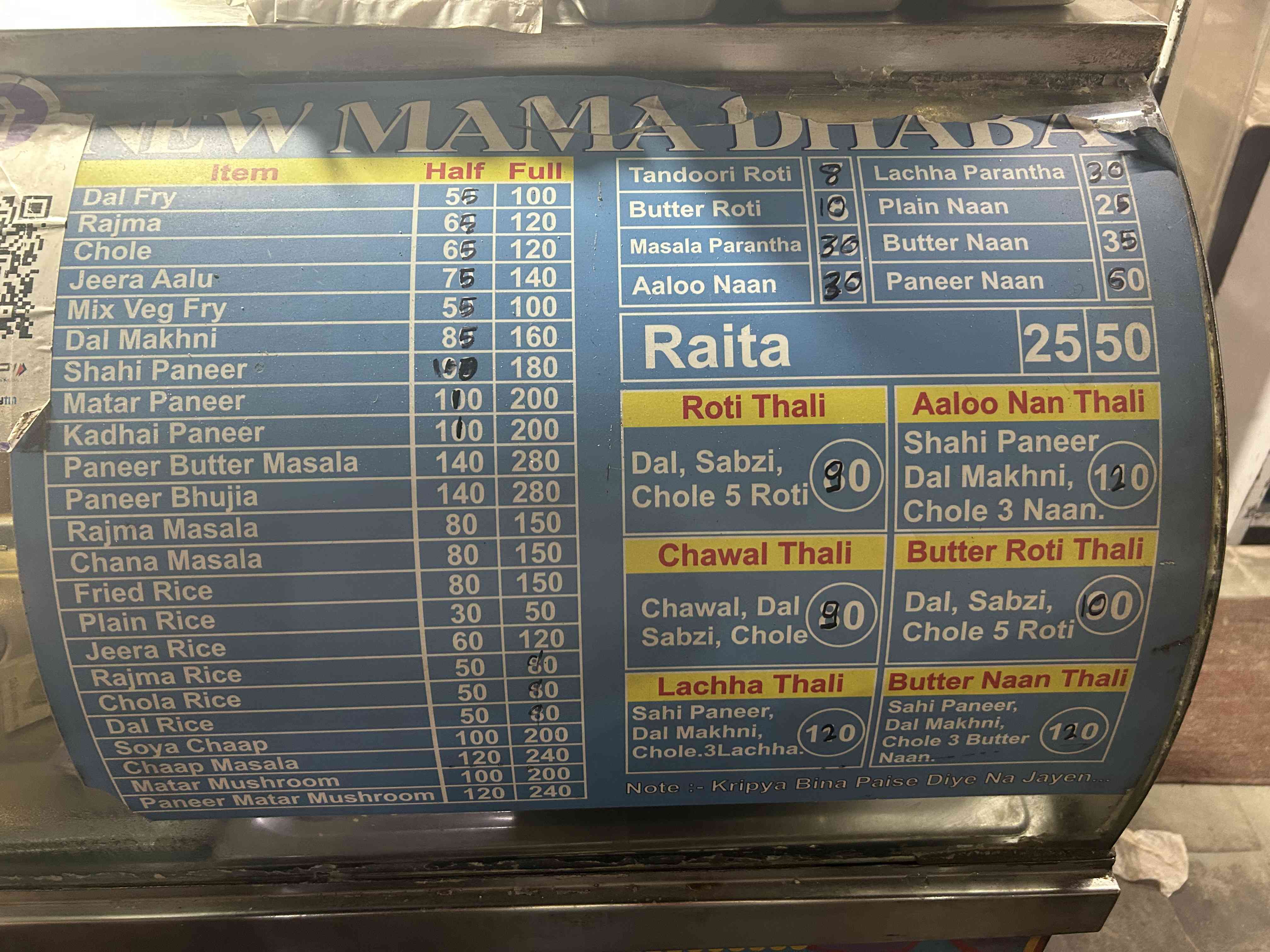 The revised menu of an eatery in the working-class neighbourhood of Gautam Nagar, Delhi. Credit: Anant GuptaRising cost of living
The cost of cylinders, which used to be sold at Rs 1,200 till recently, has shot up to Rs 3,000-Rs 4,000 in and around Delhi. “Even those queuing up to buy gas at that price don’t get it sometimes,” Dixit, the labour supervisor in Noida who is himself a migrant from Shahjahanpur in Uttar Pradesh, complained.
Driven by the shortage in Noida, some workers Dixit knew had taken days off from work to go to their home towns and fetch gas cylinders. Others, he claimed, had resorted to burning firewood on the terrace of his building for preparing their meals.
But that was not an option for those toiling in Amazon’s warehouse in Manesar. Landlords in the area would not allow tenants to light fires, Sisodiya pointed out. Besides, firewood was hard to find in Manesar, he added.
Goutam Majhi, who works in a Mahindra showroom in South Delhi and lives in the working-class neighbourhood of Gautam Nagar, has switched to buying gas by the kilo. Earlier, the worker from West Bengal used to buy a 14.2 kg cylinder for Rs 1,100 from the black market. But now he is having to cough up Rs 300-Rs 400 for every kilo.
Majhi gets his cylinder refilled with a few kilos of gas every week or so, hoping that the price will come down eventually. “I will not be able to save any money this month,” he lamented.
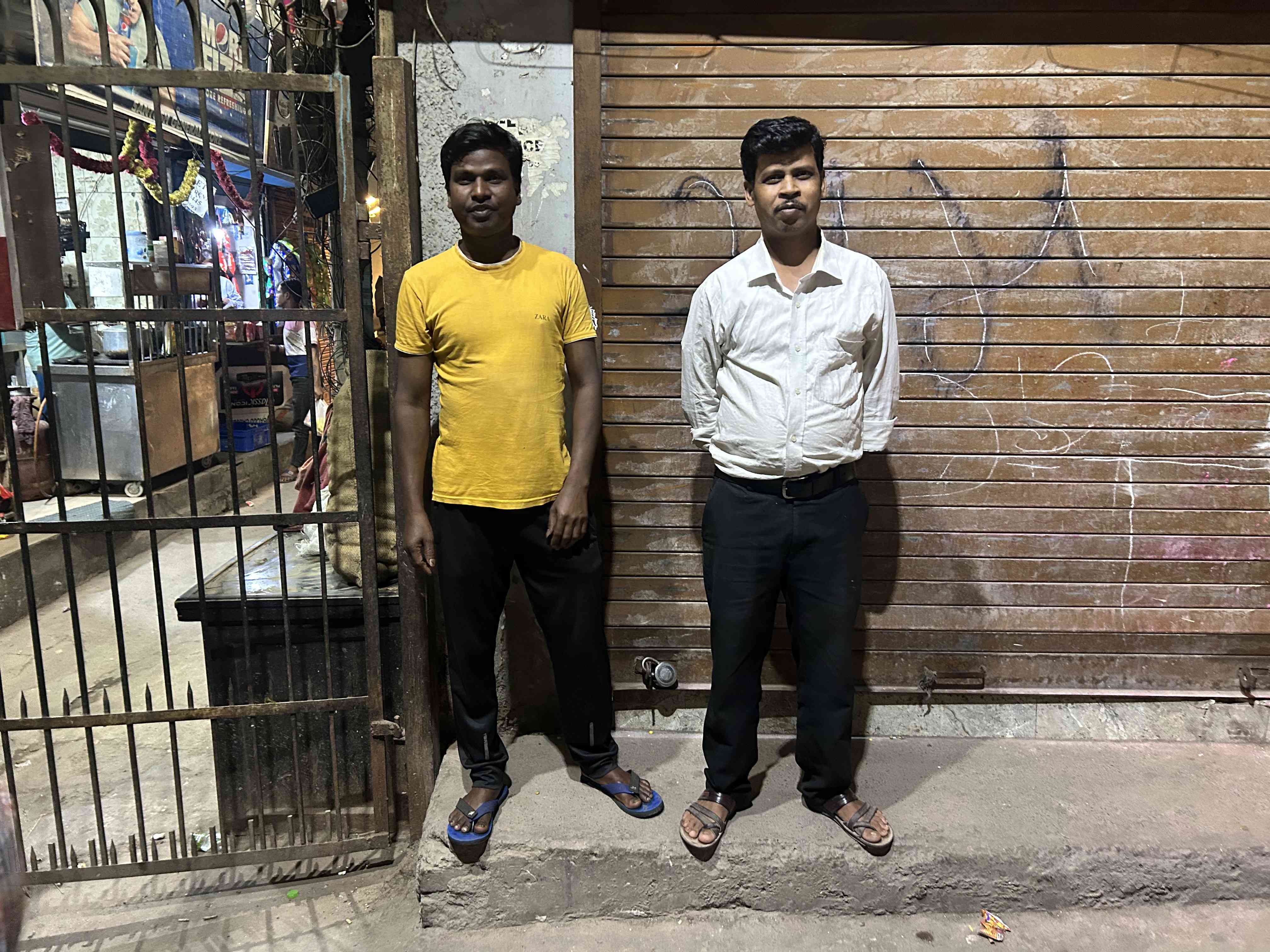 Goutam Majhi (left), a migrant worker from West Bengal, said he would not be able to save any money this month because of the increase in gas prices. Credit: Anant Gupta
Self-employed migrants running small businesses have also been hit by the crisis. Sahil Ahmad, a political science graduate from Munger University in Bihar, ran out of gas for his pizza cart in Gautam Nagar last week. He had to shut shop for a day as he went about looking for a cylinder.
When he did find a seller, the price of Rs 2,800 deterred him from buying the cylinder. Ultimately, he, too, decided to buy a few kilos of gas for the time being to resume his business. Could he not jack up the selling price of his pizzas to cover the increase in costs? “My customers will not accept that,” Ahmad said.
The 27-year-old blamed gas agencies and middlemen for profiteering from the gas shortage. “They think this is the share market and they are like Harshad Mehta,” he added, referring to the controversial stockbroker who wreaked havoc on Dalal Street in the 1990s. “They are changing gas prices at will.”
Ahmad’s own meals have become costlier as well, given that he eats outside most of the time. The dent in his profits as well as his savings is making the young man contemplate giving up on the business and sit for railway recruitment exams instead.
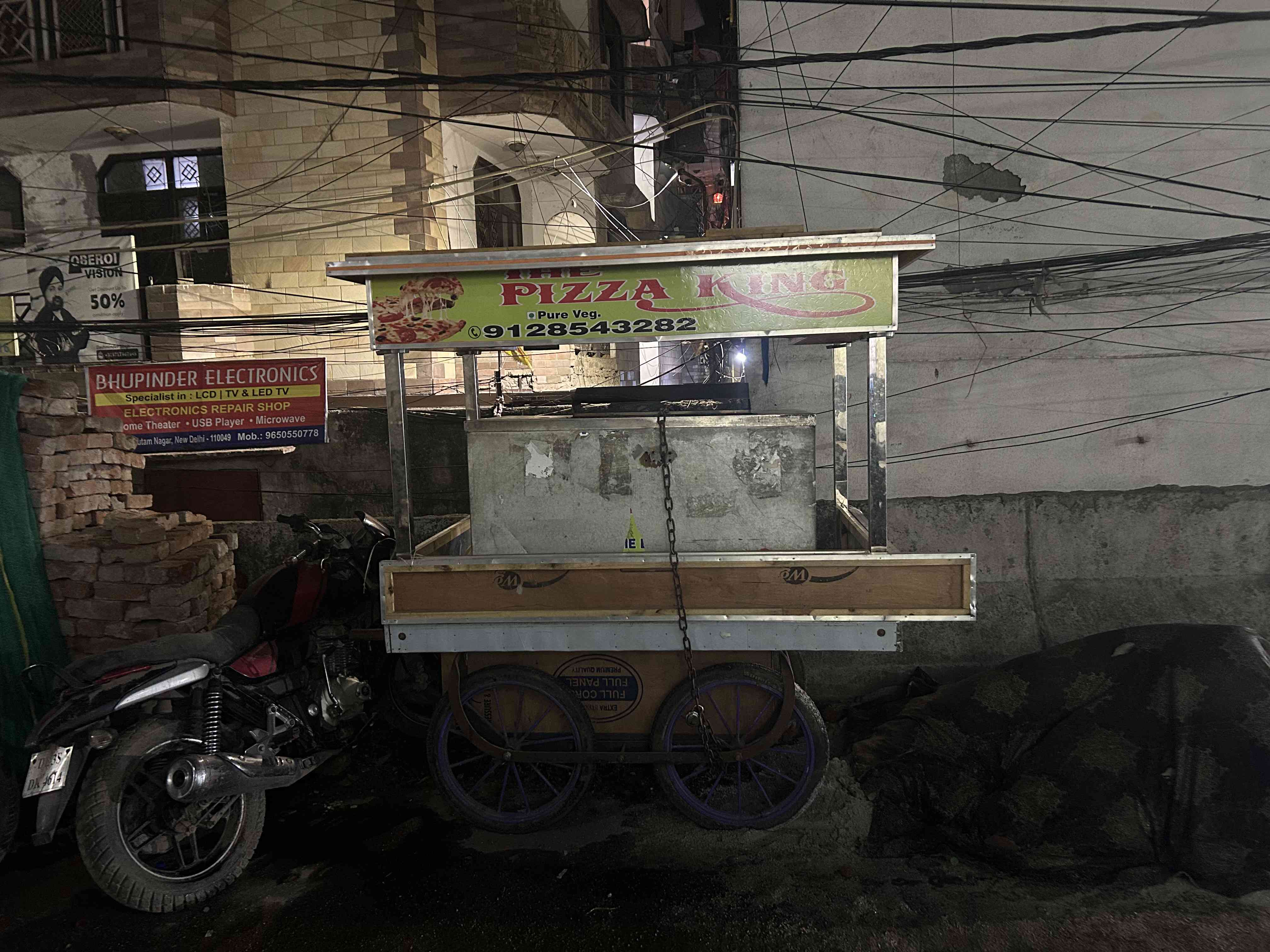 Sahil Ahmad had to shut shop for a day after he ran out of gas for his pizza cart. Credit: Anant Gupta‘No political voice’
For social scientist Pushpendra Kumar, the impact of the gas crisis on migrant workers did not come as a surprise. He told Scroll that policymakers are no better prepared to tackle the problem than they were before the pandemic. This, he argued, is because migrants are not a political force to reckon with.
“Migrants have no political voice, especially poorer migrants,” Kumar explained. “There is no pressure on those in power to cater to this constituency or address its problems.”
Migrant workers, for their part, are drawing another parallel to the Covid-19 pandemic.
Dixit, the labour supervisor in Noida, recalled how Prime Minister Narendra Modi had appeared on television in 2020 to abruptly announce the lockdown. This time, information has been even more scarce with the government maintaining silence for weeks.
On Monday, 24 days into the war, Modi addressed Parliament. He spoke about the measures the government had taken to diversify India’s energy sources. He warned that the impact of the conflict in West Asia would be severe, just like the situation India had faced during the pandemic. “We have faced such challenges with unity during the Covid period and now we have to be prepared again,” he said.
But workers say they are looking for more practical information they can use.
“The government should tell us how long it will take for things to get better,” Dixit said. “The news also does not tell us this. It just shows us the war. This is why we are unable to decide whether we should stay here or go home.”