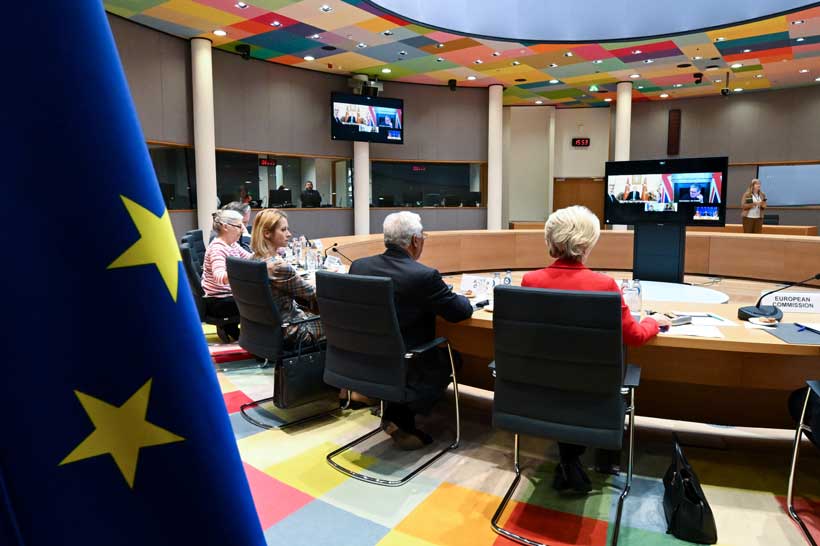
After decades of mutual suspicion and stalled engagement, Australia and the European Union have signed a long awaited Free Trade Agreement, marking a decisive shift in their economic and strategic relationship. The deal was formalized during a visit to Canberra by Ursula von der Leyen and welcomed by Prime Minister Anthony Albanese.
For much of the past half century, such an agreement appeared unlikely. Trade tensions, particularly over agricultural access, and entrenched political skepticism in Australia toward Europe’s economic model had long impeded progress.
Historical Roots of Antipathy
Australia’s early stance toward the EU was shaped by a narrow and often critical perception of it as a protectionist bloc. This view was reinforced by intellectual and political alignment with British Euroscepticism, especially during the period when the United Kingdom itself maintained an uneasy relationship with European integration.
Figures such as Margaret Thatcher emphasized economic cooperation but resisted deeper political integration, a perspective that influenced Australian policymakers. As a result, Canberra often underestimated the broader political and economic significance of the EU, focusing instead on disputes such as the Common Agricultural Policy.
Gradual Strategic Reassessment
From the 1990s onward, Australia began to recalibrate its approach. Recognizing the scale and influence of the EU single market, policymakers pursued incremental agreements in areas such as science, technology and mutual recognition.
This shift reflected a growing understanding that engagement with Brussels, rather than individual European capitals alone, was essential. Over time, the EU came to be seen not merely as a regulatory obstacle but as a complex and valuable partner.
The Missing Link and Renewed Momentum
Despite expanding cooperation, the absence of a comprehensive trade agreement remained a notable gap. Negotiations formally began in 2018 but stalled in 2023 over disagreements, particularly regarding agricultural quotas.
The breakthrough came in a changed global context. The resurgence of protectionism and tariff driven policies under Donald Trump disrupted global trade patterns and incentivized both sides to diversify partnerships. This external pressure created the political space needed to revive and conclude negotiations.
Geopolitical and Economic Implications
The agreement signals more than just tariff reductions. It reflects a broader realignment in global trade and diplomacy. For Australia, the EU represents a vast market of 450 million consumers and a means of reducing overdependence on traditional partners. For the EU, Australia offers strategic access to the Indo Pacific and a reliable partner in an increasingly fragmented global order.
The deal also complements existing EU agreements with Asian economies, reinforcing its network of trade relationships across the region.
Analysis
The Australia EU Free Trade Agreement illustrates how geopolitical uncertainty can accelerate long delayed economic integration. What was once hindered by ideological mistrust and sectoral disputes has been reframed through the lens of strategic necessity.
At its core, the agreement reflects a convergence of interests between two actors that increasingly see themselves as defenders of a rules based international order. As the United States adopts a more unilateral and less predictable approach, middle and major powers alike are seeking to stabilize their economic and security environments through diversified partnerships.
The evolution of Australia’s perspective is particularly notable. Moving beyond inherited British skepticism, Canberra now engages the EU as a multidimensional actor with both economic and political weight. This shift underscores a broader transformation in how middle powers navigate a multipolar world.
While tensions may persist, especially in sensitive sectors like agriculture, the agreement establishes a durable framework for cooperation. It signals that pragmatism has overtaken past antipathy, and that in an era of global fragmentation, strategic alignment can emerge even from historically strained relationships.
With information from Reuters.