
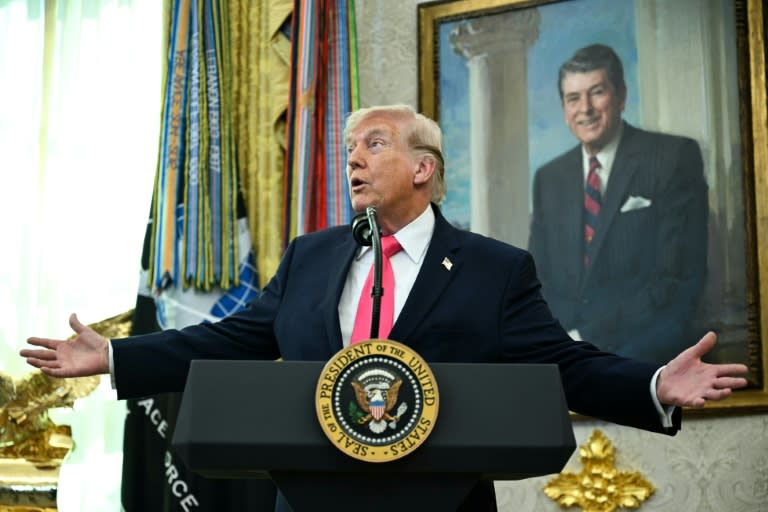
Donald Trump said ‘we’re dealing with the right people’ amid hopes for a de-escalation in the war (Jim WATSON) · Jim WATSON/AFP/AFP
Oil prices tumbled and stock markets rallied Wednesday on reports that the United States had sent a peace plan to Iran.
After nearly four weeks of conflict, investors jumped on signs that hostilities could be winding down, with the safe-haven dollar losing support.
However, analysts pointed out that the arrival of more US troops in the Middle East and fresh missile strikes exchanged between Iran and Israel suggested chances of escalation remained.
“Oil prices have moved lower… offering some relief to equities that had been weighed down by worries over inflation,” noted Matt Britzman, senior equity analyst at Hargreaves Lansdown.
“It’s still a highly fluid situation. Trying to call how the rest of the week plays out would be unwise.”
The economic impact of the crisis has begun to bite around the world, with governments looking to cut energy consumption.
Helping to ease the situation, Tehran announced it will let “non-hostile” oil vessels through the crucial Strait of Hormuz.
Crude futures plunged more than six percent Wednesday — with Brent back below $100 — after US President Donald Trump voiced optimism at ending the war and said officials were “in negotiations right now”.
The head of the International Energy Agency, Fatih Birol, meanwhile said he was “ready to move forward” with an additional release of oil reserves “if and when necessary”.
In stock markets trading, European indices jumped around 1.5 percent approaching the half-way stage Wednesday.
Asian markets earlier closed with strong gains, led by Tokyo which won nearly three percent.
– ‘Buying on dip’ –
“European markets are following the wider global theme of optimism as rumours swirl around the apparent negotiations that could lead us out of the conflict in Iran,” said Joshua Mahony, chief market analyst at Scope Markets.
“Dip buyers have started to grab what they can, while oil prices shift lower as the perceived length of time associated with the disruption shortens.”
European Central Bank chief Christine Lagarde said the ECB has several options for dealing with the energy shock, vowing policymakers would not be “paralysed by hesitation”.
At its most recent meeting last week, the ECB kept interest rates on hold, while warning of higher inflation and lower growth in the eurozone owing to the war.
However, analysts have raised bets on the central bank hiking borrowing costs as soon as next month to try and keep the lid on an expected surge in consumer prices.