
N Gowreeshwaran arrived on Indian soil with just two sets of clothes in 2006. It was all that could fit on the tiny boat that he and 10 members of his family travelled in from war-torn Sri Lanka. Since the age of 16, he has lived at a rehabilitation camp for Sri Lankan Tamil refugees in Chennai.
He yearns to see how his hometown Trincomalee, a coastal city in Sri Lanka, has changed in 20 years – but only as a tourist. “I would never consider moving there,� said Gowreeshwaran. “There is nothing there for us anymore.�
As ethnic violence and civil war ravaged the island nation for nearly three decades, lakhs of Sri Lankan Tamils fled their homes and landed up in India, mainly in Tamil Nadu. Many, like Gowreeshwaran, are refugees who have built new lives in India – but without gaining Indian citizenship.
A Sri Lankan minister’s comments, earlier in March, welcoming refugees back to the island nation brought to fore the longstanding issue of citizenship, which has resonance in both countries. But refugees Scroll spoke to said they would not return to Sri Lanka, even if offered the option. India is now their home.
Gowreeshwaran completed his education, started working, got married and now has children. “My life is here now,� he said.
Refugees said that getting Indian citizenship would allow them to access formal employment, better jobs and help the community move past the trauma of war and displacement.
“We have Aadhaar cards but they mention that we are refugees,� said Gowreeshwaran. “We still don’t have a proper address to put on documents.�
For decades, Gowreeshwaran’s family and refugees like him have lived in 10×10 rooms in the Puzhal camp in Chennai. Getting citizenship would improve life drastically, he said.
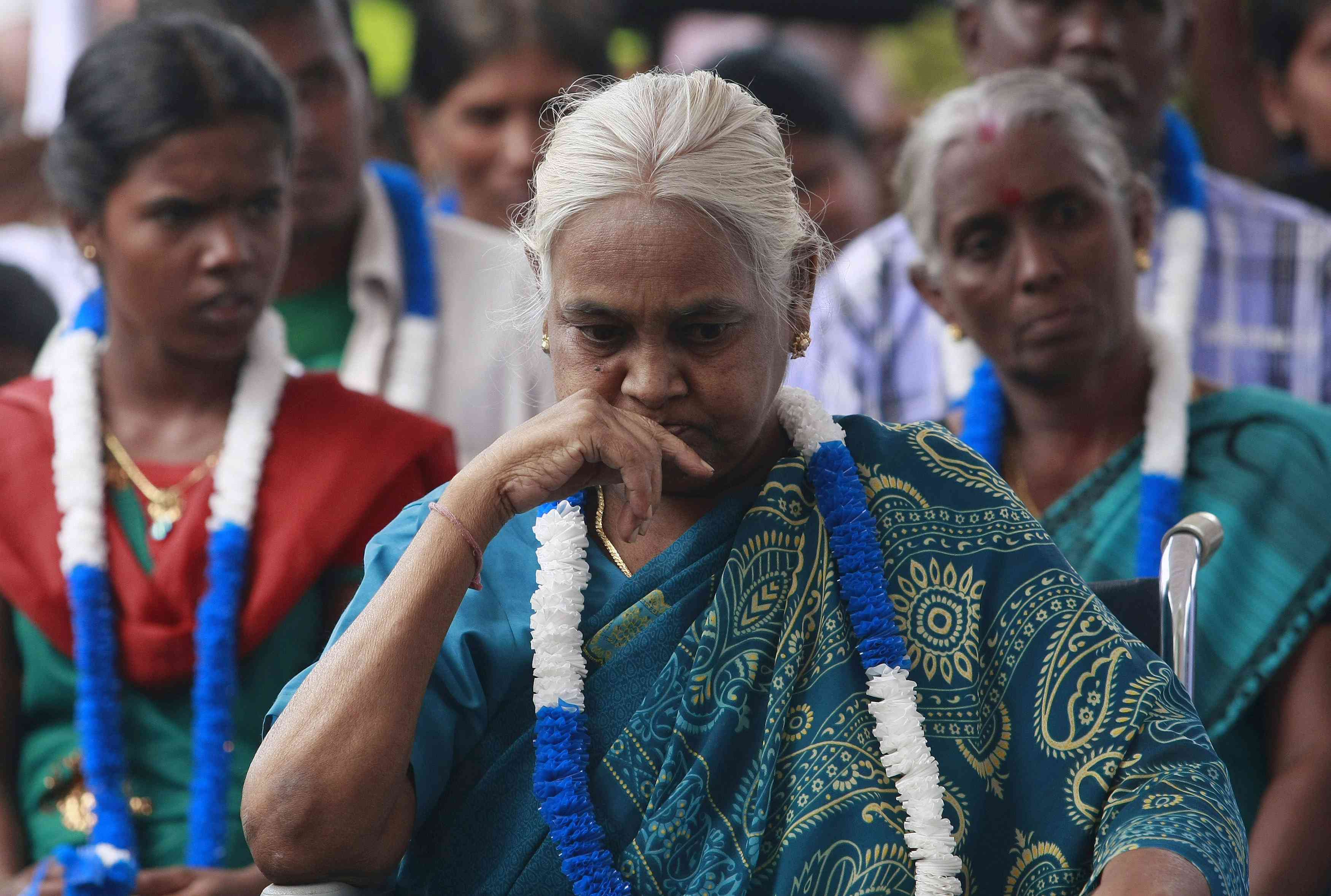 Tamil refugees wait to return to their native village after arriving from India on a passenger ferry at a Colombo port in this photograph from October 2011. Credit: Reuters.Nothing to return to in Sri Lanka
Sri Lankan minister Bimal Rathnayake told The Hindu in an interview on March 18 that the island nation was ready to receive refugees who had fled during the civil war and were living in India. He also said the Indian and Tamil Nadu governments must not use refugees as “a tool for political propaganda around elections�.
Rathnayake was responding to a query on Tamil Nadu Chief Minister MK Stalin’s letter to the Indian government on citizenship for Sri Lankan Tamil refugees. Stalin, in his letter in February, had asked the Centre to revoke administrative instructions that barred Sri Lankan Tamil refugees from applying for Indian citizenship. Elections will be held in Tamil Nadu on April 23.
Parivelan KM, a member of the advisory committee for the welfare of Sri Lankan Tamil refugees, said Rathnayake’s comments must be appreciated, but there was nothing new about this stand. “Nobody has said that the refugees cannot return, but asking them to return without a policy of rehabilitation and reconstruction is just empty words,� said Parivelan, who is also a professor at Woxsen University, Hyderabad.
In a survey Parivelan conducted of 520 families in 2014, he found that 68% would prefer to stay in India. Even so, it is not a simple matter of citizenship and belonging.
“Refugee is a blanket term used to refer to people who fled during the civil war,� Parivelan said. But the residents of the refugee camps include those with Indian roots, who were taken to Sri Lanka by the British to work on tea estates.
The two governments signed pacts, one in 1964 and the next in 1974, allowing some of these tea workers Indian citizenship and others Sri Lankan citizenship. Some fell through the cracks. “These people became stateless,� said Parivelan.
“Those who got stranded there, tried to flee after the civil war escalated post the 1980s,� he said. “They also ended up in the Sri Lankan Tamil refugee camp with the refugee tag.� Given that such refugees don’t belong to Sri Lanka or India, the issue needs to be mapped carefully and addressed with sensitivity, he said.
Rathnayake told The Hindu that 18,542 refugees from Tamil Nadu had returned to Sri Lanka since the civil war ended in January 2009. But refugees Scroll spoke to said that only those with land or money could consider moving back to Sri Lanka. Gowreeshwaran said that his family has relatives in Sri Lanka, but not land.
“Everything was lost during the war, so what would we do for work?� he said
Similarly, Priyamani*, a refugee, said that some people may have help from relatives who sought asylum in Western countries and have money. “But people like us came here with nothing,� Priyamani said.
In S Anitha’s case, her father has been trying for more than a decade to reclaim the land he owned. Anitha’s family hails from Kilinochchi, which witnessed some of the worst war crimes. At the height of the civil war in 1990, Anitha’s family fled leaving behind their possessions, including land documents.
Anitha’s father returned to Sri Lanka but has been running from pillar to post to reclaim their land. “He was supposed to show proof that he had lived there,� she said. “He had to prove that neighbours recognised him, which he did and then he followed through with the process but things haven’t progressed.�
Anitha, who lives in a camp in Madurai, said that most refugees don’t have pattas for their land in Sri Lanka or that their land was grabbed during the war. In many areas, people have also resettled since the war. “Even if people do have pattas, who knows who lives there now?� she said.
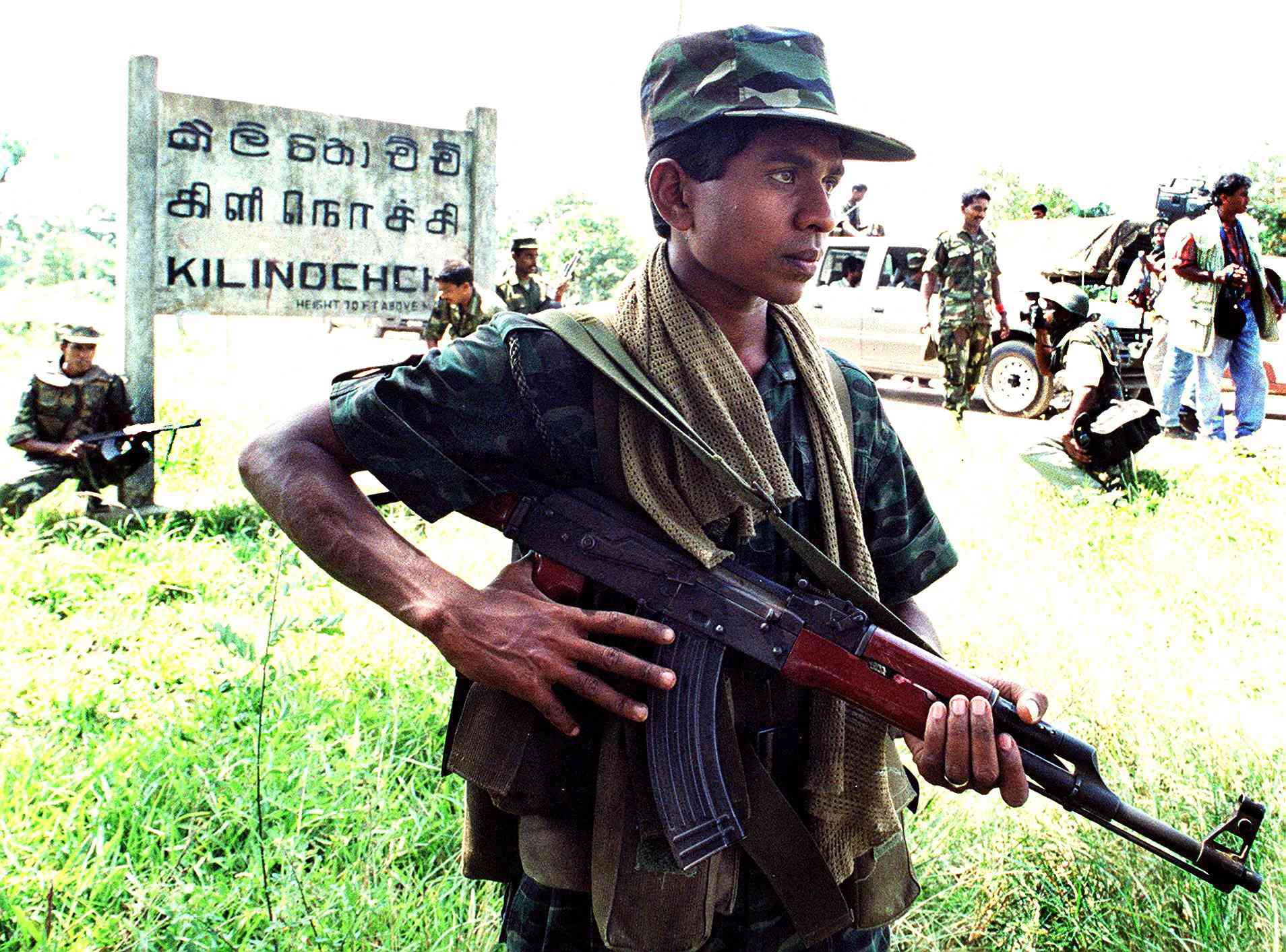 In this picture dated February 1998, a government soldier stands guard at Killinochchi town in northern Sri Lanka. Credit: AFP.Livelihood, trauma of war
More than themselves, the refugees said they hoped that at least their children would be granted Indian citizenship.
Priyamani said her children, who were born in India and are completing their higher education, would prefer to live here but have few employment prospects. “MBBS, law and government exams are still not open to our children even though they were born here,� said Priyamani.
Anitha said job options are restricted to the private sector where growth is limited. “At the most, young people earn about Rs 30,000 even in good jobs,� said Anitha. “If someone has a job that requires travel to other countries, they need a passport and other documents, which they don’t have,� she said. “So nobody is able to move beyond a certain position.�
Kanni*, a 24-year-old woman living in a camp in Cuddalore, is moving to Sri Lanka soon but only because she is marrying a man from that country. “It just so happened that we got an alliance from there,� she said. Her parents have no intention of moving back. “Like my parents, I would [have] stayed here,� she said. “I was born here, studied here and work here.�
For some, like Priyamani, memories of the civil war linger painfully. “I remember the bodies and the bombs and continue to suffer the impact of that on my mental health,� she said. Having witnessed the war at such close quarters, she feels scared about returning.
Saravanan, a refugee who is stateless, feels that returning to Sri Lanka is unfeasible. “We have Indian origins, [but] our ancestors moved there and we were also born there [in Sri Lanka],� he said.
Since escaping from the war, Saravanan lived in a camp in Thirupathur where there are others like him who are stateless. “The government has built us our homes here,� he said. “So we live here legally, but we are not given citizenship.�
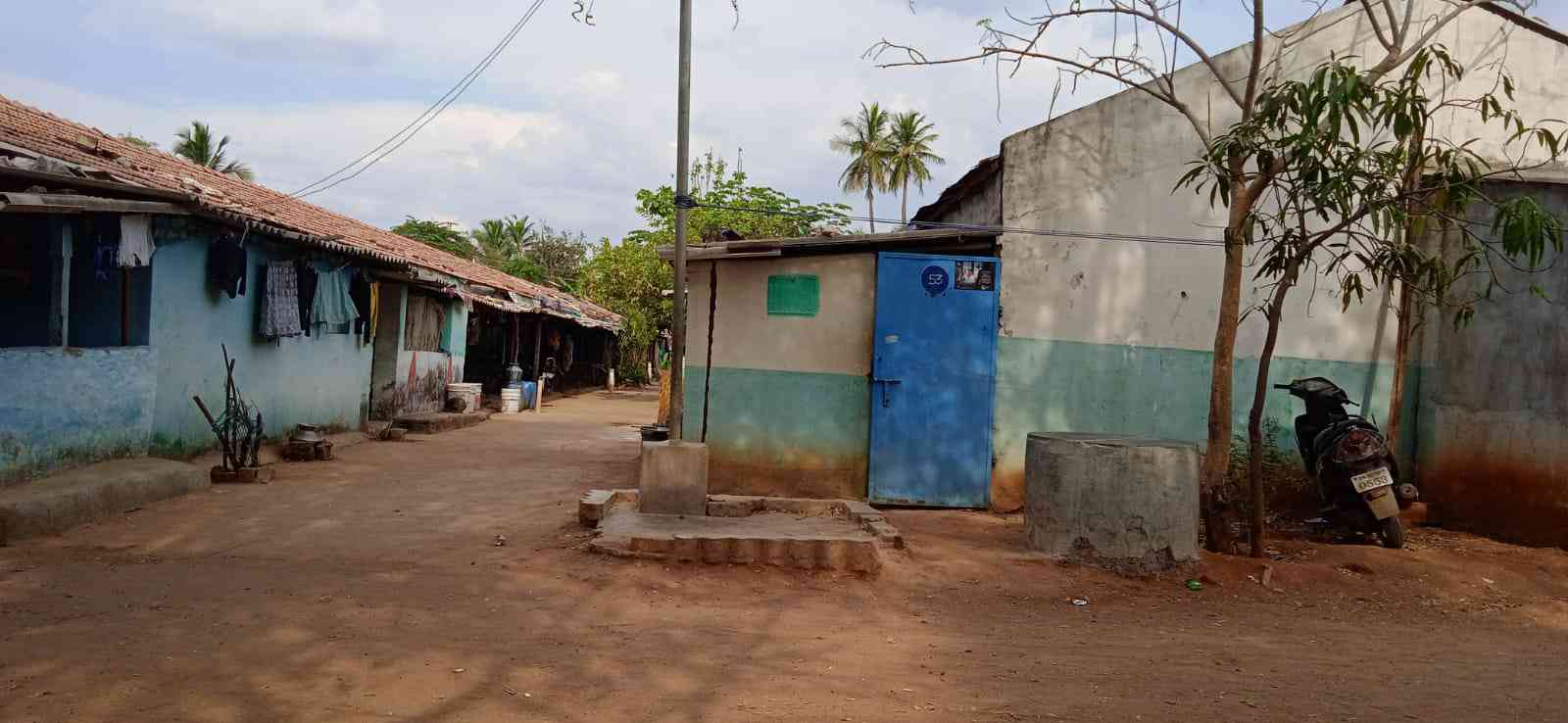 The refugee camp in Thirupathur. Credit: Special arrangement.Better policies
Returning to Sri Lanka, the refugees said, offered nothing unless it was backed by policies and concrete promises. “They can say they will welcome us back but are they saying anything about how they will support us?� asked Saravanan. “How will they provide rehabilitation and jobs?�
Parivelan, of the advisory committee for the welfare of Sri Lankan Tamil refugees, echoed Saravanan’s concerns. Referring to Rathnayake’s offer, he said, “They must tell people what their rehabilitation measures are – what about housing or livelihoods?�
“I don’t think they have planned or drafted anything yet on those lines,� he said.
Priyamani and Anitha agreed. “Somebody from the Sri Lankan government should come and meet us and ask us how we are, what our problems and needs are,� said Anitha. “It’s not right to just make such comments for political reasons.�
Parivelan said that the Sri Lankan minister’s remark about not making refugees an election issue was unnecessary. “This is election time and these issues should be raised,� he said. “It is already a political issue.�
Anitha also said that Rathnayake’s comment about Tamil refugees being used for election propaganda was misplaced. In Tamil Nadu, past governments have all tried to help the Sri Lankan Tamil refugees, she said. Besides, Anitha said, refugees in the camp support various political parties.
“Some vote for AIADMK, some DMK,� she said, referring to the opposition All India Anna Dravida Munnetra Kazhagam and the ruling Dravida Munnetra Kazhagam.
“There are also people who support Vijaykanth’s party and Vijay’s party,� said Anitha – the regional party Desiya Murpokku Dravida Kazhagam was founded by actor Vijaykanth while actor Vijay launched the Tamilaga Vettri Kazhagam in 2024.
Parivelan said the priority now is to best meet the needs of the refugees. “The Indian government and the Sri Lankan government should both come together to figure out how to help these groups and how to grant them citizenship or repatriation as per their informed choices.�
*Name changed to preserve anonymity.