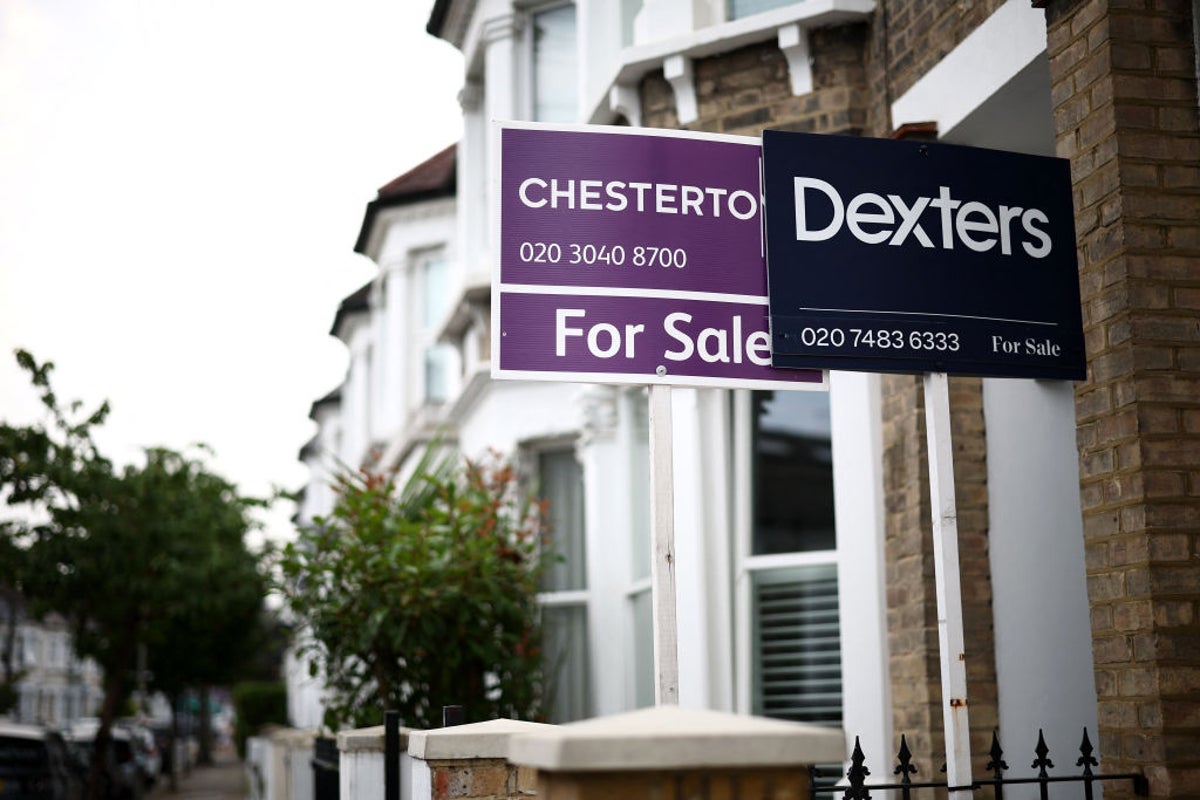
The Middle East conflict has had a string of knock-on effects in the UK, including for homeowners who are now facing higher bills.
Those who were closing in on a new house purchase, or renewing their deals on current property, would have been hoping for an interest rates cut by the Bank of England (BoE) in March or April, as was widely expected. Instead, a hold for now is on the cards – and swap rates, which mortgage deals are actually priced on, have soared.
The Independent has been shown data comparing the best rates on offer from one major high street bank on 27 February, the day before the war started, to their best rate on offer today. The difference highlights the rapid rise – and the associated extra cost – for homeowners.
For a two-year fix, it has gone from 3.67 per cent to 4.37 per cent. Assuming a £250,000 mortgage value on a 25-year term, that’s a difference of more than £96 a month, or £1,160 extra per year, if you were eligible for the original deal but waited until now – just 26 days ago.
On a five-year fix, the best deal has moved from 3.89 per cent to 4.54 per cent, equating to £90 a month or £1,089 per year more in the same scenario.
A Barclays Property Insights Report for this month showed that 1 per cent of mortgage holders said their deal is expiring within the next four weeks, rising to 8 per cent within the next three months.
It’s important to know why mortgage rates have increased (or could change upwards or downwards again) when the BoE hasn’t budged.
The BoE sets what’s termed as the bank rate, or base rate – or just “the interest rate” to most. That’s 3.75 per cent right now.
However, that’s just as the name implies: the base from which other markets move from. For mortgages, swap rates are the driving force behind pricing the interest rates you’ll see on each product available from lenders.
Swap rates are essentially a type of contract which is traded based on expectations of where money markets think rates will move in future. So, if a bank or building society is buying these at a higher price, that’s their wholesale cost for the money which they will lend you as a fixed-term mortgage holder – and so they will charge slightly above that rate within the mortgage product. When swap rates come down, the money is “cheaper” and mortgage deals can likewise fall again.
To put that into context, swap deals were trading well below 4 per cent and so there were lots of sub-4 per cent mortgage deals on the market for people to choose from. As swap rates shot up, lenders removed those deals and replaced them with higher-rate offers.
Story continues
