
 Fowsia Musse speaks during a Great Falls Forum on Thursday at the Lewiston Public Library. Musee is the executive director of Maine Community Integration. She presented along with Yun Garrison, right, associate professor of psychology at Bates College, on their theory of trauma healing for Somali immigrants. (Libby Kamrowski Kenny/Staff Photographer)
LEWISTON — Fowsia Musse thought she was on her deathbed when she first put words to her theory of posttraumatic growth.
Musse, a Somali refugee and Lewiston resident, was visiting Ethiopia in 2022 when she was shot in the leg. Her sister was killed in front of her. With the help of community members in Maine, Musse said she was airlifted to Maine Medical Center in Portland, where she spent two months fighting infection.
Pain was nothing new for the mother of five and executive director of Maine Community Integration, who says she has spent years working through the abuse and trauma she faced growing up.
“When I came to the United States, I came with lot of invisible wounds,� Musse said. “I was not aware I was suppressing anything until I came to the United States, and then for the first time, I was treated as a child and not a survivor, and not my mother’s helper, and not the oldest child.�
Musse discussed the under explored field of Somali refugee mental health with Yun Garrison, assistant professor of psychology at Bates College, at a public event Thursday at Lewiston Public Library. More than 30 people listened intently as the pair tied moments of great pain and violence, from Somalia to Lewiston, back to growth after trauma.
Their 5Rs model of posttraumatic growth for Somali refugee women includes the concepts of running, resettlement, residual stagnation, reconciliation and resolution.
Each reflects an experience from Musse’s life that many Somali refugee women share: running from catastrophe or trauma, residual pain despite assurance of physical safety and resolution marked by honoring those who have died and setting goals to improve communities.
The pair’s research, which employed collaborative autoethnographies and psychological science, is tied to the Somali term “ka bosgo,� which means being healed toward psychological wholeness. The study was published in 2025.
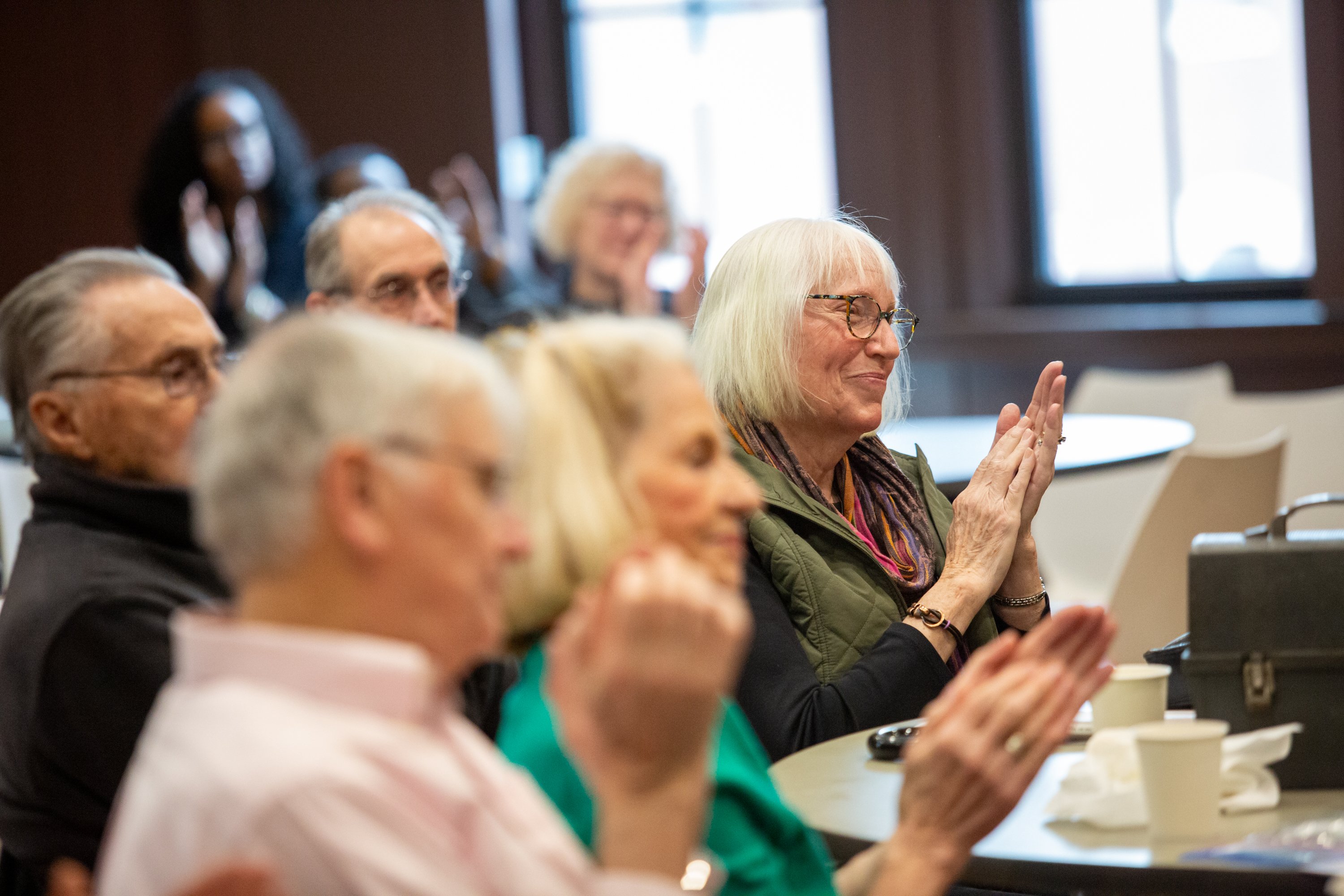 Great Falls Forum attendees clap at the conclusion of the forum hosted by Fowsia Musse and Yun Garrison on Thursday at the Lewiston Public Library. (Libby Kamrowski Kenny/Staff Photographer)
Musse was shot on Oct. 25, 2022. A year later to the day, 18 people were murdered in a shooting spree in Lewiston. She was healed from her gunshot wound by then but “had to go through grief all over again� for her community and remembering the threat of violence.
Since then, Musse has invested in her community’s healing. Next week, Maine Community Integration is launching a “makerspace� on the second floor of its 11 Lisbon St. building — a spot filled with sewing machines, clay and other tangible experiences for people who heal better without words.
“Fowsia’s strength and resilience represents who we are in Lewiston,� Mayor Carl Sheline said Thursday. “Her relentless pursuit of progress is inspiring.�
Posttraumatic growth is not easy, fast or linear, the pair said. Their research found that people working through trauma may progress and regress several times, but that having a framework like the 5Rs in place promotes healing and growth.
For decades, Garrison said, posttraumatic research only focused on the idea of fixing a person’s psychological damage. The theory of posttraumatic growth, coined in 1996, introduced the possibility of envisioning a positive future, appreciating life, improving relationships and thriving after trauma.
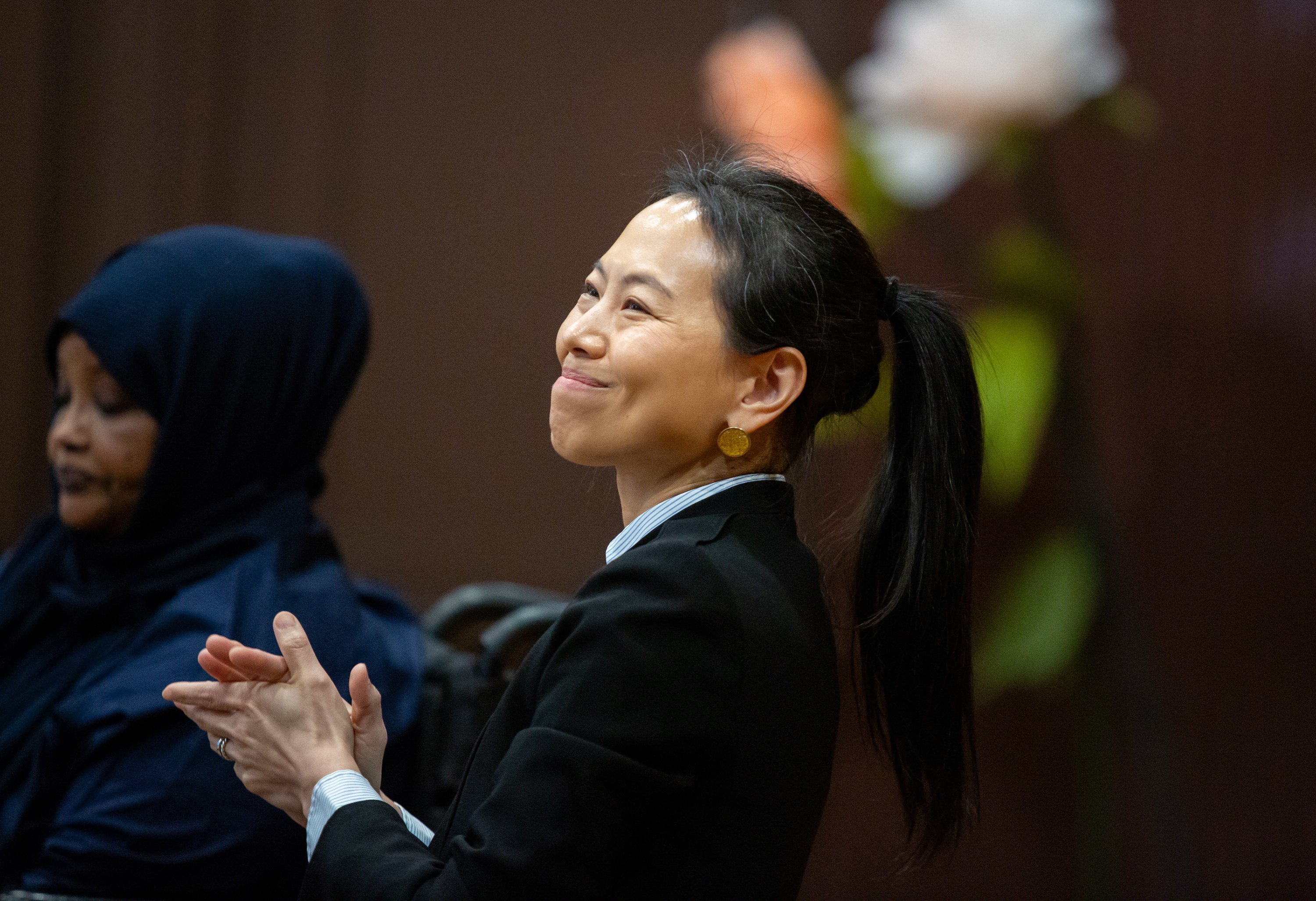 Bates College professor Yun Garrison smiles Thursday at the conclusion of a Great Falls Forum at the Lewiston Public Library. (Libby Kamrowski Kenny/Staff Photographer)
Somali people value oral stories and benefit from tangible experiences, using touch, when dealing with emotional challenges, the pair’s research found. After the shooting in Lewiston, Musse and Garrison gathered a focus group of Somali refugee women to talk about healing. Sessions produced tears and anger. Participants felt called back to hands-on work and creative distraction.
The makerspace will be rooted in those experiences, which Musse said make her community stronger.
“In this specific case of my culture, we don’t acknowledge mental health, and even more so for children and women,� Musse said. “In spite of the denial, if you sit enough time with somebody, they start talking about trauma in their own way.�