
Some of these changes are good, and some are bad. See which will affect you most.
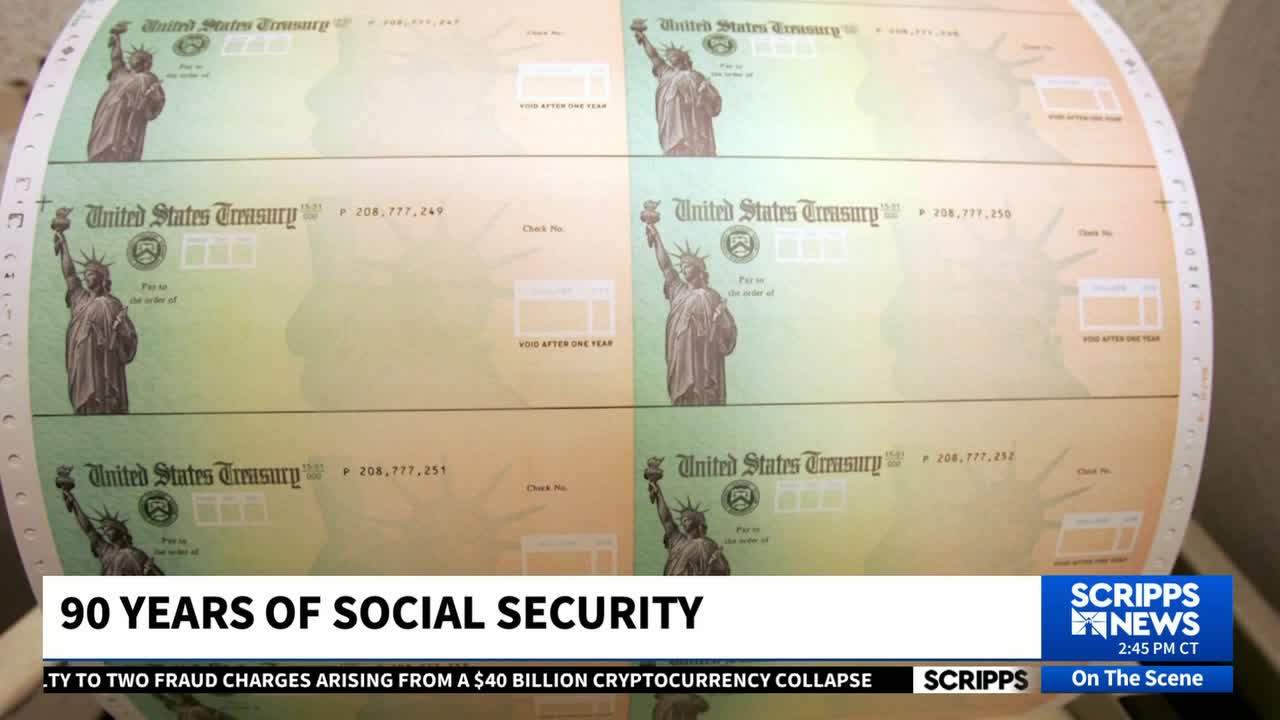

As Social Security turns 90, Congress faces financial deadline
Social Security has a cash flow problem. For years, the agency has been paying out more benefits than it takes in via payroll taxes.
Scripps News
Retirees and those approaching retirement would do well to stay on top of changes to Social Security and changes to tax laws — and changes related to both Social Security and taxes.
Here’s a look at some recent Social Security changes to know about, along with some changes related to taxes.
Six recent Social Security changes
If you’re wondering whether recent changes are good or bad, it’s actually a mixed bag.
1. Good
Your benefits went up, as they do in most years, via cost of living adjustments (COLAs). The latest increase, for 2026, was 2.8%. So if you were collecting, say, $2,000 per month in 2025, you’ll gain an extra $56, for $2,056, in 2026.
2. Bad
That 2.8% increase is smaller than the 9.7% increase in the standard monthly premium for Medicare Part B, which is going from $185 in 2025 to $202.90 in 2026. Many retirees have their Medicare premiums automatically deducted from their Social Security checks, so those checks could end up smaller than they were in 2025.
3. Not great
The maximum earnings that will be taxed for Social Security are up — from $176,100 in 2025 to $184,500 in 2026. So if you’re a relatively high earner, more of your income will be taxed for Social Security. For most people, though, all their earnings will be taxed, as they usually are.
Recent Social Security changes related to your tax bill4. Good
The vast majority of states — fully 42 of them — do not tax Social Security benefits. And that number was 41 last year. As of 2026, West Virginia has joined the ranks. (Note, though, that the federal government does tax some Social Security benefits.)
5. More good
The recent “big, beautiful bill” coming out of Washington introduced a $6,000 tax deduction for every eligible senior aged 65 and older. So even if you do have to be taxed in your state on your Social Security benefits, you can offset that with this deduction. It’s in effect from 2025 through 2028, and it applies regardless of Social Security.
6. Bad
It’s wrong to think that Social Security is falling off a cliff and that it will soon be unable to pay beneficiaries at all. But the program is facing a shortfall, and if Congress does not act to shore it up, Social Security’s trust funds’ surplus will run out within a decade.
Should that happen, benefits paid to those who earned them won’t disappear, but they may be reduced by 25% or even more. Smaller benefit checks may mean less paid in taxes on them, but every beneficiary would rather receive their full due, I’m sure.
Things that haven’t changed
While it’s good to be aware of what has changed, it’s also good to make sure you have a solid handle on Social Security basics. For example, here are some things that haven’t changed.
When you claim your benefits matters. If you claim early (as early as age 62), your checks will be smaller, but you’ll get many more of them, depending on how long you live. If you delay claiming, up to age 70, those checks will be bigger — but you’ll receive fewer. Various studies have found that the best age to claim for most (but not all) people is age 70.
There are other ways to increase your future benefits, too, if you’re still working. For example, if you can beef up your income, your future benefits will rise. And if you can keep working until your earnings history is at least 35 years long, that can boost your benefits, too.
Coordinating when to claim with your spouse can be effective as well. For example, the higher earner might delay claiming until age 70, while the lower earner collects earlier. This can provide some income early while maximizing the bigger benefit — so that when one spouse dies, the survivor will get to keep that bigger benefit.
Be sure to take the time to come up with a solid retirement plan, including not only your expected Social Security benefits but also income from other sources, such as dividends or retirement account withdrawals.
The Motley Fool has a disclosure policy.
The Motley Fool is a USA TODAY content partner offering financial news, analysis and commentary designed to help people take control of their financial lives. Its content is produced independently of USA TODAY.