Minimum wage earners in Luxembourg will see their pay rise by 3.8% from 1 January 2027, with additional indexation measures set to increase monthly incomes by around €170, the government announced on Friday.
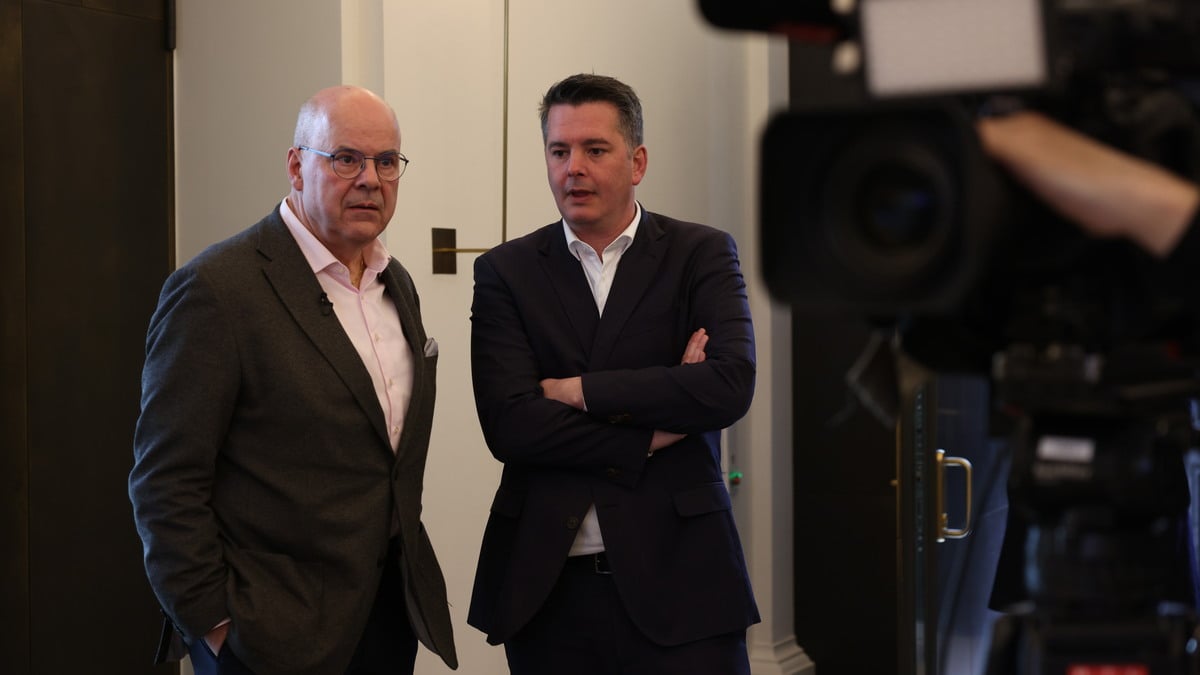
Following the a cabinet meeting, Labour Minister Marc Spautz (CSV) and Economy Minister Lex Delles (DP) presented the decision at a press conference convened at short notice.
It came amid divisions between the government and social partners over how to implement an EU directive on minimum wages.
In November, the European Court of Justice (ECJ) upheld the majority of the European Minimum Wage Directive, including the reference points that member states must use to set the minimum wage: either 50% of the national average wage or 60% of the median wage.
Trade unions had sharply criticised the government’s approach, accusing authorities of manipulating the calculation of the median income.
They argue that excluding elements such as the 13th month salary and bonuses lowers the median wage and limits any increase to around 0.6%. Unions instead pushed for a significantly larger increase, arguing that current wage levels do not allow for a decent standard of living, with a share of workers still at risk of poverty despite being employed.
Under the agreement unveiled by the government on Friday, employers will be required to cover a 2.5% increase, while the state will compensate for the remaining 1.3%.
According to Delles, the exact mechanism for this compensation is still being discussed with the employers’ organisation UEL. The overall fiscal impact has yet to be determined, but Delles estimated that the measure will cost the state between €30 million and €50 million annually. He also noted that a tripartite agreement could still be reached if current geopolitical uncertainties persist.
After the press conference, OGBL President Nora Back described the decision as “truly terrible.” During the meeting between the unions and Labour Minister Marc Spautz this week, compensation for companies was never discussed, Back stated. “That’s a real disregard for social dialogue. And it shows that they don’t even want to bring us to the negotiating table. That means we’re now taking action.”
She made it clear that the unions will oppose the decision, which will be the focus of the May Day demonstrations.
The OGBL president also criticised the fact that the minimum wage adjustment and the 2.5% index-linked wage indexation tranche expected in the first half of 2026 – which combined will result in an estimated €170 monthly gain for minimum wage earners – “would have happened anyway.”
“This simply shows that the government doesn’t want to do anything. At the same time, they want to compensate the companies. That’s actually worse than doing nothing at all. Because now we’re supposed to compensate for a third of these three indexation tranches with taxpayers’ money,” she said.
The lobby group representing private employers in Luxembourg, Union des Entreprises Luxembourgeoises (UEL), also criticised the changes, saying that the burden on employers would mean companies will have to cut staff or raise prices.
“The fact that the increase is now 2.5% instead of 3.8% is certainly better, but in the end, the outcome for businesses won’t be fundamentally different,” UEL President Michel Reckinger said. “As things stand now, it’s simply not good.”
The UEL president believes that compensation wouldn’t have been necessary at all. “For us, it was important to have a different system and to establish a minimum wage commission with the social partners in order to create clear criteria for a basic income, as provided for in the European directive,” said Reckinger.
(This article was first published by the Luxemburger Wort. Machine translated using AI, with editing by Lucrezia Reale.)
(This article was updated at 18:30 on 27 March 2026 to add reactions from the OGBL and the UEL)