BGNES publishes the full text of his remarks.
“Bulgaria is firmly and unequivocally anchored in the European institutional and political framework. It continues to serve as the main organising principle of our economic and institutional development.�
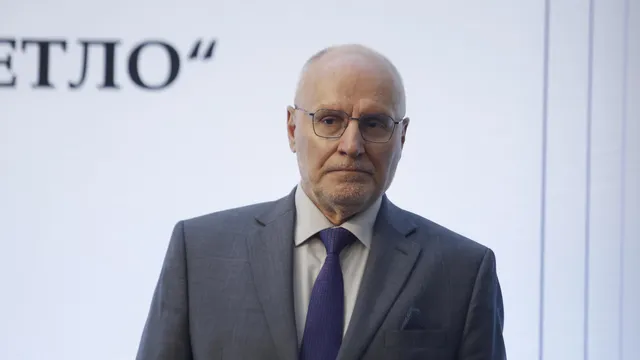
This was stated by Dimitar Radev, Governor of the Bulgarian National Bank, during a meeting with heads of diplomatic missions in Bulgaria, organised by the Bulgarian Spirit Diplomatic Society.
BGNES publishes the full text of his remarks:
“Thank you for the opportunity to address you today. It is a pleasure to speak before such a distinguished diplomatic audience here in Sofia.
We meet at a time when uncertainty remains high, but is also becoming more immediate in its impact. Developments that were once seen as external shocks are now directly affecting inflation expectations, energy prices, financing conditions and broader economic confidence.
In this sense, geopolitics is no longer just part of the background. It has become part of the macroeconomic environment itself. This is particularly evident when military conflict interacts with energy markets, logistics and trade flows.
Recent developments in the Middle East, as well as risks affecting key transport corridors, have once again shown how quickly tensions in energy markets can influence the European outlook — including the eurozone and Bulgaria as part of it.
For economic policy, this represents a fundamental shift in the environment in which decisions are made. Resilience can no longer be viewed solely in cyclical or financial terms. It must also be understood in institutional, strategic and increasingly geopolitical dimensions.
Allow me to structure my remarks around three themes:
First, the political framework;
Second, the macroeconomic environment;
And third, the priorities of economic policy.
1. Political framework
Across Europe, policymaking is becoming more demanding. The external environment is more volatile, the margin for error is narrower, and the interaction between geopolitics and economics is more immediate.
For Bulgaria, this has direct implications.
Our strategic orientation remains clear and unchanged. Bulgaria is firmly anchored in the European institutional and political framework, which continues to guide our economic and institutional development.
At the same time, risks affecting our region can no longer be described as purely external. They are transmitted through multiple channels — energy, logistics, investor sentiment and perceptions of security.
In such conditions, trust becomes a key variable in economic policy. For smaller and more open economies like Bulgaria, trust is not just desirable — it is essential. It reduces uncertainty, supports macroeconomic stability and strengthens the capacity of institutions to act effectively under pressure.
This is why institutional consistency matters so much. Over the past two decades, Bulgaria has benefited from a framework built on macro-financial prudence and policy discipline. This framework has served the country well in times of instability and remains fully relevant today.
At the same time, the current pre-election period once again highlights a structural weakness in the national political environment. Bulgaria has shown strategic consistency in its geopolitical and institutional choices. That consistency should not be underestimated. In this sense, the country’s strategic trajectory has proven more resilient than its governing configurations.
However, strategic orientation and day-to-day governance capacity are not the same. The more immediate challenge lies in the recurring difficulty of translating political competition into stable governance. In recent years, this has been reflected in repeated elections, fragmented parliaments and shortened policy horizons.
The current electoral cycle is unfolding amid a broader reshaping of the political landscape. This does not signal institutional breakdown, but it does come at a cost — shorter policy horizons, weaker reform continuity and greater difficulty in maintaining medium-term fiscal and structural priorities.
In the eurozone context, trust depends not only on strategic direction but also on effective governance.
2. Macroeconomic environment
The global economy has proven more resilient than expected, but this resilience should be interpreted with caution.
The baseline scenario still points to moderate growth and continued disinflation, especially in Europe. However, uncertainty remains high and is increasingly linked to geopolitical and energy developments.
Recent discussions at the European Central Bank highlighted this clearly. The potential impact of the Middle East conflict on eurozone inflation was analysed in detail.
The conclusion: short-term effects will likely come mainly through energy prices, while medium-term effects will depend on the duration of the conflict and the extent of transmission to consumer prices and economic activity.
The ECB kept interest rates unchanged and reaffirmed its commitment to bringing inflation to 2% over the medium term, without pre-committing to a specific path for future rates.
The key takeaway is that the current environment is defined less by the baseline scenario and more by the widening range of possible deviations around it. The transmission from geopolitics to macroeconomic variables is no longer indirect or delayed — it can be immediate.
Energy price shifts, disruptions in trade and transport, or broader security deterioration can quickly affect inflation, growth and confidence.
Three transmission channels are particularly important:
Energy markets, which remain highly sensitive;
Strategic fragmentation, shaping trade and investment;
And confidence, as economic agents adjust behaviour early.
For Bulgaria, these channels are especially relevant as a small, open economy within the eurozone.
The country enters this period from a relatively solid position — growth remains positive, the labour market is stable and the banking sector is well capitalised and resilient.
However, the previous inflation shock has left lasting effects.
BNB projections suggest average inflation of around 3.7% in 2026, with potential upward deviations of 0.7 to 1.2 percentage points under adverse scenarios.
The conclusion is clear: inflation risks are not only elevated, but also asymmetric and closely tied to geopolitical developments.
3. Economic policy priorities
These can be summarised in three principles: stability, trust and adaptation.
Stability is a prerequisite for all other policies.
Bulgaria enters this period with relatively low public debt, but fiscal policy has become less conservative compared to the pre-2020 period. Fiscal consolidation must return to the centre of policy, while preserving flexibility.
Trust now depends less on intentions and more on consistent implementation.
As a member of the Eurosystem, the Bulgarian National Bank now directly participates in shaping monetary policy — a responsibility, not just an institutional milestone.
Adaptation requires focusing on fundamentals — human capital, infrastructure, digitalisation and innovation. Energy resilience has become a macroeconomic issue, and convergence must increasingly rely on productivity and investment quality.
Ladies and gentlemen,
The defining feature of the current environment is not just uncertainty, but the speed at which it translates into economic outcomes.
When geopolitical developments simultaneously affect energy prices, inflation expectations and confidence, the value of credible policies and strong institutions rises significantly.
Resilience cannot be improvised. It must be built — through institutions, discipline and consistency.
For Bulgaria, the strategic direction is clear. The key question now is whether the domestic political environment can deliver the necessary consistency and effectiveness.
Because resilience is not given. It is built.
Thank you for your attention.� | BGNES