Against the backdrop of rising geopolitical turbulence, world leaders are increasingly making statements firmly outlining the security of their countries and their readiness to defend national sovereignty, including by the use of military force.

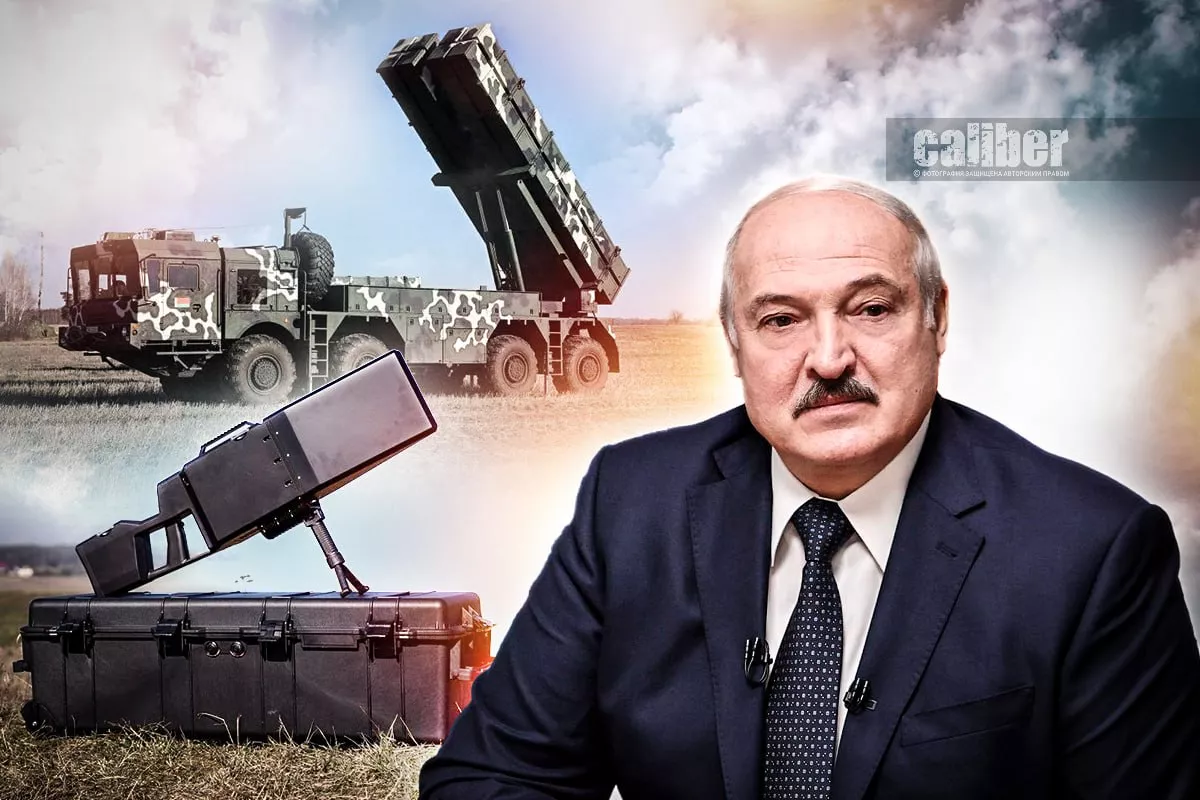
Recently, Belarusian President Alexander Lukashenko made a similar statement during a meeting summarising the results of a comprehensive inspection of the Armed Forces, emphasising that “Belarus is preparing for war, even though it is against it.”
“There can be no peacetime. We are preparing for war. That is why we created the Armed Forces, why we maintain them, why the people pay for their upkeep. And people must understand: we are absolutely against war. Especially our officers, our soldiers, our Armed Forces. Because we know what war is. We do not want war, but the army exists for that purpose,” said the head of the Belarusian state.
This naturally raises the question: “What war is the president of Belarus talking about?” Even if we assume that Lukashenko’s words are figurative rather than literal, it is quite clear that the Belarusian leader is making his statement based on real external threats facing the country. Caliber.Az turned to political scientists and analysts from Belarus to comment on this topic.

Thus, Petr Petrovsky, editor at the International Radio “Belarus,” research fellow at the Institute of Philosophy of the National Academy of Sciences of Belarus, and analyst, sees one of the threats in the growing militarisation of the Baltic countries and Poland.
“Today, we are witnessing an extremely worrying trend: Poland and the Baltic states are expanding their military capabilities, and we are not talking about defensive measures, but offensive potential. In particular, Warsaw has brought its military spending to nearly 5% of GDP, actively purchasing weapons from the United States and South Korea, and this inevitably raises questions about the objectives of such a policy. Against this backdrop, a new security architecture is emerging, one that relies not on dialogue but on coercive pressure,” he said.

The analyst emphasised that such steps create long-term risks for the entire region and lay the groundwork for a potential conflict, while pointing to specific military preparations along the borders of Belarus and Russia.
“In the Baltics, military bases are being actively established, including the deployment of a Bundeswehr contingent in Lithuania near the border, as well as the construction of large training grounds, such as the facility in the Kapčiamiestis area. Moreover, some members of the Polish and Lithuanian military leadership publicly discuss the so-called ‘Kaliningrad issue,’ suggesting the possibility of forcibly pushing Russia out of the region, naively assuming that this would not lead to nuclear escalation,” he said.
The expert also noted that this rhetoric reflects a qualitative shift in the mindset of the military circles in these countries, adding that the media narrative around the Suwałki Corridor is being used for propaganda purposes:
“This corridor has no real strategic significance from a logistical perspective, yet it is being actively promoted to portray Belarus and Russia as potential aggressors. This is done deliberately, to prepare public opinion in the Baltic states and Poland for a possible escalation.”

The analyst also focused on the role of the Ukrainian side in creating the current tension:
“As is known, at a certain point, Kyiv’s rhetoric towards Minsk noticeably hardened. Whereas previously Volodymyr Zelenskyy avoided sharp statements, the tone has now changed, largely linked to the growing influence of figures such as Kyrylo Budanov. Ukraine increasingly emphasises so-called threats from Belarus while simultaneously supporting opposition structures and diverting attention from genuine negotiation initiatives. This approach aims to shift the balance in the information space.”
According to him, Kyiv is simultaneously taking steps to reduce Minsk’s role in the peace process.
“Belarus is trying to defend its interests, including issues of property restitution, transit, and economic cooperation, yet we see that the Ukrainian side is seeking to diminish this participation. This is being done by emphasising alleged threats, as well as through diplomatic and informational tools. This also involves engagement with Poland and the Baltic countries, which provide Ukraine with additional opportunities, including the use of airspace,” the analyst said.
In conclusion, Petr Petrovsky emphasised that the combination of these factors is creating a new wave of tension in the region:
“We are witnessing coordinated actions: the military build-up of Poland and the Baltic states, the change in Kyiv’s rhetoric, informational pressure, and attempts to push Belarus out of the negotiation process. Against this backdrop, the inspection of the Belarusian Armed Forces and the statements by the country’s leadership should be seen purely as defensive measures. The logic is simple: if you want to preserve peace, you must be prepared to defend it. It is in this context that the corresponding signals from official Minsk should be understood.”

At the same time, according to political analyst and economist Sergey Tomits, the core of the problem lies in the fact that the foreign policy vectors of the countries surrounding Belarus within the European Union are disconnected from reality.
“Belarus now finds itself in the path of a wave of provocations from several Eastern European and Baltic states, which are both overtly military in nature and driven by informational and propaganda agendas. While the United States is engaging in active political dialogue with Minsk and attempting to find a peaceful channel in negotiations with Russia, European countries are becoming a source of unwarranted military hysteria.

Thus, unlike the United States, the European Union has taken a course toward worsening relations with Minsk and continuously fuels this situation. At the same time, it is clear that such logic is detached from reality: the EU is searching for a ‘black cat’ where none exists, while also escalating the positions of countries regarding the continuation of the Russia–Ukraine war, a mood that is actively reinforced among politicians in Kyiv.
In other words, where ordinary dialogue is possible, countries such as Poland and Lithuania advocate for coercive approaches to ‘resolving issues’ with Minsk, while the European Union leadership simultaneously promotes the ideology of war as the optimal path for Kyiv. In this paradigm, military confrontation between Ukraine and Belarus is not ruled out. Accordingly, the Belarusian leadership genuinely perceives that the EU and many European states are creating a threat of escalation in the near future, and Minsk must prepare for these challenges—and possibly for war,” concluded Tomits.