
Even as Estonia’s inflation rate eases, food prices remain stubbornly high, leaving many households feeling little relief at the supermarket checkout.
Food prices remain among the most stubborn pressures on household budgets this year. While overall inflation has cooled to around 3 per cent, food inflation continues to run higher – closer to 5–6 per cent as of February 2026. The result is a frustrating disconnect: economists point to stabilisation, but grocery receipts suggest something rather different.
A slower burn, not a spike
What sets the current moment apart from the price spikes of 2022–2023 is its character. The pain is less dramatic, but more persistent. Data from Statistics Estonia shows that essentials – dairy, meat and vegetables – continue to rise steadily, with fresh produce among the categories still seeing noticeable movement. Occasional dips in items such as flour or sugar offer some relief, but they are too slight and too irregular to alter the wider trend. For most shoppers, the basket remains expensive.
This is no longer a crisis with a clear peak. It is a prolonged adjustment – and that makes it harder to talk about, even as it remains very real.
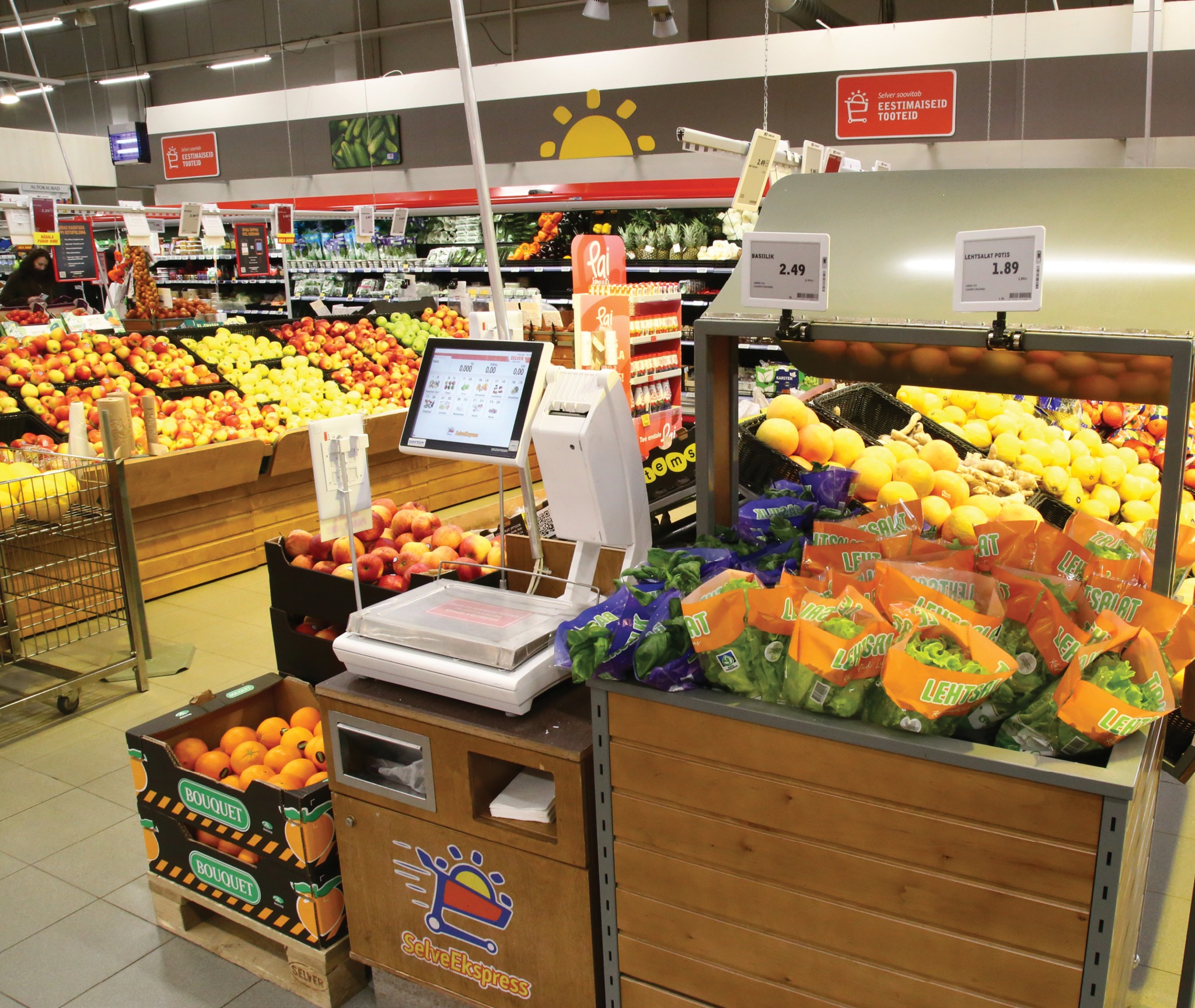 Fruit and vegetables on sale at a Selver supermarket in Estonia, where food prices remain a key pressure on household budgets. Photo: Selver.
Several forces are quietly feeding into food costs. Recent VAT increases continue to filter through to retail prices, while excise taxes add indirect pressure on production and distribution. These mechanisms are rarely visible to the average consumer, but they are embedded in every price tag.
External factors also play their part. Estonia’s food system is tightly linked to global markets, meaning international commodity prices, energy costs and supply-chain dynamics land directly on local shelves. Even as global conditions stabilise, they remain elevated compared with pre-2020 levels. Add to that the structure of the domestic market – small, relatively concentrated and heavily reliant on imports – and price movements tend to be amplified rather than absorbed.
The quiet shift in shopping habits
Consumers are adapting, though not always in ways that are immediately obvious. Price sensitivity is rising. Shoppers are comparing brands more carefully, switching between stores and tracking discounts more closely. Discount chains and private-label products are gaining ground at the expense of conventional supermarket brands.
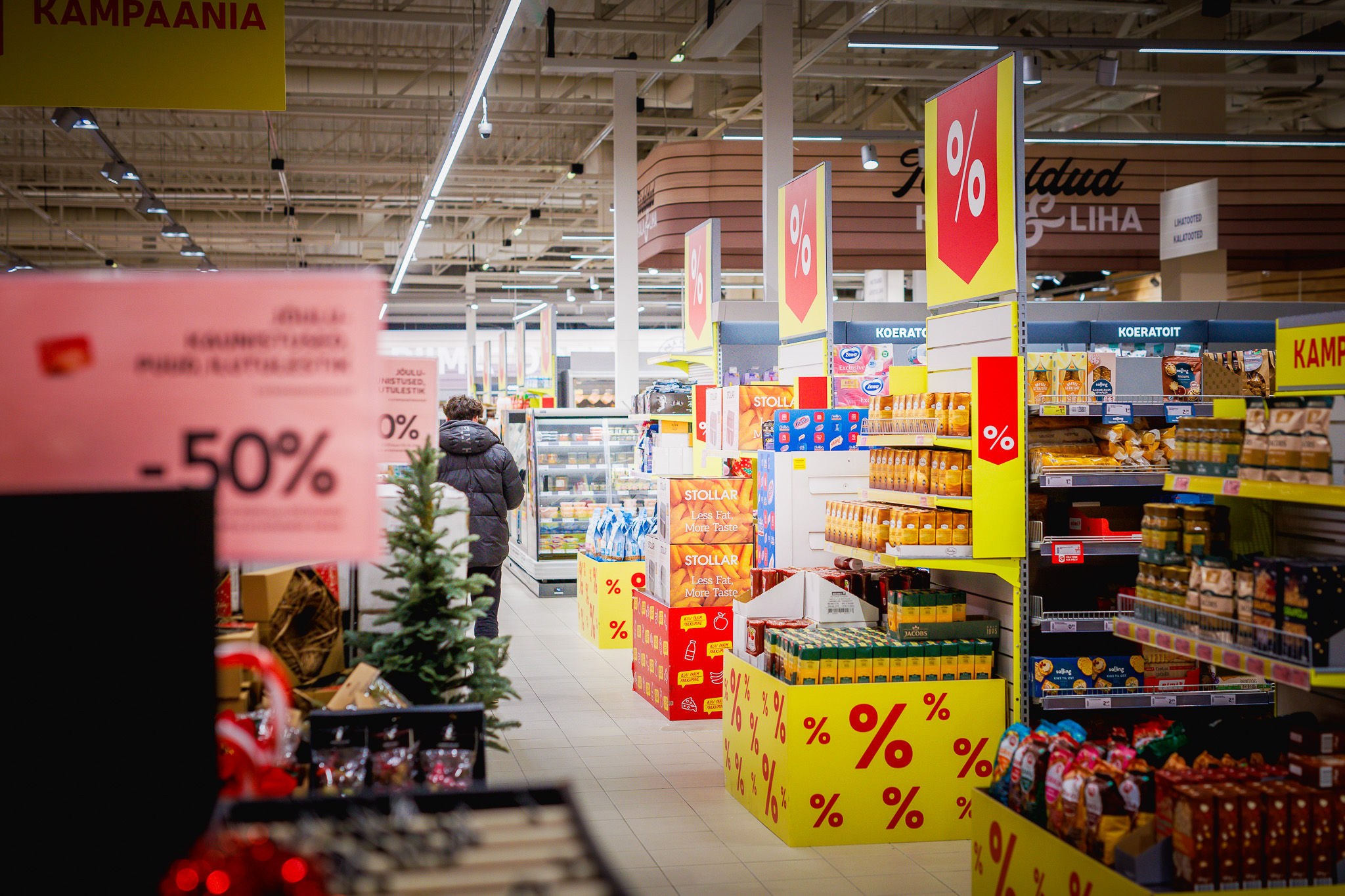 Discount signs inside a Rimi supermarket reflect growing price sensitivity among Estonian shoppers. Photo: Rimi.
Dietary habits are shifting, too. Some households are cutting back on meat – not out of lifestyle choice, but financial necessity – or replacing it with cheaper alternatives. Snacks, convenience foods and premium items are increasingly the first things to be left off the list.
Food carries a particular psychological weight in this environment. Unlike rent or energy bills, which arrive monthly, groceries are a constant, repeated reminder of rising costs. This helps explain why many Estonians still feel financially squeezed, even as wages begin to catch up and headline inflation falls. The improvement is gradual; the pressure is felt several times a week.
A regional question
Comparisons with Latvia and Lithuania continue to simmer in public debate. Many consumers see Estonia as the most expensive of the three Baltic states for everyday goods, raising questions about competition and retail pricing strategies across the region. Cross-border shopping is less common than it was at the height of the price surge, but the perception persists – and it matters.
 A Maxima store in Estonia. Photo by Maxima.
A straightforward basket comparison helps illustrate the local picture. Tracking ten everyday items – milk, bread, eggs, butter, chicken, minced meat, potatoes, apples, pasta and cheese – across Estonia’s main supermarket chains (Rimi Baltic, Selver, Prisma, Lidl and Maxima), using the cheapest available standard product in each category, consistently places Lidl at the lower end of the price range. Maxima follows, with Prisma behind.
A new normal, still settling
Estonia is no longer in a period of runaway inflation. But when it comes to food, the pressure has not vanished – it has simply become steadier, and more deeply embedded in daily life.
That shift makes it harder to measure and easier to overlook in economic headlines. Yet for many households, the question has moved on from how to weather a sudden price spike. It is now about how to manage a new baseline – one in which groceries consistently claim a larger share of the monthly budget.
That new normal is still settling in. And for now, the checkout remains its most honest measure.
The opinions in this article are those of the author.