Since independence in 1991 Ukraine lived under illusion that it could be protected by international law, its neutral status and binding international agreements. Upon the dissolution of the Soviet Union, Ukraine inherited a substantial nuclear arsenal, including 176 intercontinental ballistic missiles, over 500 cruise missiles, and 34 strategic bombers, amounting to approximately 1,700 nuclear warheads. This positioned Ukraine as the third-largest nuclear power globally, after the United States and Russia. Nevertheless, by 1996 Ukraine had fully relinquished its nuclear capabilities, motivated by confidence in the security assurances provided under the Budapest Memorandum.Â
Under this framework, the United States, Russia, and the United Kingdom—subsequently joined by France and China—committed to respecting Ukraine’s independence, sovereignty, and territorial integrity, while refraining from the use of force or economic coercion. Consequently, Ukraine significantly reduced its conventional military capacity, including its inventories of tanks, artillery, and military aviation, alongside a substantial downsizing of its armed forces personnel.
 Its once extensive military-industrial complex underwent a profound transformation, with a diminished defense sector increasingly oriented toward export activities, largely reliant on surplus stockpiles inherited from the Soviet era. This strategic posture was fundamentally challenged in 2014, when Russia annexed Crimea and instigated conflict in the Donbas region, actions that escalated into a full-scale invasion in 2022. These developments constituted clear violations of international legal frameworks, including the Helsinki Final Act, the Budapest Memorandum, and the Treaty of Friendship, Cooperation and Partnership between the Russian Federation and Ukraine.Â
These events served as a wakeup call for Ukraine, prompting a renewed emphasis on national defense capabilities, including the revitalization of its military-industrial complex and a comprehensive rearmament effort. While military assistance from the United States and European partners has played a significant role, it has proven insufficient on its own.Â
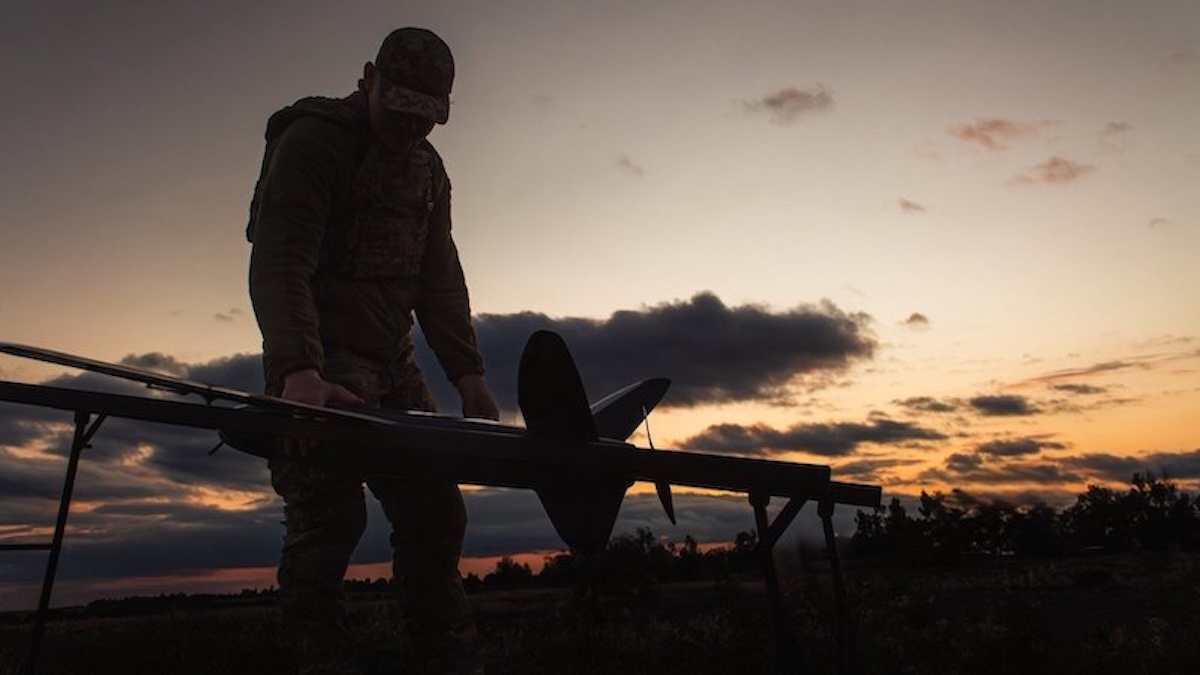
Consequently, Ukraine has accelerated the domestic development and deployment of advanced weaponry, driven by the exigencies of wartime conditions. Moreover, the conflict has underscored a broader transformation in the nature of modern warfare. In particular, it has highlighted the increasing prominence of unmanned aerial systems, which have significantly altered battlefield dynamics. The widespread deployment of drones has diminished the operational effectiveness of traditional heavy equipment, such as tanks, by enabling rapid detection and targeted strikes, thereby reshaping contemporary military strategy and doctrine.
Alongside state-owned enterprises, a substantial number of private military start-ups have emerged, particularly in the development and production of aerial, maritime, and ground-based unmanned systems. The drone sector has consequently become the largest and most rapidly expanding segment of Ukraine’s defense industry. Prior to the full-scale invasion, only a small number of firms—fewer than ten—were engaged in drone production. Since then, the sector has undergone exponential growth; by April 2026, approximately 450 companies were involved in drone manufacturing, including around 50 operating at an industrial scale.
This sector now constitutes a comprehensive and diversified ecosystem. It encompasses developers and manufacturers of first-person-view (FPV), reconnaissance, strike, and transport drones across aerial, naval, and terrestrial domains. In addition, it includes firms specializing in software development and artificial intelligence applications, particularly in areas such as targeting and coordinated swarm operations. The ecosystem also includes a network of component manufacturers producing engines, optical systems, and electronic subsystems.
Notably, the sector is further supported by a significant number of small-scale, volunteer-driven producers who assemble drones in informal settings such as private workshops or households, often supplying them directly to military units. In terms of output, Ukrainian manufacturers produced over 1.5 million drones in 2024 and approximately 2.2 million units in 2025. Production targets for 2026 project a substantial increase to around 7 million units, underscoring the sector’s rapid expansion and strategic importance.
Among the most notable achievements of Ukraine’s defense innovation have been its naval drone systems, particularly the Magura V5, which have significantly diminished Russia’s operational capabilities in the Black Sea at comparatively low cost. These systems exemplify the asymmetric effectiveness of unmanned platforms in modern maritime warfare.
Another illustrative case of rapid innovation within Ukraine’s defense sector is the start-up firm Fire Point, which specializes in the development and production of long-range drones and missile systems. Founded in November 2022 by space physicist turn entrepreneur, Denis Shtilerman, the company moved swiftly from inception to production. By early 2023, it had begun manufacturing the FP-1 deep-strike drone, capable of delivering a warhead of 60–120 kg over distances of up to 1,600 km. Within less than two years, production capacity expanded dramatically—from approximately 30 units per month to over 3,000.
In addition to long-range systems, the company has developed a range of mid-range drones with enhanced payload capacities tailored for frontline deployment. Its most advanced product, however, is the ground-launched cruise missile Flamingo (FP-5), which has a reported range of up to 3,000 km and a warhead mass of 1,150 kg.Â
The missile’s airframe, constructed from fiberglass composite materials, reduces radar detectability, while its ability to operate at altitudes as low as 30 meters further complicates interception by enemy air defense systems. By mid-2025, Fire Point’s production of the Flamingo missile had reached around 30 units per month, with plans to scale output to several hundred monthly. The estimated unit production cost is approximately $500,000, making it four to eight times less expensive than comparable systems such as the Tomahawk missile.Â
Flamingo missiles have been employed extensively by Ukraine’s armed forces for deep-strike operations targeting command centers, ammunition and fuel depots, military-industrial facilities, oil refineries, air defense systems, and other strategic assets within Russian territory. It is reported that over 60 percent of such deep-strike missions have been conducted using various Fire Point’s drone systems, underscoring their operational significance.
The company Fire Point has also developed two ballistic missile systems, designated FP-7 and FP-9, both of which are currently entering the production phase. The FP-7 is a tactical ballistic missile with a range of up to 200 km, a warhead capacity of 150 kg, and an estimated accuracy of around 15 meters. Its production cost is reported to be roughly half that of comparable U.S. systems such as the ATACMS.Â
The FP-9 represents a more advanced capability, with a range of up to 850 km, a substantially larger warhead of 800 kg, and an accuracy of about 20 meters. In parallel, the company is reportedly developing an anti-ballistic air defense system intended to serve as a more cost-effective alternative to the American Patriot system.
Company leadership has also emphasized a strategic differentiation in export policy: unlike certain U.S.-manufactured systems, their weapons are not designed with remote deactivation (“switch-offâ€�) mechanisms, thereby reducing potential dependency of states purchasing them on external political decisions.Â
Fire Point working in close cooperation with the Ministry of Defence of Ukraine has experienced rapid organizational growth and currently employs approximately 5,000 personnel. Its production infrastructure is geographically dispersed across roughly 50 locations, a deliberate strategy aimed at mitigating the risks associated with concentrated facilities in the context of ongoing Russian air strikes.
Ukraine has also developed a diverse range of air defense interceptor drones, including systems such as Strila drone, P1-SUN drone, and Saliut drone, among others positioning itself as a global leader in this emerging segment of unmanned aerial warfare. Among these, the most operationally significant and widely referenced system is the Sting drone, developed by the Ukrainian volunteer–industry initiative Wild Hornets.Â
The Sting interceptor has proven particularly effective against Shahed drone-type loitering munitions, which have been extensively deployed by Russia in Ukraine and by Iran in the Middle East. From an economic perspective, these interceptor drones offer a highly cost-efficient solution. With an estimated unit cost of approximately $2,000–3,000, they provide a markedly cheaper countermeasure compared to the $20,000–50,000 cost of Shahed-type systems. This favourable cost-exchange ratio enhances their strategic value, enabling scalable and economically sustainable air defense operations against mass drone attacks.
Thus, Ukraine has emerged as a global leader in the development and deployment of unmanned military systems. Leveraging rapid innovation, a dynamic start-up ecosystem, and wartime necessity, it has scaled production of aerial, naval, and ground drones, pioneering cost-effective solutions that are reshaping modern warfare and influencing military practices worldwide.