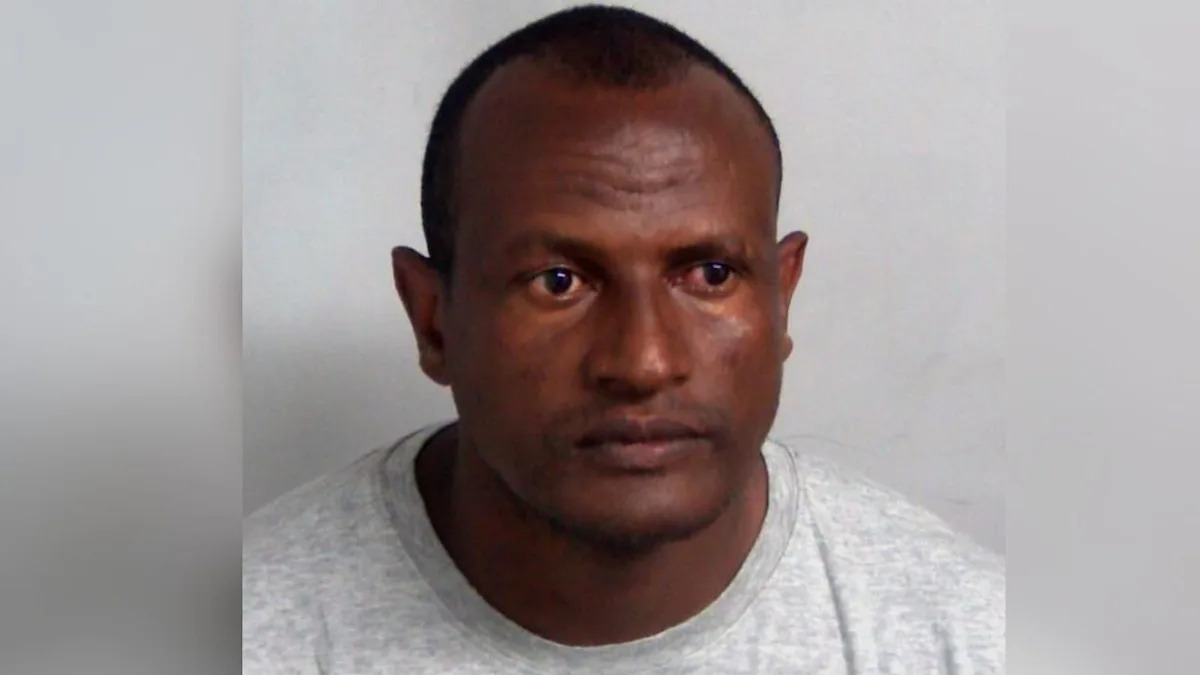
The accidental prison release of migrant sex offender Hadush Kebatu was caused by a “broken system”, Justice Secretary David Lammy has told ITV News.
He was speaking after an independent investigation into mistaken prisoner releases, including that of Kebatu, was released on Wednesday.
The Independent Review into Releases in Error, led by Dame Lynne Owens, found that overly complex processes, poor communication between departments, and outdated technology are driving errors in the prison release system, including wrongful releases.
“Dame Lynne has found that the system is broken,” the deputy prime minister told ITV News. “It’s a product of underinvestment over successive governments, but particularly the last 14 years of austerity.”
In response, the deputy prime minister said the government would be investing £50 million in a new prison release biometric system, as well as better staff training.
He said the government will “do everything in our power” to restore trust in the UK’s prison system before the end of the next parliament, adding that it needs to become more digital and streamlined.
The review found that there were “missed opportunities” to prevent the accidental release of Kebatu in October 2025.
The Ethiopian national had been jailed for a year in September for sexually assaulting a 14-year-old girl in Epping, Essex.
His accidental release from HMP Chelmsford sparked national outcry and led to a two-day police manhunt.
Kebatu was eventually located and arrested in London’s Finsbury Park, having travelled there from Chelmsford. He was later deported to Ethiopia.
Kebatu’s release served as a catalyst for increased scrutiny of the prison release system.
On Wednesday, figures released by the Ministry of Justice showed 179 prisoners were mistakenly released in the space of one year, between April 2025 and March 2026.
Asked whether there had been any disciplinary process for the officers involved in the early release of Kebatu, Lammy said he did not wish to “blame the frontline staff for what Dame Lynne finds is a broken system.
“It’s a system error, and of course it’s our job as government to get on and fix that,” he said.
Dame Lynne’s report found key problems in the prison release system, including overly complex sentencing calculations, inconsistent recording practices, and a heavy reliance on manual data entry across outdated and disconnected IT systems, as well as an overuse of paper-based systems.
Additionally, poor coordination between courts and prisons has further increased the risk of missing or incorrect information, while pressure on staff raises the likelihood of human error.
The report recommended better digitalisation and interconnectivity of systems across the criminal justice system, as well as more efficient training of staff.
The deputy prime minister told ITV News the government will be accepting all of Dame Lynne’s recommendations.
“We have to move to a digital system,” Lammy told ITV News’ UK Editor Paul Brand. “A system in which all staff can follow the prisoner and know exactly the date the prisoner should be released.”
Lammy said junior prison staff had been left having to wade through “mountains of paper” to make calculations about whether a prisoner should be released.
He added that he intends to make the changes before the end of this parliament.
Speaking to ITV News exclusively, the father of Kebatu’s then-14-year-old victim said he had no confidence in the government, saying: “The government is to blame in my eyes.”
“The government is half of the problem, if not all of the problem,” he said. “They had the power to shut the hotel down, but they haven’t,” he added, referencing the use of hotels used to house asylum seekers.
The Bell Hotel, where Kebatu was living before his conviction, became the focal point of demonstrations and counter-protests last summer following his criminal charges.
The victim’s father at the time said Kebatu’s accidental release caused his daughter a lot of distress.
In a statement, via her father, she said: “I think it’s disgusting how me and my family have been treated in all of this and it’s not fair that he was released by accident. I feel like I was put in danger all over again.”
She also described how she found out about Kebatu’s accidental release via social media, rather than through an official channel.
“The way that the young victim of Kebatu and her family found out about this was unacceptable. I apologise to them, I apologise again,” Lammy told ITV News on Wednesday.
“We cannot have a system where this happens.”
Alleged small boat pilot charged over deaths of four migrants in Channel
Why are foreign criminals being paid to leave the UK?
Asked whether it was right for Kebatu to have been removed from the country before he had served his full sentence, Lammy said it was, and that it was a “public policy decision.”
“It is right that where you’ve got a foreign national offender in a high-profile case that they are removed swiftly from the country at the end of the statutory term with which their sentence is served.
“That should have happened in this case and it’s our duty to ensure that it happens properly over the course of the next few years.”
Lammy said he wished to “bring an end to the public concern about releases in error”, reaffirming that the government would implement all of Dame Lynne’s recommendations.
Kebatu’s victim’s father told ITV News that the review had given him “reassurance”, saying “I do hope these recommendations are put to parliament and that they’re going to look into this and prevent it happening to someone else’s family.”
Reporting History sees journalists join News At Ten anchor Tom Bradby to revisit their remarkable on-the-day reports of the defining events of the modern age. Listen to the episodes below…