
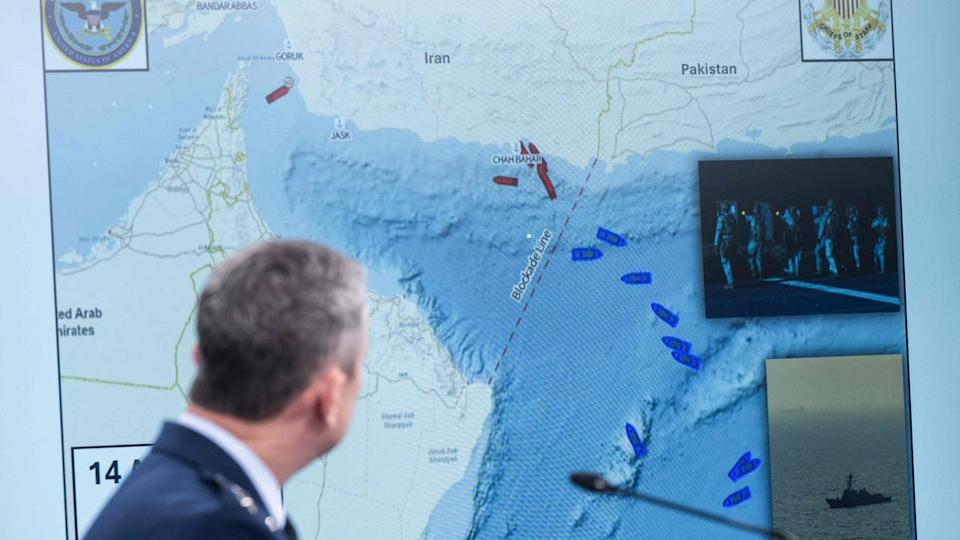
The US is blockading the Strait of Hormuz to cut access to Iran’s ports. Picture: Saul Loeb / AFP
Finance chiefs from the world’s top 20 economies expect the fallout from the Iran war will worsen before it gets better, Treasurer Jim Chalmers says.
Emerging from talks with G20 counterparts in Washington overnight, Mr Chalmers said that the conflict’s consequences “are already very serious for Australians, and they risk becoming severe” the longer the Strait of Hormuz remains closed.
“The global economy desperately needs to see the free passage of shipping in the Strait of Hormuz,” Mr Chalmers told reporters.
“This is a dangerous moment in the global economy.”

Treasurer Jim Chalmers says the global economy faces ‘a dangerous moment’. Picture: NewsWire / John Gass
The strait, a maritime chokepoint between southern Iran and Oman’s northern tip, has been effectively closed since the start of the conflict in late February, with Iranian drones and missiles making passage too perilous.
The closure has cut a fifth of the world’s oil supply and almost a third of its fertiliser supply, driving fuel prices to historic highs and sparking fears of a food crisis as farmers across the globe scramble to find alternative sources to boost their yields.
“Australians haven’t chosen the circumstances of this war, but they are paying a very hefty price for it at the petrol bowser and beyond,” Mr Chalmers said.
Having met with counterparts from key economies, including Japan, South Korea and China, he said everyone agreed that “even when there is a proper end to this war and the Strait of Hormuz opens again, it’s expected to take some time before the global economy normalises”.
“There is an expectation around the G20 that this thing has a little way to run yet, and that it’s entirely possible that it will get harder in the global economy before it gets easier,” he said.
The US has blockaded the Strait of Hormuz after peace talks with Iran failed. Picture: Saul Loeb / AFP
Mr Chalmers also said his talks in Washington were “an opportunity to compare notes and forecasts as we put the Budget together and release it in May”.
“We’re putting this budget together in very uncertain, very unpredictable, very volatile global conditions,” he said.
“It will be a responsible budget based on resilience and reform. It will strike the right balance between the pressures on people in the here and now and our intergenerational responsibilities.
“I’m confident that we’ll get those balances right, but I’m not complacent about it because we are hostage to developments in the Middle East.”
The US this week launched its own blockade of the Strait of Hormuz to deny access to Iran’s ports.
The blockade does not affect ships bound for other countries’ ports in the Persian Gulf.
It came after Pakistani-mediated peace talks failed.