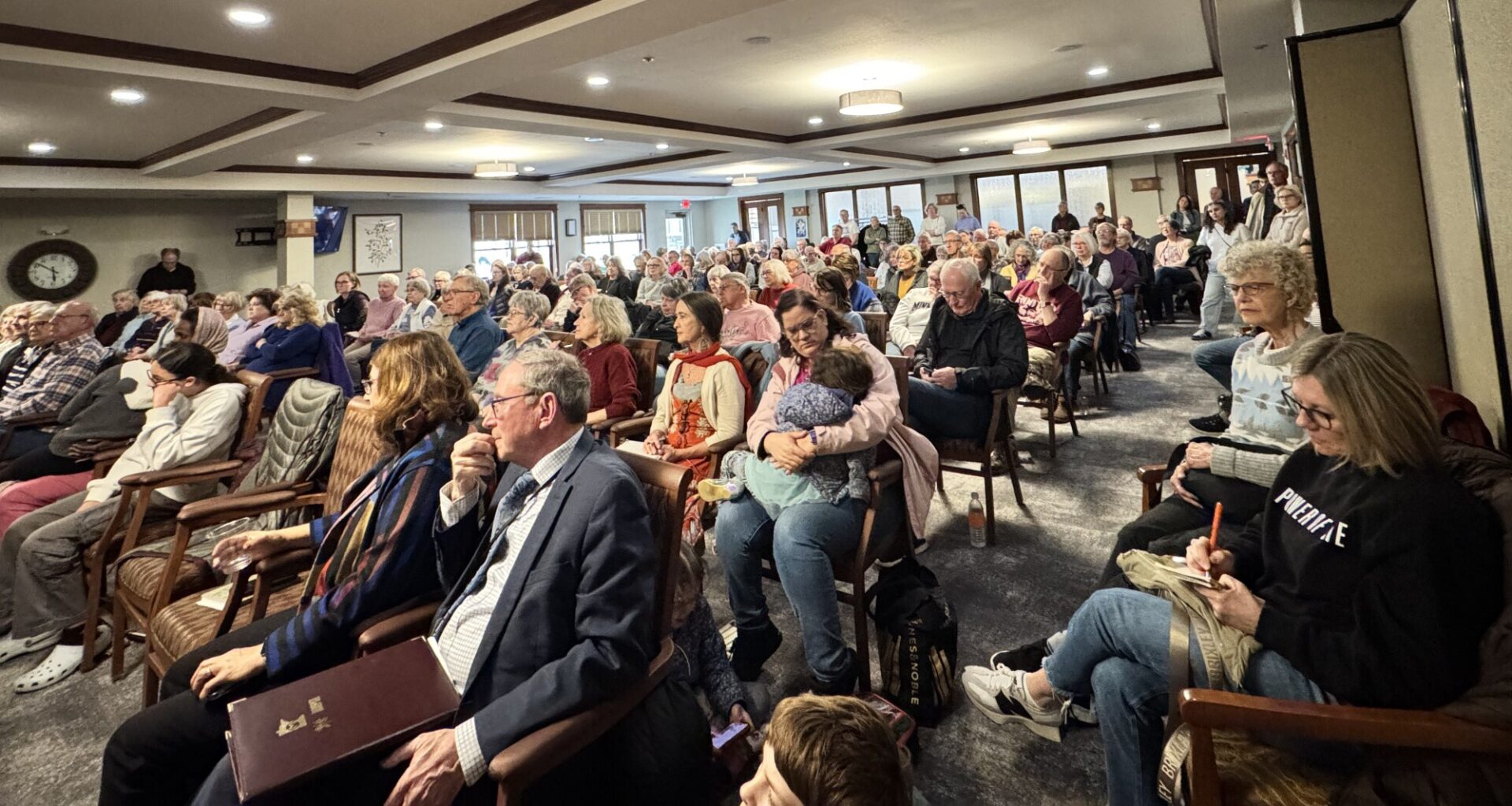
— The community room at Grand Arbor seats about 100, but Friday evening, April 17, folks were standing in the back and along the sides when all the chairs were gone.
They’d come for an event put on by
called “
Understanding Immigration – A Community Conversation
,” billed as “an evening of learning and conversation about immigration and its impact on our communities.”
Steven Thal is
an immigration attorney from the Cities
. He talked about some of the changes that are occurring in immigration law and the challenges of navigating it.
An
signed by President Donald Trump in January of 2025, aims at ending “
” — automatic citizenship for children born to undocumented or temporarily present parents. The policy is currently the subject of litigation, with the Supreme Court hearing oral arguments in the case Barbara v. Trump this month.
“So what happens to a baby that’s born here at Alexandria hospital, to two parents who have work visas, who are here legally?” asks Thal. “Suddenly the child doesn’t have any status; ICE is going to deport the baby because they have no status? Or what happens if you use the administration’s definition of allegiance? Let’s say one parent is a U.S. citizen, but the other parent is a non-citizen or doesn’t have status but owes allegiance to a foreign country. What allegiance does the baby have at birth? Many of these questions were not answered in the case that’s currently before the Supreme Court. But I can guarantee if birthright citizenship is struck down, it’s going to have ramifications that are beyond what’s been even imagined.
Thal says the executive order has already been challenged in other places around the country, and the case remains under consideration by the Supreme Court, with a decision, perhaps, by June.
He talks about one of his clients trying to attend Alexandria Technical and Community College.
“He’s from Iran. He came here legally. We applied to change his status as a B-2 visitor to an F-1 student and we were hit with a notice of intent to deny from the immigration service based on a presidential proclamation that restricted the entry into the United States for nationals from 12 countries, including Iran. But the point is, he was already here. And guess what? He didn’t come on a passport from Iran. He has dual citizenship; he came on a passport from the Caribbean country of Dominica. And yet we were still being challenged. We still don’t have a decision on this case.
Thal also talks about new deportation policies.
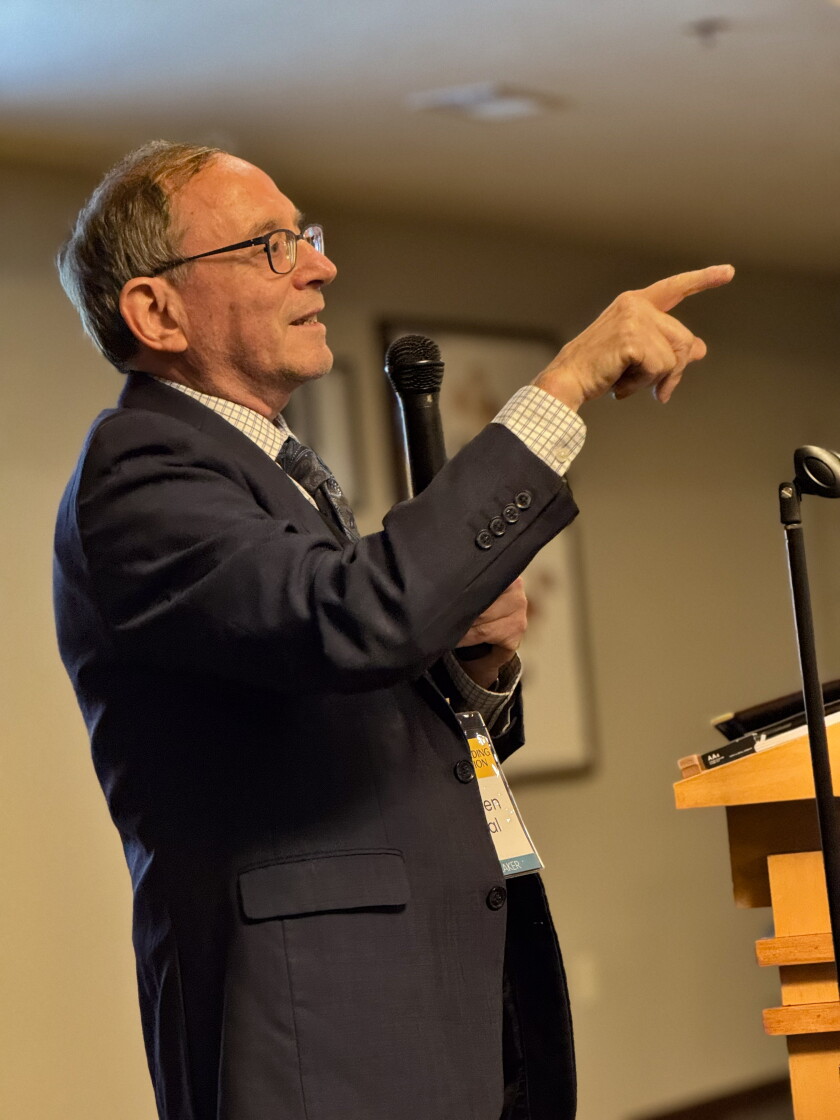
Steven Thal, immigration attorney, explains some of the changes in immigration law.
Lisa Johnson / Alexandria Echo Press
“We saw that in the Garcia case, where he was deported to Salvador and then later brought back. The latest on that case is now the government is proposing that he can be deported to Liberia.
“What’s happened is we’ve entered into a number of so-called ‘
where certain other countries have agreed to take back deportees from the United States. I recently had a case of asylum denied for a Peruvian, without even a hearing, because the government said, ‘Well, we now have a safe harbor agreement with Ecuador.’ And at the time that they were rolling this out, at the start of the Iran war, and we were actually invading Ecuador with our military to root out narco traffickers. That doesn’t sound like much of a safe harbor agreement, from this podium.
“Recently I’ve had another case pending for an individual from Cameroon, which is a very divided country, and the government is proposing that he be sent to Uganda. The individual happens to be gay, and Uganda has one of the most fierce anti-gay laws on the books — it’s a felony and severely punishable.
“Those are some of the challenges that we’re facing, with respect to the third country removals.”
Yasin Alsaidi has been in America for 40 years. He’s an
and works with
, so his conversation is informed by his training as a lawyer and his experience as an immigrant.
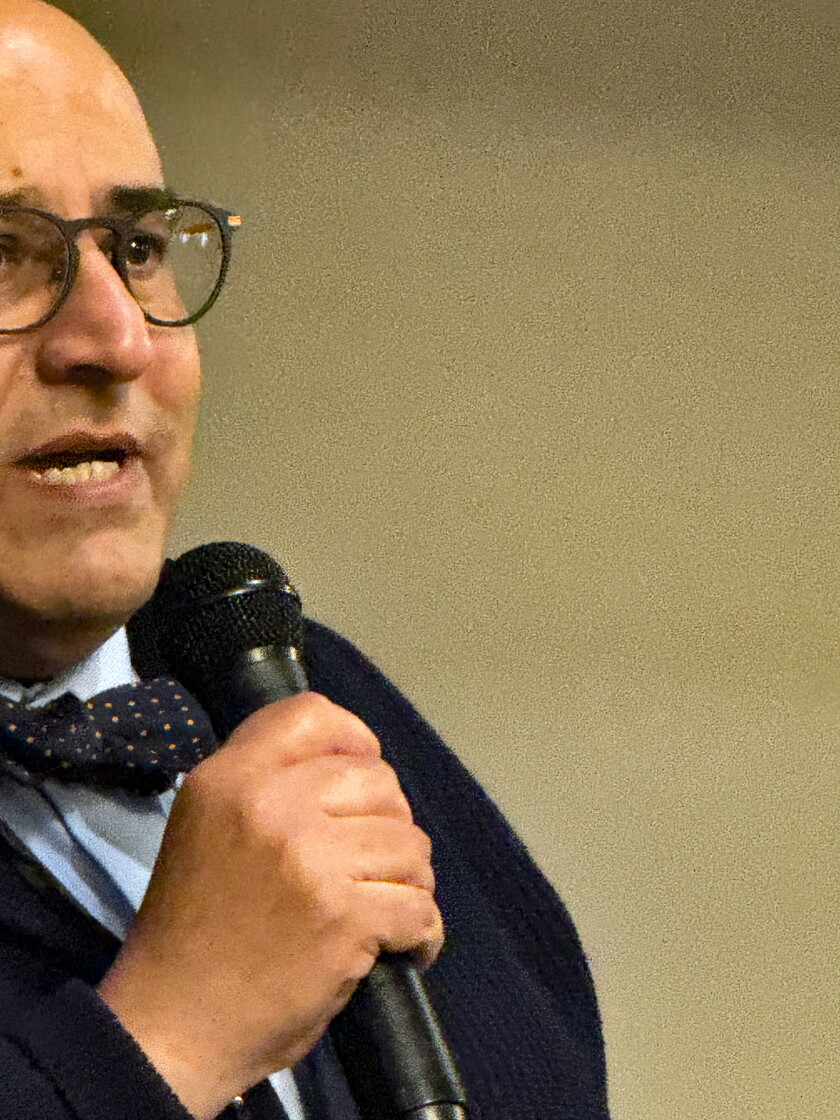
Yasin Alsaidi is an immigration attorney and works with Mid-Minnesota Legal Aid.
Lisa Johnson / Alexandria Echo Press
“I am blessed with a skin hue that doesn’t say I am of European descent,” he says, by way of introduction. “I still hang on to an accent, although I try pretty hard. Now some of you would like me and some of you would not like me, just based on these things. And all of that is fear. But the Constitution guarantees me, being here in the United States, whether I’m a citizen or not, that you can’t infer that I committed a crime based on these criteria. But this is what’s happening right now. This is what’s happening in the United States.”
Alsaidi talks about his experiences working with parents during the recent Metro Surge of ICE agents in Minnesota.
“In Minnesota, as in many other states, there is what we call a ‘delegation of parental authority.’ Basically, you can designate someone to stand in your shoes as a parent. We started doing those. We’ve done a bunch of those. I can’t tell you what an experience it is to sit across the room from a parent who is signing their kids away in case they get deported.”
Yasin says, sometimes when he’s in the office late at night, he gets philosophical.
“I’d like to understand what’s happening or why? I remember the political statement ‘We’re anti-illegal immigration.’ What I see is we have become anti-immigration. “
“Practitioners of immigration law wake up every day and they have a new set of rules, and they have a new set of obstacles that they have to overcome. Mr. Thal talked about the
. A lot of people refer to that as a ‘genius visa;’ those are the brightest that we get here. All of a sudden we have an executive order that says the company has to pay $100,000. All of a sudden we have people from banned countries. It started with 19, escalated to 39, now it’s 79. And how do you operate under laws by social media?”
Alsaidi talks about the asylum cases that he’s seen.
“If you are here, even undocumented, and you are a victim of a qualifying crime, or a victim of domestic abuse, or you have been trafficked, there’s a process that you go through to gain legal residency in the US. Usually some, if not most, of these people are under removal, so their deportation case is going through the courts.
“Starting last May, we started seeing motions from government lawyers trying to put their cases of removal back on the docket. Again, that’s something new. Here you are working with a client; they have been through hell and back, and they have this one hope of getting their life back together. And all of a sudden, the rug’s pulled out from under them.
“We used to have about 125,000 visas available for refugees.
That was dropped down to 7500, and only from one country, South Africa
, and only for one segment, white South Africans.”
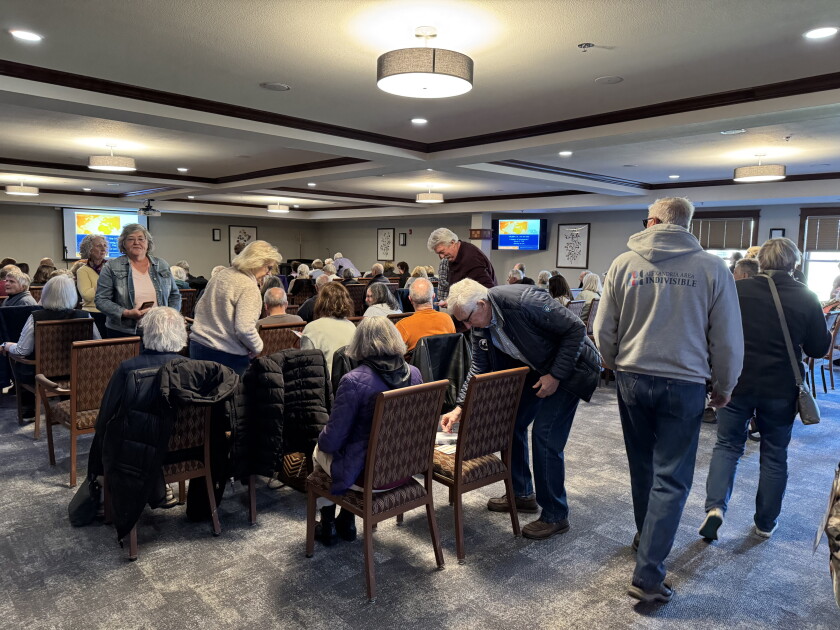
Audience members find their chairs at the Understanding Immigration forum.
Lisa Johnson / Alexandria Echo Press
Alsaidi grins at his white, mid-Minnesota audience. “We have a President who talks about ‘Why don’t we have refugees from Norway?,” he says, as the room erupts in laughter and applause. “The question answers itself: Why would they want to come here?”
“Refugees come here from a war-torn country,” he continues when the room quiets. “Nobody comes here as a refugee with $20,000 in their pocket. Doesn’t happen that way. A refugee who spends years in camps, if not decades. They’re being vetted by many different organizations. Some of them are international organizations with the UN, UNHCR. The State Departments vets them. Department of Homeland Security vets them, and then they’re given their refugee visa.
“After you come here as a refugee, you have one year and then you can adjust your status to a green card holder; to a lawful permanent resident. Operation Metro Surge happens, followed by Operation PARRIS (Post-Admission Refugee Reverification and Integrity Strengthening). Operation PARRIS started detaining people who are on refugee status. Take them to the Whipple Building, where they spent a few hours, and they were shipped to Texas.
“[People] from Minnesota found themselves in Texas. They were imprisoned; one day, someone opens the door and says ‘Just go. Go ahead. You’re free.’ And they’re like, ‘Can I have my driver’s license?’ ‘No.’ ‘Can I have any documentation?’ ‘No, but thank you very much. You’re free.’ So we had to scramble and work with other organizations to find caravans and cars because nobody could get on a plane or bus or anything like to come back to Minnesota. These are people that were here legally.”
Alsaidi knows only too well the trade-offs that come with leaving your home, even if you feel you have no other choice.
“Picking up and moving is not an easy thing. Being away from your family is not an easy thing. Working jobs that not a lot of people want is not an easy thing. But to them, that’s better than where they were.
“I’ve been away from my family for 40 years. My father passed away and I couldn’t go home. When I got out of law school and I applied, I had to pick up the phone and call the law firms that I was applying to. Because my name — the first thing that they would think is, ‘Does he speak English?’
“It’s not easy being an immigrant. It takes a really good reason to leave all that’s familiar. You have to start from point zero, and then you have a lot of obstacles, whether it’s language, whether it’s money, whether it’s assimilation, whether it’s adjusting. But people do it. I entered into law school looking for, not certainty, but an understanding of what the law is, understanding that there is a Constitution that we can always depend on.”
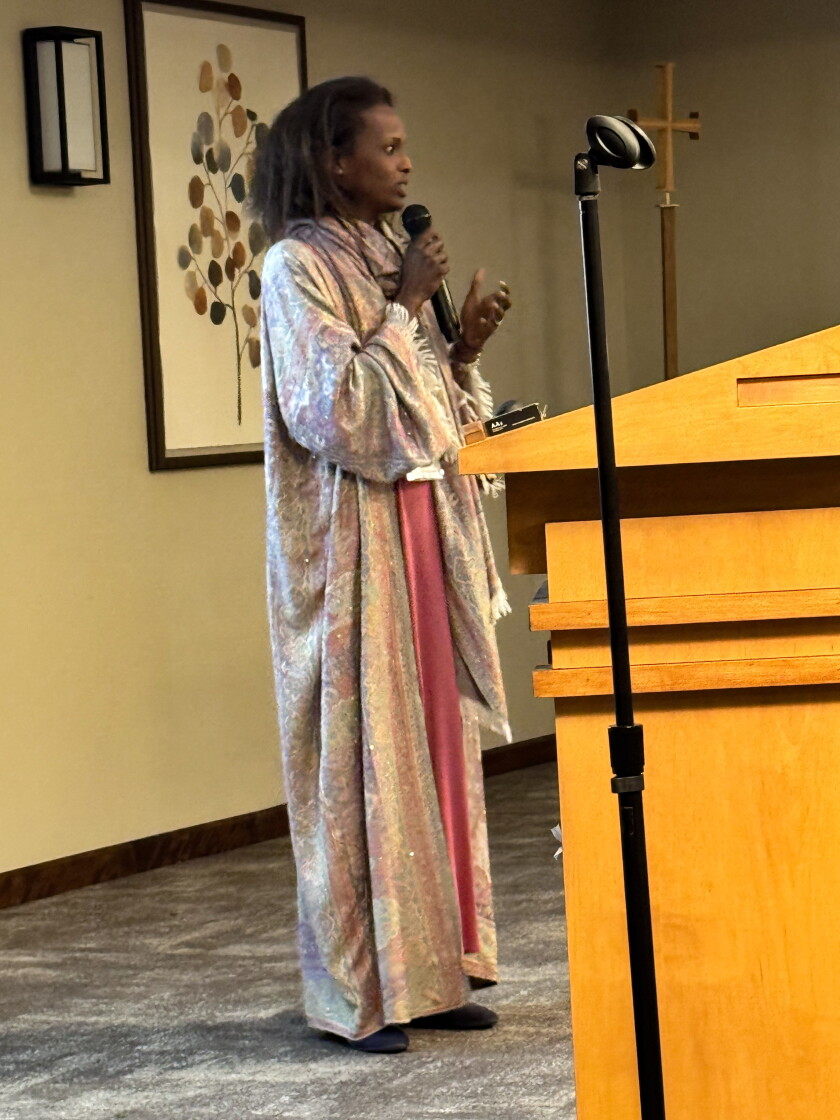
Ayan Omar is the St. Cloud Public Schools Equity Director.
Lisa Johnson / Alexandria Echo Press
stories of coming to America in 1993 as a Somali refugee with her big, sprawling family, are filled with a lot of joy. She talks about her father, a well-read mathematician who preferred spending time with books, and her mother, who she says “believed in religion in action. My mother believed in picking up trash, cleaning the environment. She believes a smile at your neighbor or complete strangers is more rewarding than sitting and memorizing a book. So I have the best of both worlds.”
She talks about learning English by watching “The Simpsons” and “Saved By the Bell” — and about how she learned “shut up” did not, in fact, mean “thank you.”
“I started to watch Mister Rogers. Every time I watched him, he would end it with, ‘You are beautiful just the way you are.’” She says that was just the message she needed “in a world where I just wanted to cower and hide away because I stood out. Not only because I was a Somali-American refugee, but I was also poor, although she says that revelation came later.
“We just knew every day to do better than the day before, with two parents that understood the responsibilities of bringing their America to life,” she says. “My mother is the most patriotic person you’ll ever meet. For her, so much of America’s goodness is what produced the positive outcome for her children. In my family, we have a community health nurse. I have a sister who lives in Switzerland, who works in the United Nations. I have a brother who’s a police officer. I have a brother who’s a teacher. So at some point, everything that my parents invested in us really did come to life.”
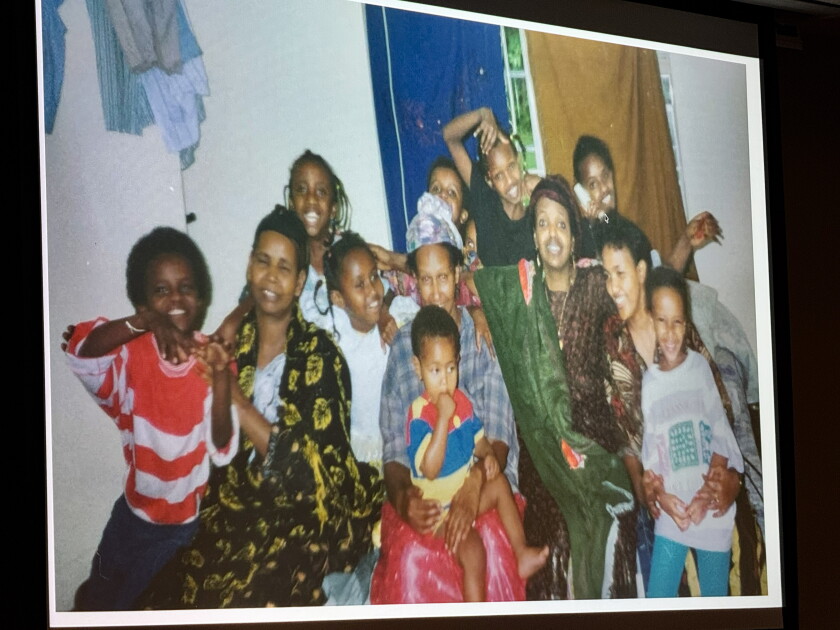
Ayan Omar says this is the only photo of her whole family after arriving in America, and she says everyone in her family has a copy.
Lisa Johnson / Alexandria Echo Press
Omar came to Minnesota to attend college at Minnesota State University – St. Cloud. She is currently the
St. Cloud Public Schools Equity Director
. She talks about being a Muslim, dating a Catholic, and their early efforts to convert one another.
“We quickly realized much of what we were trying to do was counter-intuitive,” she says. “Often we rely on the world wide web to learn about other humans when those humans are right there and then in our face. So I quickly changed my mindset. I said, I’ll just do something different. I said, ‘I’m going to attend church with you. You come to mosque with me.’ At the time, he was going to a small town church in Avon, Minnesota. Lots of farmers, hard working individuals. I got to see the church. You got to see people. I got to see how they interact. I got to talk to people, get to know them. And Catholicism started to look very different for me. It wasn’t words on the world wide web; it was a Bob, it was a Michael who lived in Avon. He did the same. He came to mosque with me. And he would get to talk to people. And we quickly changed our mindset. It’s not about what the world tells us. It’s about the local community, the people who live right here with us that determines how we understand about a faith, a culture.”
Inspired by the words of
, Omar says she tried to bring them into the classroom with her when she began teaching.
“Douglass said it’s easier to build strong children than to fix broken men. So I focused on the children. I was in a position of power as an educator, and I had an opportunity to inform, inspire and instruct what the future will look like. And I would start every year, the beginning of the school year, with a speech with my students. I said, ‘You’re always going to get 110% from me because you will be responsible for my kids. And if I want my kids to be in good hands, I’m going to have to give you 110%. For that reason alone, I love you.’ “
And she continues to feel that responsibility, too, not only to the children in her physical orbit, but for children around the world.
“I, too, was that child sitting in a refugee camp waiting on the world to answer the phone. And I will never forget that. Especially now, with everything that’s happening around the world, there are children who are waiting on us to answer their call. I believe every kid, every day, whether they live in Alexandria, they live in Saint Cloud — we have a responsibility for them. And I conduct myself as such. My mother raised me to believe, if you can’t help them, at least don’t hurt them — get out of their way. But all of these ideas fill my bucket in being the best person that I can be with, with the knowledge and the experiences that I have.”