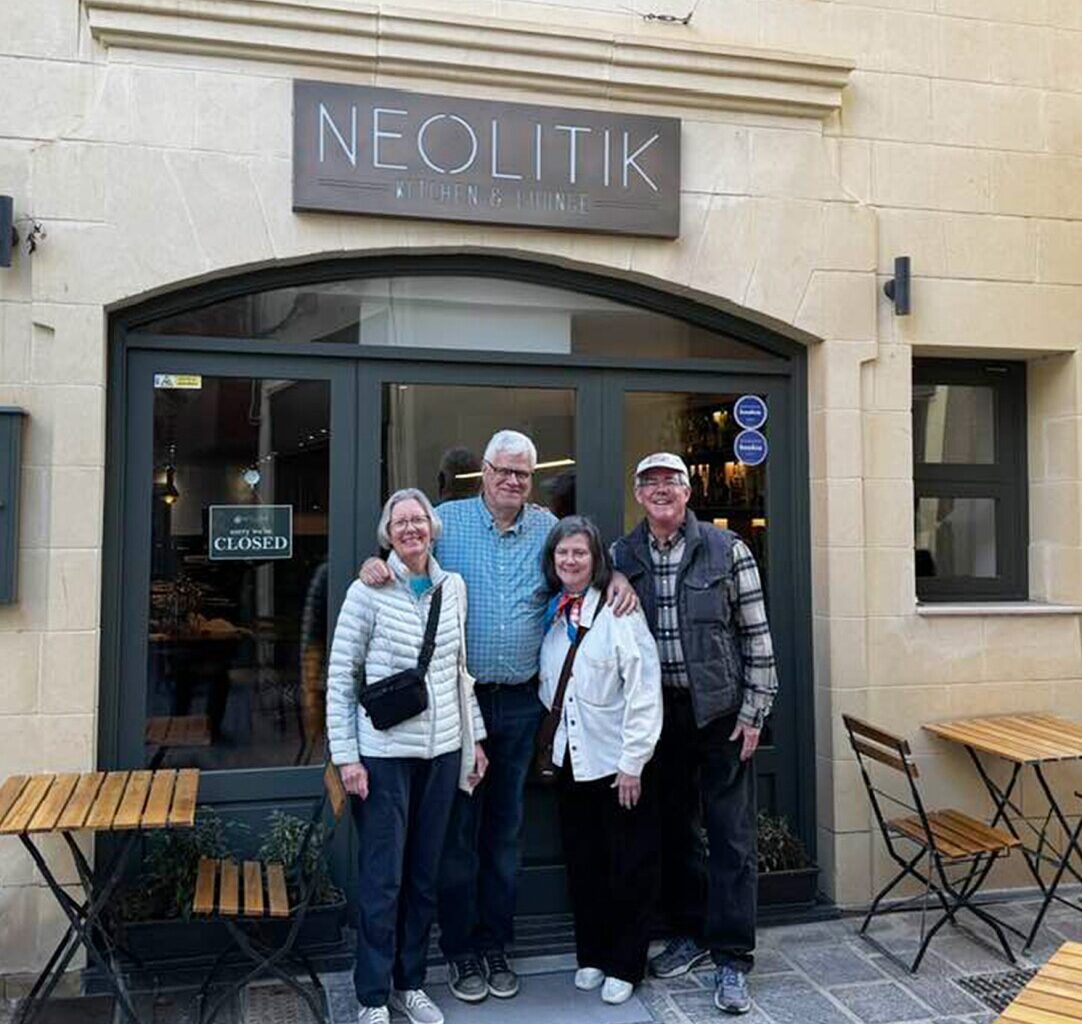
WORTHINGTON — The trouble with traveling alongside in-laws who are serious academics is that a fellow feels obliged to present his road notes in a manner that might withstand the inspection of sentient and literate minds. One must, apparently, offer facts — real ones — and meaningful observations besides.
Well now, dear reader, I shall try my damndest. But I must confess straightaway that I am not the scholar you may have been led to expect. I come from simpler stock and simpler soil.
Still, I hope to pass along a few significant happenings in this wide world in a tone that a layman might follow without needing a faculty lounge nearby.
My world is a modest one — bounded by corn, soybeans, crop rotation and the steady music of a chisel plow cutting through black earth. Where I’m from we like to think of ourselves as good stewards of the land, though the land, I suspect, has been stewarding us for far longer.
On rare occasion I cast off those moorings and wander off toward some far-flung place I’ve never been — usually somewhere suspiciously lacking in corn or soybeans.
I’ve always considered myself a late bloomer in matters of world travel. I didn’t really begin until about 25 years ago. But I’ve long had an interest in sociology, anthropology and the curious ways communities hold themselves together — or come apart.
Travel has a way of enlarging a person’s understanding. It reveals that the world is considerably bigger than the view from one’s own doorstep… even if, now and then, you have to stand on your tiptoes to glimpse another perspective.
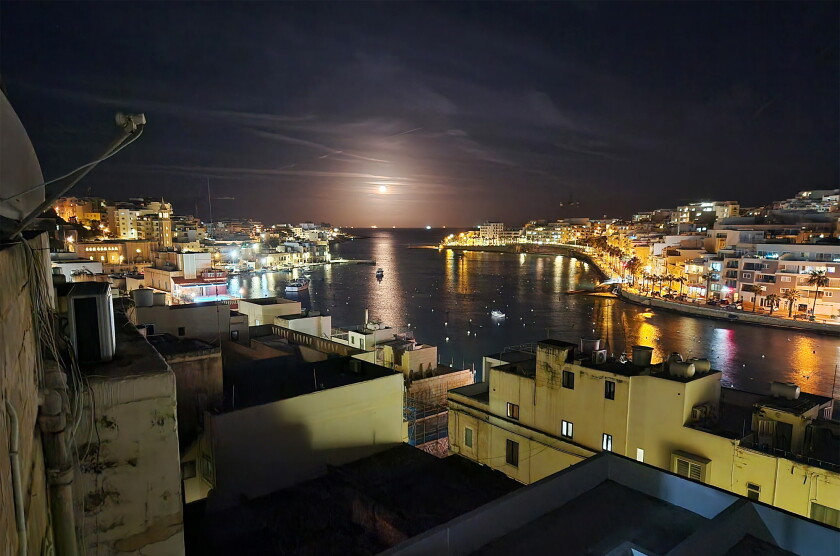
After an epic journey — three days longer than planned thanks to an ice storm — I finally arrived in Malta.
Truth be told, only about half of my friends could point to Malta on a map without first warming up with a little guesswork.
Contributed / Bill Keitel
So let’s pull out the atlas together. We’ll wander through Brussels, drift down to Italy, slip past Sicily, and then cross about a hundred kilometers of Mediterranean blue until we reach the island of Malta.
Now Malta is small — remarkably small, really. Yet this little island has had an outsized effect on the course of history, and in ways that echo right down into the lives we lead today.
Some folks may recall Malta from the Malta Accords signed near the end of the Cold War. But the island’s true historical stature towers far above that modern footnote.
Most of us grew up hearing about the first and second World Wars without much consideration that there were other “world-shaping” conflicts long before them — wars that shifted the direction of civilizations. Wars we may have dozed through in world history class. (At least I did. Sometimes knowledge doesn’t knock on your door until you’ve gotten a good deal older.)
The year was 1565, and the island of Malta became the focus of the Western world.
The Knights of Malta found themselves facing the might of the Ottoman Empire under Sultan Suleiman the Magnificent. His forces included not only imperial fleets but also the infamous Barbary corsairs — sailors who were as fond of plunder as they were of sailing.
Now, consider the situation Europe found itself in at the time.
Christianity held sway across much of Europe, while the Ottoman Empire was expanding with impressive determination. Spain had begun funneling vast wealth from the Americas into Europe, while the old structures of Roman influence had long since given way to new powers.
Within a century, the Ottomans controlled roughly two-thirds of the Mediterranean. Their expansion seemed unstoppable.
And at the center of this rising storm sat a small island — about 9 by 17 miles.
Malta had no special interest in becoming the hinge of history. It was a pleasant place, minding its own affairs. But geography has a way of volunteering a place for trouble whether it wants the job or not.
In 1551, the Ottomans had already swept through the nearby island of Gozo, carrying off nearly the entire population — 5,000 to 7,000 souls — into slavery. They were never seen again.
The Knights of Malta failed to do their job of protection.
That sort of thing tends to concentrate the mind.
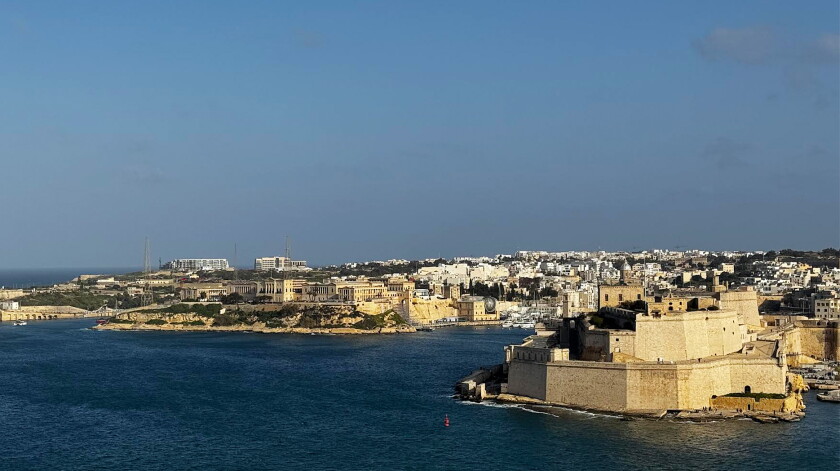
The people of Malta concluded that their best hope lay in stone — quarrying it, stacking it and shaping it into fortresses strong enough to discourage the next visitor with imperial ambitions.
And here is a small observation for you: geography has an uncanny influence on religion.
Contributed / Bill Keitel
If you are born in India, chances are good you’ll grow up Hindu. In Turkey, Muslim. In Great Britain, Christian. One begins to suspect that geography has had at least as much say in these matters as divine revelation.
And Malta’s geography — sitting squarely between Europe and North Africa — made it the crossroads of competing worlds.
So in 1565, Suleiman the Magnificent dispatched a massive force — perhaps 80,000 men and 800 ships — to take the island and clear this Christian stronghold from the Mediterranean.
For the people of Malta, the stakes were perfectly clear. Defeat meant death, or worse — chains and slavery like their neighbors in Gozo.
The odds were daunting. The defenders — Knights and Maltese alike — were outnumbered perhaps eight to one. Not good odds anywhere and the locals were called in to assist with this endeavor.
But this was not their first unpleasant experience with invading armies. They had spent the intervening years quarrying stone and building fortifications — higher walls, thicker bastions, stronger gates. The sort of defenses that require the effort of an entire population.
When the Ottoman fleet arrived, the harbors filled with ships and the hills rang with cannon fire.
Wave after wave of attackers surged toward the fortifications. The walls shook, the defenders bled and the battle raged for months.
At one point the attackers pressed so fiercely that they began climbing over the bodies of their fallen comrades, using them almost as steps toward the ramparts.
But the walls held.
They had been built just a little higher than human determination could quite overcome — even when stacked tragically upon itself.
And there, on that narrow margin of stone and stubbornness, rested the fate of Malta… and perhaps of Italy, Spain and much of Europe beyond.
So it may be that the prayers spoken today in churches across parts of Europe — and perhaps even your own — owe a quiet debt to the Knights of Malta and the citizens who stood beside them on that small island in 1565.
History, like farming, sometimes turns on the work done quietly and patiently long before the storm arrives.