There’s a line buried in the Spring Economic Update 2026 tabled by the Finance Minister yesterday that I keep coming back to.
“Building Canada Strong includes a strong sporting system.”
At first glance, it feels like a throwaway budget line. The kind of sentence you skim past on the way to the bigger-ticket items: sovereign wealth fund, Arctic infrastructure, defence industrial capacity, trade diversification, $6 billion to recruit and train more workers in the trades, and critical minerals.
But I don’t think it is filler.
I read it as a clue to how the Carney government thinks about the country right now.
He’s argued many times that Canada needs to get stronger, more sovereign, less dependent, and more capable of acting in a world that has become less stable and less forgiving. But a country is not only made stronger through ports, mines, procurement, or trade corridors. It is also made stronger when people feel like they belong to something worth building.
That’s why I was surprised at first at the $755 million investment in sport. But after a while, it makes complete sense.
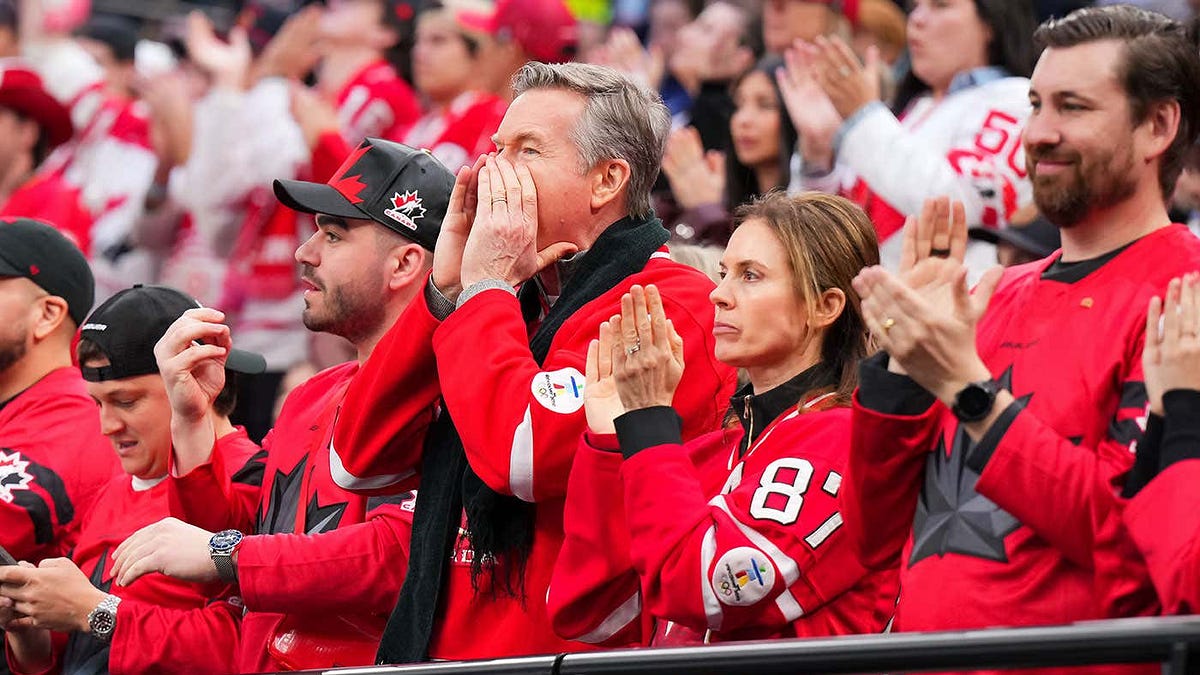
This investment in sport matters because sport is one of the few places left where Canadians still gather together, in person, across difference, and feel something collectively.
For years now, I have been writing about the shift from scarcity to precarity. It is the feeling that life has become more conditional, more unstable, and harder to plan around. It shows up in affordability anxiety, but it goes deeper than that. Institutions feel more distant. Politics feels more hostile. The future feels less guaranteed.
In that kind of environment, people look for reassurance. Not always in big ideological ways. Often in simple, lived ways. A kid joining a team. Parents sitting in a rink or on a soccer sideline. A community gathering around a tournament. A country watching one of its athletes win on the world stage.
My sense is that these moments are not trivial. They are part of how people experience belonging. And a sense of belonging is in high demand when people feel things around them are uncertain.
That is why I read the sport investment as social infrastructure, not just sport policy.
The evidence points in that direction too. Participation in sport is linked to better mental health, higher self-esteem, stronger social connection, and a greater sense of belonging. Team sport seems to matter especially because it teaches people how to cooperate, lose, recover, trust others, and be accountable to a group. Those are athletic skills, but they are also civic skills.
There is also a health system argument here. Getting more Canadians active, especially children and youth, is not just nice to have. It is prevention that can reduce pressure on a health system already struggling under the weight of chronic illness, mental health demand, and an aging population.
But the most interesting part to me is the unity argument.
Canada is not an easy country to hold together. It never has been. Quebec nationalism, western alienation, Atlantic frustration, Indigenous reconciliation, urban-rural divides, language, class, religion, and generation. These are not temporary irritants. They are built into the structure of the country.
Carney said at the Liberal convention that unity does not require uniformity. I think that is the right line. But unity does require something. It requires repeated experiences where people feel, even briefly, that they are part of the same national project.
Sport can do that.
A gold medal does not erase regional alienation. A World Cup match in Toronto or Vancouver does not resolve constitutional tension. A national team cannot fix affordability or housing. But those moments can make the country feel real. They can create emotional common ground that politics often fails to produce.
That may sound soft, but I don’t think it is. National pride is not fixed. It rises and falls. It has to be renewed. And sport is one of the most reliable ways to renew it. I still believe the Blue Jays’ playoff run in 2015 help give the Trudeau Liberals momentum because it felt new, optimistic, and positive – something that aligned with the message he was offering at the time.
There may also be an international piece too. If Canada is serious about diversifying trade and building relationships beyond the United States, then Canada needs to be better known in the world. Sport does that without sounding like propaganda. Athletes, teams, and major events project a version of the country that people can feel before they analyze it.
The biggest part of the investment, $660 million for National Sport Organizations, may be the most overdue. Their funding has been largely unchanged since 2005. In real terms, that means 20 years of erosion while costs rose, the population grew, and global competition became more intense.
Canada has been asking a hollowed-out system to keep producing world-class results. That is not sustainable. And it showed in this year’s Winter Olympics as Canada posted its lowest medal count in years.
The $45 million for athlete support, safe sport, and mental health matters too. The scandals in many sports did real damage. If sport is going to play this larger social and national role, people need to believe the system is safe, fair, and accountable.
So when I look at this investment, I don’t see a feel-good budget item. I see a government trying to connect economics, identity, health, community, and sovereignty into one larger project.
And I think that is the right way to read it. And it entirely aligns with the public mood right now.
Sport will not solve precarity. It will not fix housing. It will not settle the unity question. But it can give Canadians more moments when the country feels like it belongs to them, and when they feel like they belong to it.