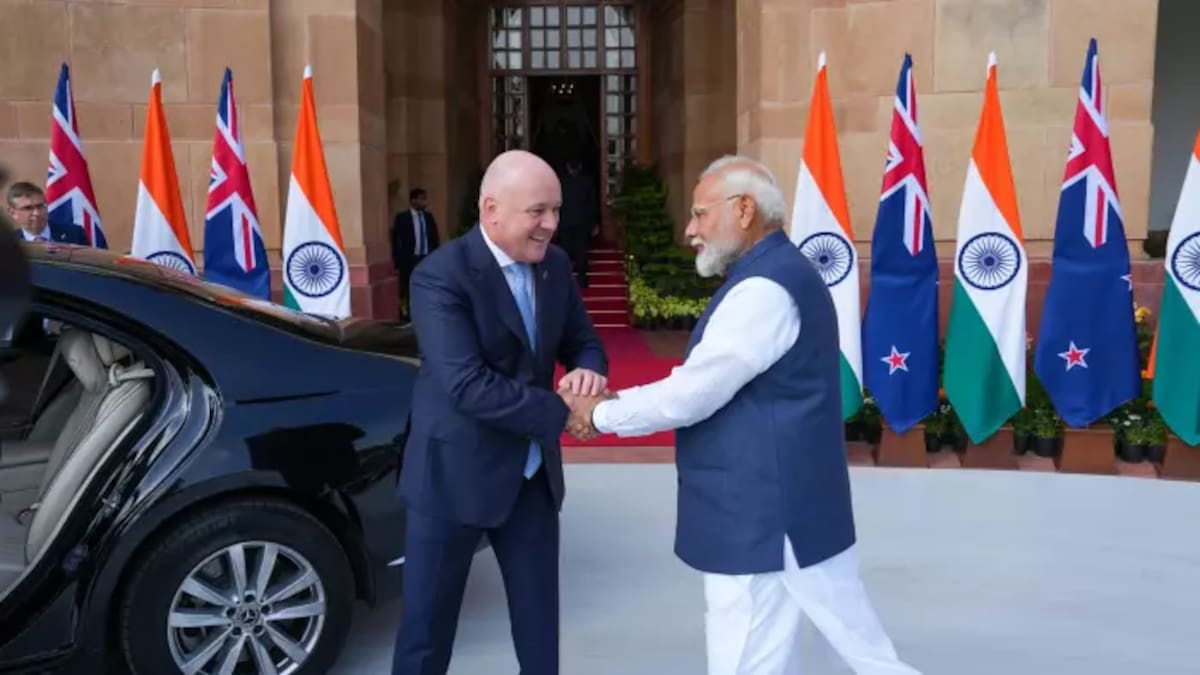
India, meanwhile, is accelerating its own network of agreements after agreeing one with the European Union earlier this year and with Britain last year.
That urgency isn’t abstract. Exporters in both countries are operating in an era of volatile freight routes, sudden policy shifts, and punitive tariffs that can appear or disappear through the stroke of a pen.
The value of a trade agreement, in 2026, is as much about predictability as it is about price.
On paper, the FTA’s provisions are significant.
India gets duty-free access for 100% of its exports to New Zealand – something its industry groups say could help small and medium-sized firms across textiles, leather, gems and jewellery.
New Zealand exporters, in turn, secured tariff relief on products such as wool, kiwifruit and apples, while wine duties (currently 150%) are set to fall sharply over the next decade.
The FTA also includes a US$20 billion ($34b) investment commitment from New Zealand over 15 years, and 5000 temporary employment entry visas for Indian professionals.
In the hallways of the Bharat Mandapam Convention Centre the optimism was easy to find – in the three ministerial speeches India and New Zealand each gave across the business forum, signing ceremony and celebration event, and the all-day conversations with local businesses and officials.
A nation of about 1.4 billion people with an economy of more than US$4 trillion in nominal GDP was fully engaged and meaningful friends with a nation of only 5.4 million with an economy of about US$280b.
Many described it as “forward-looking”, designed to broaden co-operation and open fresh opportunities for firms looking to diversify their markets.
Still, anyone treating the signing as a happy and tidy win for everyone is missing the politics that made these negotiations so long and so stop-start.
In New Zealand, parts of the coalition Government have already questioned whether the FTA delivers meaningful market access for dairy – our top export – even as it opens its market more fully in other areas.
There are also legitimate questions about labour-market settings.
Specialised visa pathways and expanded work rights can be a net positive when they target genuine skill shortages and are matched with strong compliance. But they can also become political lightning rods.
The dairy carve-out in the FTA captures the challenge.
India has agreed to allow New Zealand to send dairy ingredients duty-free for processing to then be re-exported. Indian dairy farmers and co-operatives will want assurance that any “intermediate goods” aren’t used to circumvent rules and leak into their domestic market. That requires prevention mechanisms that are actively enforced.
This agreement also lands amid India’s broader trade diplomacy, including difficult conversations with the United States, which views the subcontinent as a geopolitically important link with China, Russia and emerging economies.
This FTA can strengthen India’s negotiating posture by demonstrating a willingness to move ahead with other partners even when talks with Washington are complex.
If the signing had one unifying subtext, it was that the world is rewarding countries that can keep doors open, rules clear and partners confident.
Trade officials will tell you that FTAs succeed or fail in the months after the cameras leave.
For New Zealand, that means being transparent about what was gained and what wasn’t, and ensuring exporters can use the new preferences without red tape. The upcoming Parliament select committee process is important for this.
For India, it means pairing market opening with credible enforcement, especially around the dairy processing and re-export pathway so domestic producers trust the system.
For both countries, it means publishing clear guidance for businesses, resourcing customs and compliance, and tracking outcomes.
When the ink dried, the room moved on quickly – exchange of gifts, handshakes, photos, the quiet shuffle of folders being closed.
Of course, the signatures weren’t the finish line. They were permission to do the harder and less visible work of making openness and connectedness enduring.
Catch up on the debates that dominated the week by signing up to our Opinion newsletter – a weekly round-up of our best commentary.