SOUTH BELOIT, Ill. (WIFR) – A fish head fell into a mason jar atop a table inside South Beloit council chambers. Wearing an apron, Adam Elbrichi poured brown sugar into the concoction.
A standard vote for a special use permit became a stage for science for one night only. Before Monday’s city council meeting began, Elbrichi offered a live demonstration of his life’s work: fish fertilizer.
“The fish fertilizer is just one small part of this whole thing,” he said.
With a few natural ingredients — like brown sugar, fish and extract mixed with licorice, ginger, garlic and spent beer — the creator of Behera Planet showed the fertilization process in action.
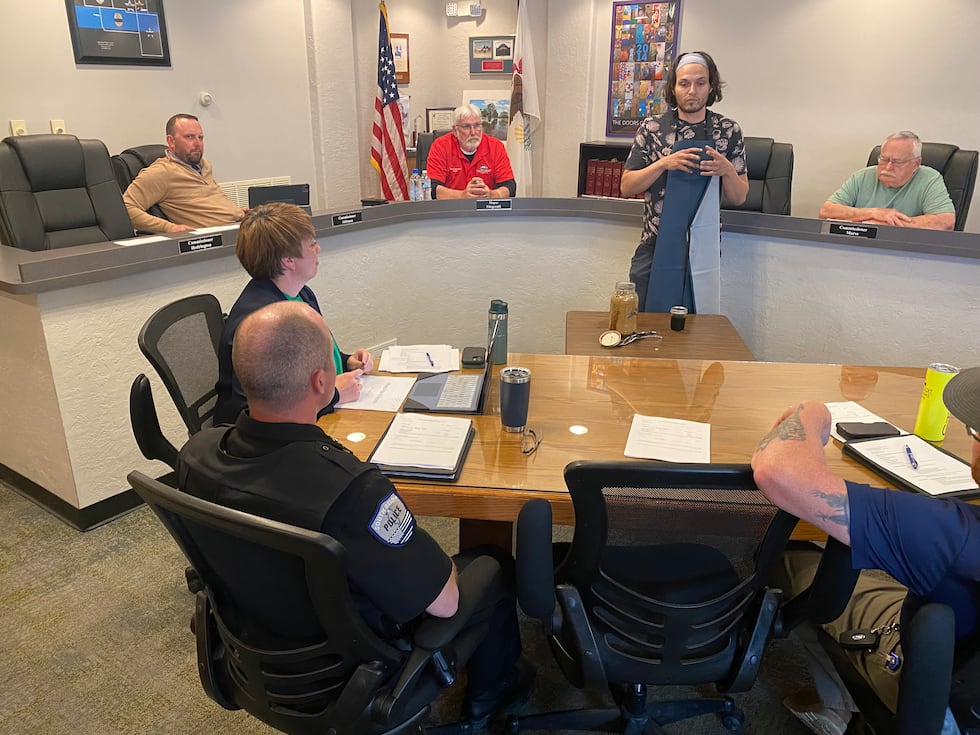
The 34-year-old studied biology at Rock Valley College and Rockford University.(Nathaniel Langley)
“The current fertilizer industry — being all sourcing everything from overseas or used all industrial chemicals and not real food ingredients — they’re not really basing their care for plants and soil on an actual nutrition cycle,” argued Elbrichi. “We try to aim to get around that by using all biological methods.”
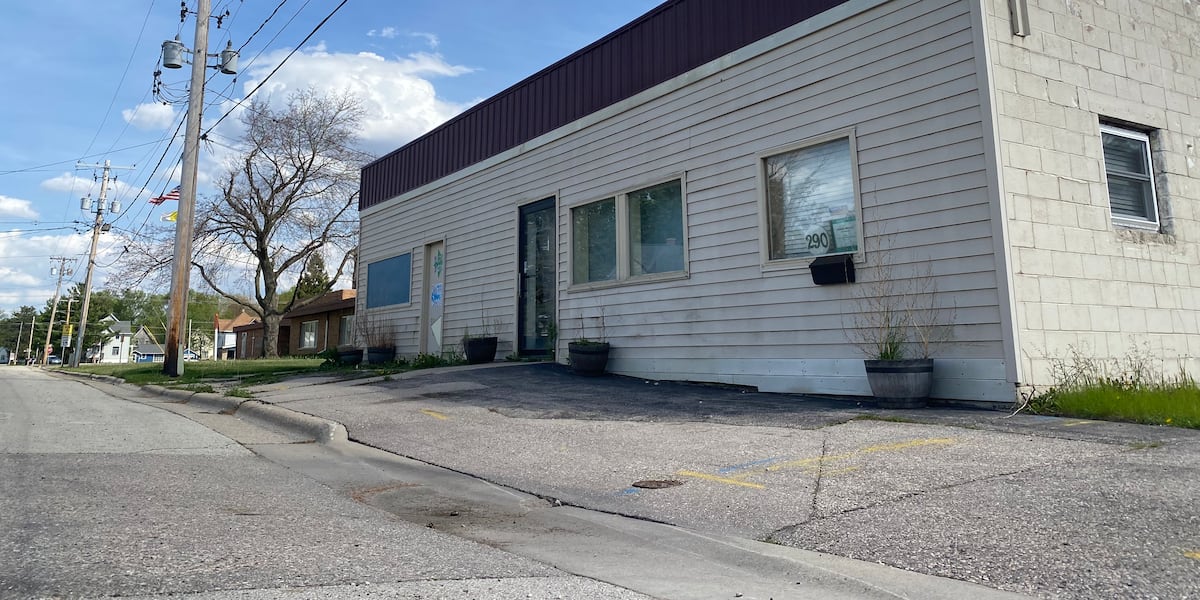
To start operation in a facility at 290 Elmwood Ave., Elbrichi required city council’s approval for a special use permit.
Commissioners approved the business 3-1, with Mayor Tom Fitzgerald, Commissioner Ryan Adleman and Commissioner Courtney Prentice voting for, Commissioner Ken Morse against and Commissioner Brian Hedrington absent.
The vote inspired an audience of about 30 community members, some concerned about a “fishy” business, and others supportive of the agricultural work not yet seen in the Rockford region.
How It Works
Elbrichi studied biology at Rock Valley College and Rockford University. Over the course of a decade, and alongside partnerships with producers, he pursued a process to support farms with natural fertilizer.
With research finished, the 34-year-old from Rockford looks to plant roots in the region. He explained nearby farms ready to purchase, and the community’s industrial history, attracted him to South Beloit.
“We have organic farms, non-organic farms, tons of gardeners, and tons of people growing plants indoors, and we will seek to provide to all those people.”
His fertilization process starts with fish scraps, specifically from invasive Asian carp he’ll buy from fishermen — one ton per month as the operation commences. In a sealed barrel, brown sugar supports a microbiome which breaks down the fish’s proteins into amino acids and nitrogen. Fermentation lasts about a year before a liquid is prepared to support farm fields.
Elbrichi stressed his goal is to repurpose as much waste as possible by using invasive species and natural ingredients.
“Our process is very simple. There’s no heating involved. There’s no steam or off-gassing,” describes Elbrichi. He plans for several steps of filtration to prevent air from leaving the building as well.
Smell Concerns
Behera Planet’s building neighbors Saint Peter Catholic Church and apartments. Ken Collins moved next door months before Monday’s vote and considers his home the ideal retirement spot.
“It’s going to be a pure mess, man,” he felt about the fish fertilizer business. When told of the environmental claims, Collins contended Behera, a Moroccan term for farming many things within one system, can “do good” elsewhere.
“Find a nice little plot, and hey, put your little fish fertilizing company right there.”
A handful of community members echoed Collins’ concerns during Monday’s demonstration and public comment period.
“Our city leaders need to be more interested in the businesses that are here now,” said one woman.
Although some acknowledged the demonstration eased their nerves, others worried what happens with the gas built up by the fermentation.
South Beloit Police Chief Adam Truman escorted a woman out of the meeting who spoke out of turn, claiming the business could lead to a similar situation like 2021’s Chemtool explosion — when a massive fire erupted at the chemical facility in Rockton.
South Beloit Mayor Tom Fitzgerald and Elbrichi dismissed the claim. Behera’s gas will be carbon dioxide, which isn’t flammable and is often used to suppress fires.
What’s Next
Elbrichi considers Monday’s approval the first of many hoops to swim through. His operation requires further signatures from the U.S. Department of Agriculture and the Illinois Department of Agriculture.
He expects to open by the end of summer 2026 and added his goal is to buy land and incorporate dozens of greenhouses to support the fermentation.
Fitzgerald told council Behera’s special use permit comes with qualifications, including no smell leaving the building.
“If you don’t adhere to these ten points, then you lose your business right then.”
Just after earning council’s support, tears streamed from Elbrichi.
“It’s an incredible thing to be a part of a scientific process that I have control over,” he said, “and I’m not being forced to use chemicals that poison me or the people around me.”
When asked how he’ll earn neighbors’ trust, Elbrichi exclaimed science will prove naysayers wrong.
Copyright 2026 WIFR. All rights reserved.