
For the better part of the last seven years, Wall Street’s major stock indexes have been unstoppable. The broad-based S&P 500 (SNPINDEX: ^GSPC) has rallied at least 16% in six of the last seven years, while the iconic Dow Jones Industrial Average (DJINDICES: ^DJI) and technology-driven Nasdaq Composite (NASDAQINDEX: ^IXIC) have reached psychologically important levels of 50,000 and 24,000, respectively.
Although the annualized return of stocks is unrivaled over the very long term, compared to other asset classes, getting from Point A to B is typically an adventure for investors. Thanks to an impending shift at America’s foremost financial institution, the Federal Reserve, the stock market may be readying for one of its wildest rides yet.
Will AI create the world’s first trillionaire? Our team just released a report on a little-known company, called an “Indispensable Monopoly,” providing the critical technology Nvidia and Intel both need.
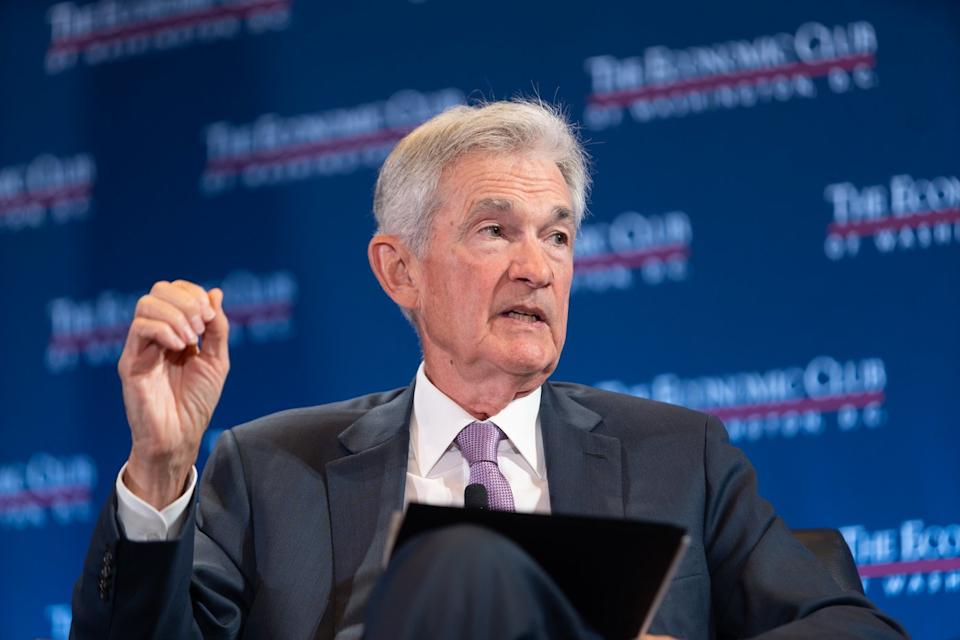
May 15 will mark Jerome Powell’s final day as Fed chair. Image source: Official Federal Reserve Photo. Fed chair nominee Kevin Warsh aims to change the central bank’s narrative
May 15 marks the final day Jerome Powell will serve as head of the Fed.
The end of his tenure has been well telegraphed for a year, thanks to an ongoing public feud with President Donald Trump over interest rates. Whereas Trump has repeatedly called on Powell and the other members of the Federal Open Market Committee (FOMC) to aggressively cut interest rates to 1% (or below), Powell has been steadfast in the idea that economic data will guide the FOMC’s policy decisions.
Assuming U.S. Senate confirmation, it’ll also mark the beginning of the road for Kevin Warsh, whom Trump nominated to succeed Powell as Fed chair. Although Warsh brings five years of experience to the position — he served on the Board of Governors of the Federal Reserve from Feb. 24, 2006, to March 31, 2011 — he aims to change the central bank’s narrative, to the detriment of the stock market.
For starters, Warsh has been a vocal critic of the Fed’s bloated balance sheet. Between August 2008 and March 2022, the central bank’s total assets ballooned tenfold, from just shy of $900 billion to almost $9 trillion. Though a quantitative tightening cycle modestly lowered this figure to $6.7 trillion, Warsh has been clear that he wants to see the Fed deleverage its balance sheet and become a more passive market participant.
