
VENICE, Italy and OTTAWA, ON, May 5, 2026 /CNW/ – The National Gallery of Canada (NGC), commissioner of Canada’s participation in the 61st International Art Exhibition – La Biennale di Venezia, unveiled today the exhibition Abbas Akhavan: Entre chien et loup.
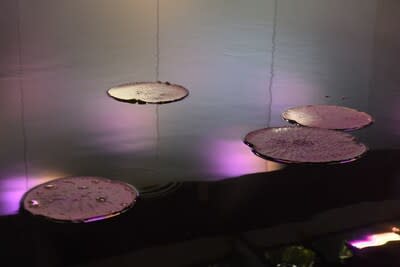
Installation view, Abbas Akhavan: Entre chien et loup, 2026, Canada Pavilion, 61st International Art Exhibition – La Biennale di Venezia. Commissioned by the National Gallery of Canada and presented in partnership with the National Gallery of Canada Foundation and the Canada Council for the Arts. ©Abbas Akhavan. Photo: Francesco Barasciutti (CNW Group/National Gallery of Canada)
Over the past two decades, Abbas Akhavan has honed a poetic and thoughtfully site-specific practice. With each project, he enters into a protracted conversation with a place: its architecture, economies, human and non-human inhabitants, and their rhythms. Gardens and organic matter in general—along with cultural heritage and historical iconography, particularly the fluidity of symbols throughout history, contexts, and conflicts—have been recurrent preoccupations and foundational themes in his work.
For Entre chien et loup, his site-specific installation for the Canada Pavilion, Akhavan reimagines the building’s architecture as a Wardian case: a precursor to the terrarium used to transport plants throughout the British Empire. With a custom pool outfitted with grow lights to present giant water lilies of the genus Victoria, the pavilion also evokes the Crystal Palace, constructed to house the Great Exhibition of 1851 in London, where the plant was prominently displayed. Although native to South America, the water lilies were a natural wonder of the Victorian era. Named in homage to Queen Victoria, they are considered her emblem.
In collaboration with the Royal Botanic Gardens, Kew (UK), seeds of the water lilies were first transplanted to the Botanical Garden of the University of Padua (IT) for germination. From there, they were transported to the Canada Pavilion to reach maturity during the Biennale Arte 2026. The artist has replaced the structure’s facade with glass panels, making the plants visible from the exterior. This central installation is framed by additional sculptural works inside the pavilion and in its courtyard.
Anchored by these magnificent lilies, the installation operates as a satellite garden while the Waterlily House at Kew Gardens is closed for renovation. By re-presenting these plants and cultural emblems within the pavilion of a Commonwealth country established under the reign of their namesake, Akhavan offers a meditative space in which to revisit a pivotal moment in world history and to consider how we position ourselves today in relation to our natural and built environments.
The title Entre chien et loup – literally “between dog and wolf”– evokes the indeterminate nature of twilight, when distinctions blur and a wolf might be mistaken for a dog. In this liminal space, the exhibition invites us to reconsider our relationship to the natural and built worlds.
