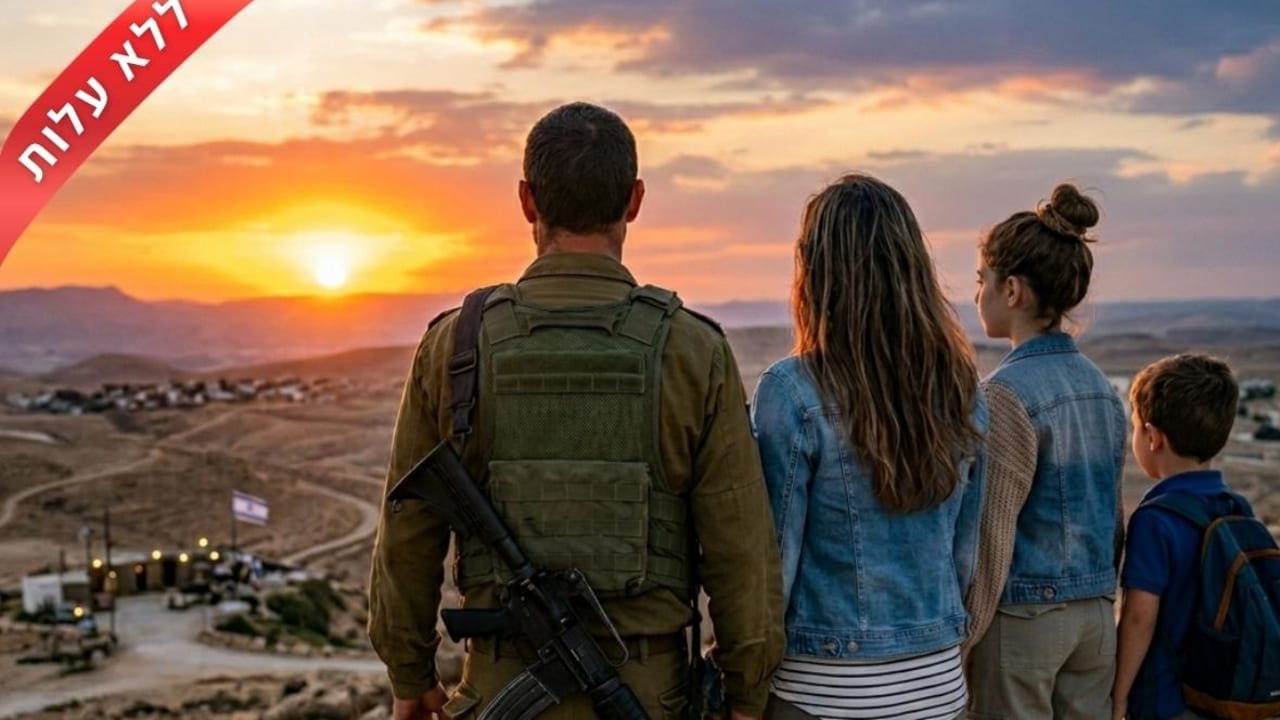
The “Tushiya” program by the Israel Public Health Association provides support groups for wives, children, and parents of veterans with combat-related PTSD. These groups combine experiential workshops with professional guidance, allowing families to share and process their difficult reality.
Since October 7, 2023, the State of Israel has been dealing with wounds that are not always visible to the eye. While headlines focus on the front lines, another war, quiet and exhausting, is being fought inside thousands of Israeli homes. Many soldiers returning from battle carry with them “shell shock” (combat stress), a form of PTSD that forever alters their reality.
But they are not alone on this front; their families are the “transparent warriors” standing by their side, often finding themselves collapsing under the weight of the burden. This is where the “Tushiya” (Resourcefulness) program of the Israel Public Health Association steps in, born out of a burning national and community need.
The program offers groups for wives, children, and parents of veterans with combat-related PTSD. These groups combine experiential workshops with professional facilitation, enabling participants to share and process the harsh realities of living with combat stress within a peer group.
The story of V., who participated in a partners’ group in Jerusalem, reflects the story of many. “Since my husband was wounded, he has changed completely,” she shares candidly. “He was hospitalized for six months in a psychiatric ward and is now in rehabilitation. He has been out of the house for a year, and with all the pain involved, it is easier for us without him. I was in a deep crisis, and the group simply picked me up. It gave me a breath of fresh air that kept me going all week until the next meeting.”
For V. and many other participants, “Tushiya” is an anchor of sanity in an overturned world. The program provides a safe space free of judgment. The “Tushiya” program, which began operations in Jerusalem with support from the Jerusalem Foundation, offers unique support groups free of charge.
At the heart of the program is the “peer group”- a place where you don’t have to explain yourself because everyone speaks the same language. The program consists of 15 weekly sessions. Each session consists of a discussion and a unique workshop. These provide a professional yet compassionate space for personal, marital, and family rehabilitation.
Above all, it offers an extraordinary experience that reignites the inner strength and resilience inherent in every participant.
M., one of the participants, says: “In the group, we talked about everything, even the things people don’t talk about. We talked about relationships and intimacy, about how to rebuild a family with room for everyone, about being a mother in this crazy reality, and about the fact that it’s okay to ask for help. We learned about our rights, but more than anything, I learned how to create a safe space for myself and met friends who became family.”
One of the most moving developments in the program is the connection to “Derech Ha’omanut” (The Way of Art), a social jewelry and art studio operated by the Israel Public Health Association in Jerusalem. According to Shirel Tubul, the studio’s manager, the use of art as a therapeutic and rehabilitative tool is proven and powerful. “We bring this tool to the wives of combat veterans with the goal of turning pain into creation. We use materials as a foundation for the rehabilitation process, creating products that tell the stories that are sometimes too difficult to express in words.”
Yasmin Nahum, CEO of the Israel Public Health Association, explains: “The ongoing fighting presents us with constant challenges. Our mission at the Association is to care for those who are pushed to the margins. Thanks to the partnership with Mr. Arik Grebelsky, President of the Jerusalem Foundation, and the entire Foundation team, we are able to create unique solutions for families and communities that currently receive no support, creating ripples of impact that give hope to entire families.”
“Without understanding what was happening, I had already abandoned the battlefield by the age of 10,” reads a line from a poem by Moriah Nachum, the daughter of a combat-trauma survivor. The verse is a stark reminder of the hidden cost of leaving combat shock, what is now recognized as post-traumatic stress disorder, untreated.
The goal of the Tushiya program is straightforward yet urgent: to ensure that no child, no partner, and no parent ever feels they must “abandon the battlefield” and face the aftermath alone. We are here for you—join us. If you are a family member of someone dealing with post-trauma from the war, know that you have a place. You have a community that understands, supports, and strengthens you. We invite you to join the “Tushiya” family and find the strength to continue, together. Through their resourcefulness, we will find our own.
For further details and to join the program, click here.
This article was written in collaboration with the “Tushiya” Program.