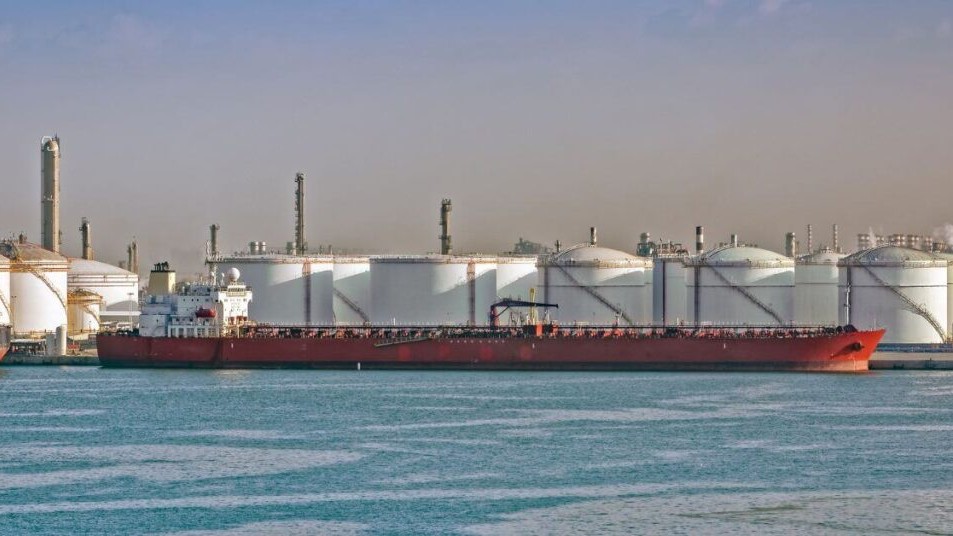
Venezuela’s oil is moving again. That does not mean Venezuela’s oil industry has been rebuilt. It means something narrower, more technical, and more revealing: part of the machinery required to make Venezuelan barrels tradable has been switched back on.
That distinction matters for oil markets.
Venezuela’s oil exports rose 14% in April to 1.23 million barrels per day, the country’s highest monthly export level since late 2018, according to Reuters. The increase followed a political reset after Nicolás Maduro’s January capture, a new supply arrangement, and U.S. licenses that reopened legal channels to buyers in the United States, India, and Europe. April shipments included 445,000 bpd to the United States, 374,000 bpd to India, 165,000 bpd to Europe, and 187,000 bpd to Caribbean terminals for resale; Chevron handled roughly a quarter of total exports, while trading houses handled more than half.
Those numbers are important. But the deeper market signal is not merely that more barrels left Venezuelan ports. It is that more barrels were able to leave through channels that buyers, refiners, banks, insurers, shippers, and compliance officers could recognize.
Oil markets often speak of supply as if it were a physical fact. It is not. Supply is a legal and logistical achievement. A barrel in the Orinoco Belt is geology. A barrel blended with naphtha, lifted under a valid contract, documented at a terminal, loaded onto an insurable tanker, delivered to a refinery built to process it, and paid for through a compliant account is market supply.
That is the lesson of Venezuela’s rebound: reserves do not become supply until the ledger lets them move.
Venezuela has never lacked oil. It has lacked the operating system that turns oil into dependable cash flow. The U.S. Energy Information Administration has noted the country’s long production decline, the special difficulty of its extra-heavy crude, and the importance of diluent, maintenance rigs, naphtha and condensate shipments, power reliability, and specialized refining capacity. EIA also reported that Venezuela’s extra-heavy crude must be processed by specialized refineries, while the country’s own refining system has suffered from underinvestment, mismanagement, and low utilization.
Related: Big Oil Resists Push To Prioritize Output Growth
That is why the most revealing figure in the April export data may not be the export total. It may be the naphtha.
Venezuela imported about 141,000 bpd of naphtha in April, Reuters reported. Naphtha is not a decorative input. It is the solvent that helps turn extra-heavy Venezuelan crude into something that can move through pipes, tanks, ships, and refineries. Without diluent, Venezuelan oil is not merely sanctioned. It is chemically stranded.
This is why Venezuela’s rebound should not be read as the simple return of “lost barrels.” It is the partial reconstruction of a supply chain.
Wells must be worked over. Rigs must be repaired. Generators must run. Terminals must function. Contracts must be enforceable. Cargoes must be documented. Tankers must be chartered. Insurers must cover the voyage. Banks must clear the payment. Refiners must be able to run the crude. Governments must trust the paperwork.
That chain is what collapsed. That chain is what is now being tested.
Reuters reported in late April that oilfield-service companies had begun taking stored rigs and equipment back out for assessment and repair as Venezuela overhauled oil-and-gas contracts. At least nine rigs had reportedly been removed from storage, with five more under assessment, while officials targeted an increase in production from about 1.1 million bpd to 1.37 million bpd by year-end.
That is what an oil recovery looks like before it becomes a headline. Not speeches, but corrosion checks. Not ideology, but service contracts. Not slogans, but drill pipe, pumps, spare parts, pressure control, labor crews, generators, payment terms, legal review, and banks asking whether they can touch the invoice.
The downstream side is just as important. Venezuelan crude has a natural home in complex refining systems, especially along the U.S. Gulf Coast. Reuters reported in January that Gulf Coast refineries from Corpus Christi to Pascagoula were prepared to process Venezuela’s heavy, sour crude and that many had been upgraded over decades with coking capacity and corrosion-resistant steel to handle heavier barrels from Venezuela, Mexico, and Ecuador.
That matters because crude quality is not interchangeable. U.S. shale has made the United States a production giant, but much of that crude is lighter. Complex refiners often need heavier barrels to optimize coking units, balance refinery runs, and produce the product slate that makes their economics work. Venezuelan crude competes not merely as “oil,” but as a particular heavy crude with a refining home.
For U.S. refiners, Venezuela offers a familiar barrel. For India, it offers optionality. For Europe, it offers marginal diversification. For traders, it offers cargoes whose value changes dramatically depending on whether they are legally impaired or legally normalized.
This is where sanctions matter in market terms. Sanctions do not always remove oil from the world. More often, they reprice it.
A sanctioned barrel can still move. Shadow fleets can sail. Ship-to-ship transfers can obscure origin. Intermediaries can layer ownership and documentation. Buyers can demand discounts. But this is not ordinary trade. It is trade with legal drag. The discount is not only about crude quality. It is about banking risk, insurance risk, freight risk, enforcement risk, reputational risk, and the possibility that the cargo will become a compliance problem somewhere between loading and payment.
The producer receives less. The intermediary captures more. The buyer demands compensation. The bank hesitates. The insurer prices risk or walks away. The tanker owner worries about blacklisting. The refiner asks whether the bill of lading will withstand review. The cargo still moves, but every link in the chain charges rent.
That is the hidden cost of being outside the ledger.
Venezuela’s partial return to legal trade reverses some of that cost. A barrel sold through opaque channels is discounted not only because of quality, but because it is harder to finance, insure, deliver, and defend. A licensed barrel moving through visible channels is worth more because it is easier to believe.
OFAC’s General License 50A is central to the story. The license authorizes oil-and-gas-sector operations in Venezuela for specified entities, including BP, Chevron, Eni, Maurel & Prom, Repsol, and Shell. It is not a blanket reopening of Venezuelan oil. It is a controlled lane for named companies operating under U.S. legal oversight.
The license shows how the modern petrodollar system actually works. It is not merely a pricing convention. It is a permissions architecture. The United States does not need to own the oilfield to influence the barrel. It can influence the contract, the bank, the insurer, the payment path, the vessel, the counterparty, the jurisdiction, and the conditions under which proceeds become usable.
That is the real petrodollar. Not a mythic treaty in a vault. Not a single Saudi bargain. Not a conspiracy theory about denomination. The petrodollar is the dollar-centered operating system around energy trade: correspondent banking, marine insurance, sanctions compliance, letters of credit, dispute resolution, vessel screening, cargo documentation, and payment finality.
Venezuela makes that system visible because the same crude becomes a different economic object depending on its legal route. In the shadows, it is distressed supply. In a licensed channel, it becomes feedstock, collateral, repayment, revenue, and strategic optionality.
The corporate response confirms this. Eni signed an agreement with Venezuela’s oil ministry and PDVSA to relaunch a heavy crude project in the Orinoco Belt, while BP signed a memorandum of understanding to develop offshore gas resources tied to Trinidad and Tobago. Eni also restarted lifting Venezuelan crude in April as payment-in-kind for gas produced in the country, allowing it to recover longstanding receivables from Caracas.
This is not merely an oil story. It is a balance-sheet story.
For foreign energy companies, Venezuela’s reopening is not only about future production. It is about whether past debts can be recovered, whether receivables can be converted into liftable crude, whether contracts can be made credible, and whether legal permissions can transform stranded claims into bankable value.
That is the difference between rebound and reconstruction.
A rebound can be licensed. Reconstruction must be financed.
Venezuela still faces severe constraints. Reuters reported that foreign power suppliers have hesitated to support Venezuela’s grid-repair effort without payment guarantees, even though electricity reliability is central to any oil-and-gas recovery. That matters because power is not a side issue. It runs fields, terminals, upgraders, refineries, pumps, control systems, ports, and the basic logistics of a modern energy sector.
A country cannot revive an oil industry if its grid cannot keep the machinery alive.
Nor can it rebuild an oil industry on licenses alone. Licenses can reopen lanes. They cannot repair years of deferred maintenance. They cannot instantly restore field productivity. They cannot supply every needed rig. They cannot make every receivable credible. They cannot force foreign suppliers to accept Venezuelan payment risk. They cannot turn political transition into institutional trust overnight.
That is why investors should not confuse Venezuela’s April surge with a full recovery.
The first barrels are often easier than the next barrels. Bringing stored equipment back into service can produce quick gains if fields are underworked rather than permanently damaged. Redirecting cargoes through legal channels can improve netbacks quickly. Reconnecting with refiners already configured for Venezuelan crude can raise realized value. But sustained production growth requires capital discipline, technical reliability, enforceable contracts, transparent fiscal flows, and political stability.
In other words, Venezuela can export more before it becomes fully investable.
Still, the direction matters. Venezuela’s rebound is unfolding in a market already shaped by geopolitical stress, Middle East disruption, and the renewed importance of maritime chokepoints. The Strait of Hormuz remains the world’s most important oil chokepoint. In 2025, nearly 15 million bpd of crude oil — almost 34% of global crude trade — passed through the strait, with most of it destined for Asia. China and India together received 44% of those crude exports.
That gives Venezuela wider significance. It cannot replace Gulf supply. It cannot solve a Hormuz crisis. It cannot single-handedly cap Brent. But it can provide a non-Hormuz heavy-crude option at a time when refiners and governments are searching for supply that is geographically, legally, and politically less exposed to a single maritime chokepoint.
This is why the Venezuela story intersects with China’s energy strategy. China can buy sanctioned barrels. It can extend credit. It can use alternative payment channels. It can absorb discounted Venezuelan, Iranian, or Russian crude when Western firms retreat. But buying oil outside the Western compliance system is not the same as replacing that system.
Workarounds are not sovereignty. Discounts are not independence. Shadow trade is not a full substitute for low-friction, bankable, insurable commerce.
The reserve and payments data still show a dollar-centered world. IMF COFER data show that the dollar accounted for 56.77% of allocated official foreign-exchange reserves in the fourth quarter of 2025, while the renminbi accounted for 1.95%. SWIFT’s March 2026 Global Currency Tracker showed the dollar at 57.49% of international payments by value in February 2026, compared with 2.16% for the Chinese yuan in that category.
The dollar is not invulnerable. But it remains embedded in the legal machinery of global trade.
That embeddedness is the real story. The dollar matters in oil not only because many contracts are priced in dollars, but because dollar-centered institutions help decide which barrels are financeable, insurable, contractable, and enforceable. The petrodollar is not just money. It is infrastructure.
This is also why sanctions overuse carries a cost. Every time Washington weaponizes access to the ledger, it reminds the world that the ledger is conditional. That does not produce instant de-dollarization. The numbers do not support that fantasy. But it does produce hedging: more gold, more local-currency experiments, more alternative payment channels, more shadow fleets, and more attempts to make trade less vulnerable to U.S. legal chokepoints.
The result is not the death of the dollar. It is a more expensive dollar system — still dominant, but less innocent; still indispensable, but increasingly hedged against.
Venezuela therefore offers a more precise lesson than the usual petrodollar debate allows. The world is not leaving the dollar because it has found an equal substitute. It is building partial escape routes because the dollar system has become visibly conditional. But those escape routes are costly, opaque, and incomplete. They move barrels, but they often do not restore the producer’s fiscal authority or the buyer’s full legal comfort.
That is why Venezuela’s return to licensed trade is so important. It shows that access to the ledger can be worth almost as much as access to the field.
A barrel in a shadow channel may be bought. A barrel in a legal channel can be financed. A barrel in a shadow channel may be moved. A barrel in a legal channel can be insured. A barrel in a shadow channel may generate cash. A barrel in a legal channel can rebuild a balance sheet.
For Venezuela, the challenge is now to move from barrels to credibility. That means transparent netbacks, enforceable contracts, repaired infrastructure, debt sequencing, credible payments to suppliers, and fiscal capture that reaches the public realm rather than disappearing into intermediaries. A petrostate that cannot audit its barrels cannot govern its future.
For energy markets, the lesson is simpler and more immediate. Venezuela is not “back” in the easy sense. It is being repriced. Its barrels are becoming less legally impaired. Its heavy crude is finding refiners. Its service sector is testing whether equipment can return. Its foreign partners are probing whether agreements can hold. Its exports are moving through more legible channels.
That is a market event, not just a political story.
It may help Gulf Coast refiners. It may give Indian refiners another opportunistic heavy-crude stream. It may improve Venezuela’s netbacks. It may pressure competing heavy grades at the margin. It may provide Washington with a strategic supply tool during Middle East disruption. It may tempt oilfield-service companies back into a market they had largely written down.
But every one of those possibilities depends on the same thing: whether the ledger remains open.
Venezuela has already shown what happens when a petrostate loses the ledger. It can still have reserves. It can still have wells. It can still have tankers. It can still have buyers. But each barrel becomes harder to value, harder to insure, harder to finance, harder to tax, and harder to convert into public capacity.
Oil underground is not power. Oil in a compliant invoice is power. Oil in a ship’s manifest that banks trust is power. Oil whose proceeds can pay debt, rebuild infrastructure, and finance imports is power.
That is why Venezuela’s rebound is more than a production story. It is a lesson in modern sovereignty. The country’s oil did not become more valuable because the molecules changed. It became more valuable because the route changed.
The shortest path from the Orinoco Belt to the world market does not run only through wells, pipelines, and ports. It runs through banks, insurers, licenses, contracts, refineries, and courts.
Barrels run engines. Ledgers run states.
And Venezuela is discovering, one cargo at a time, that in modern energy markets the most valuable barrel is not merely the one that can be pumped. It is the one the world is willing to believe.
Disclosure: The author holds no positions in Venezuelan sovereign debt or PDVSA debt.
By Emir J. Phillips for Oilprice.com
More Top Reads From Oilprice.com
Oilprice Intelligence brings you the signals before they become front-page news. This is the same expert analysis read by veteran traders and political advisors. Get it free, twice a week, and you’ll always know why the market is moving before everyone else.
You get the geopolitical intelligence, the hidden inventory data, and the market whispers that move billions – and we’ll send you $389 in premium energy intelligence, on us, just for subscribing. Join 400,000+ readers today. Get access immediately by clicking here.