
The Islamic Revolutionary Guard Corps warned on Tuesday it would respond firmly to any ships that diverge from Iran’s approved route through the Strait of Hormuz, as Israeli television reported US President Donald Trump came close to ordering renewed strikes over the weekend before calling them off.
The warning came on the second day of a US effort to facilitate the transit of commercial ships through the blockaded waterway.
“We warn all vessels planning to transit the Strait of Hormuz that the only safe passage is the corridor previously announced by Iran. Any diversion of ships to other routes is dangerous and will result in a firm response from the Iranian Revolutionary Guards navy,� the IRGC said in a statement carried by state television.
Mohammad Bagher Ghalibaf, Iran’s chief negotiator in Pakistani-mediated peace talks, said Tehran has “not even started� its standoff over the Strait of Hormuz.
“We know full well that the continuation of the status quo is intolerable for America; whilst we have not even started yet,� said Ghalibaf, who is also the speaker in Iran’s parliament, in a post on X.
Get The Times of Israel’s Daily Edition
by email and never miss our top stories
By signing up, you agree to the terms
He claimed the actions of the US and its allies had put shipping security at risk, but their “malign presence will diminish.�
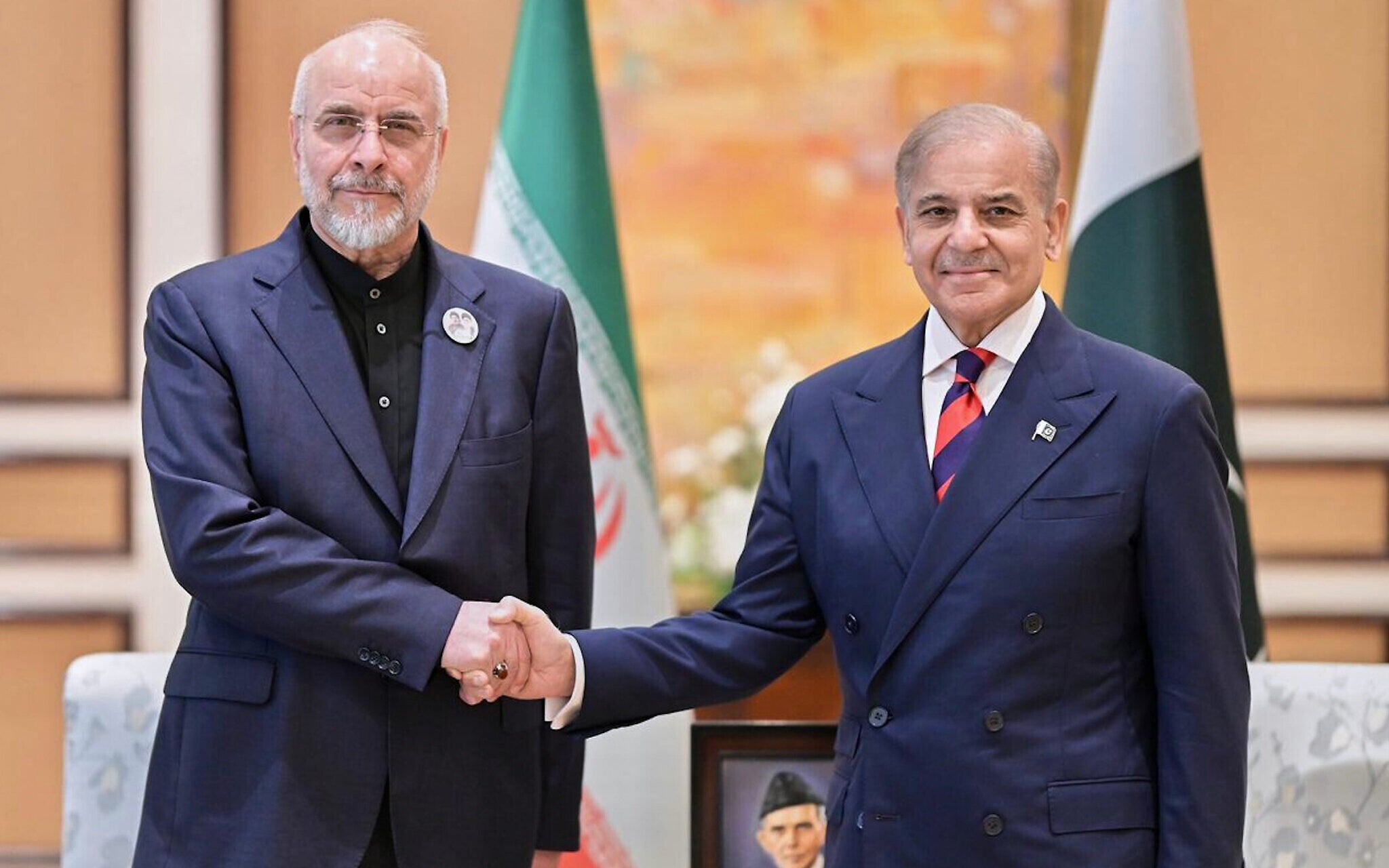
Iran’s Parliament Speaker Mohammad Bagher Ghalibaf, left, shakes hand with Pakistani Prime Minister Shehbaz Sharif before their meeting, in Islamabad, Pakistan, April 11, 2026 (Pakistan Prime Minister Office via AP)
The strait normally carries about a fifth of the world’s oil shipments but was blockaded by Iran in response to the bombing campaign that the US and Israel launched on the Islamic Republic on February 28.
The US imposed its own blockade on Iran-linked shipping days into a truce that began on April 8, and Trump has said Washington would respond forcefully to foreign interference in the US effort to guide trapped commercial vessels through the Strait of Hormuz.
On Tuesday, US Secretary of State Marco Rubio said some 23,000 civilians from 87 countries are currently on ships trapped in the Persian Gulf.
The US effort, dubbed Operation Project Freedom, has seen tensions spike amid the Iran ceasefire, with American and Iranian forces exchanging fire. The UAE has accused Iran of targeting it with missiles on Monday and Tuesday, though Iran has denied firing at the Gulf state, claiming to have taken “defensive actions� directed at the US.
Earlier Tuesday, US officials signaled that the truce was holding and that the clashes did not mean a return to open conflict. But American and Israeli military officials also said their militaries were ready to resume fighting.
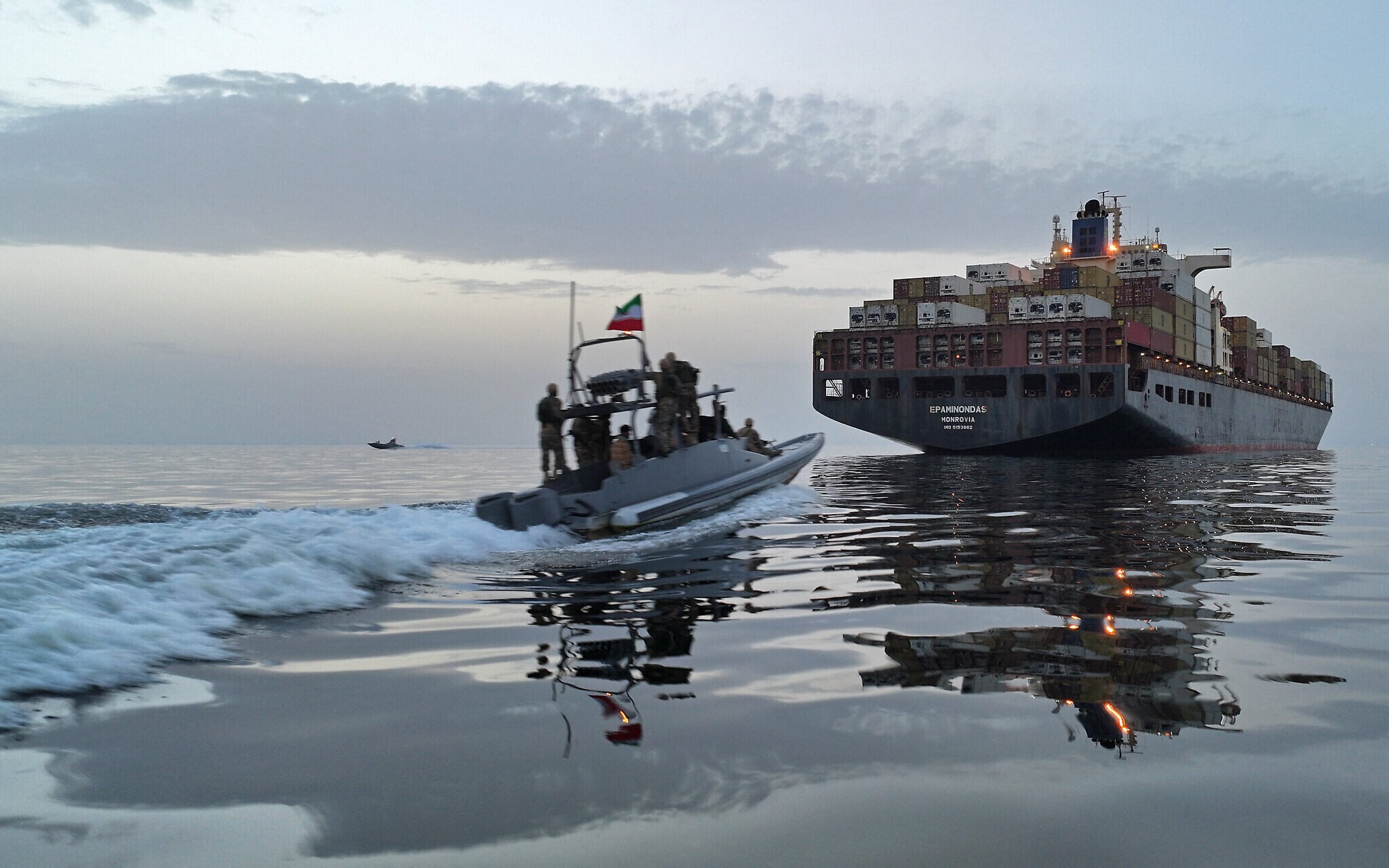
An Islamic Revolutionary Guard Corps (IRGC) boat allegedly takes part in an operation to seize ships attempting to cross the Strait of Hormuz, on April 21, 2026. (MIRZADEH via the Iranian news agency TASNIM NEWS, via AFP)
World leaders are pushing for restraint. Speaking to a reporter in the Oval Office on Tuesday, Trump declined to say what Iran would have to do for him to decide it violated the ceasefire.
“You’ll find out because I’ll let you know when they do,� Trump said. “They know what not to do.�
He added, “They should do the smart thing because we don’t want to go in and kill people.�
External advisers reportedly pressing Trump to resume war
On Tuesday evening, Channel 12 news reported that Trump has repeatedly shifted his stance in recent days on whether to go back to war against Iran, and came close to ordering renewed strikes, but is currently holding off to let negotiations play out.
According to the report, which cited US officials, Trump came close on Friday to ordering a renewed wave of strikes, but reversed course at the last moment after Iran submitted an updated proposal for a deal to end the war — which he later rejected. Instead, he opted to proceed with the operation to free up the Strait of Hormuz.
The report said Trump is facing pressure from what it described as advisers outside the White House to resume fighting, though the officials cited by the network stressed that as of now, he still prefers to exhaust negotiations.
However, US officials warned that if talks remain deadlocked in the coming days, Trump is prepared to order a short and powerful military campaign aimed at breaking the impasse, the report said.
Trump’s advisers, including his son-in-law Jared Kushner, reportedly told him progress is being made in narrowing gaps with Iran, but cautioned there is no guarantee any agreement reached with Iranian Foreign Minister Abbas Araghchi would be accepted by the Islamic Revolutionary Guard Corps.
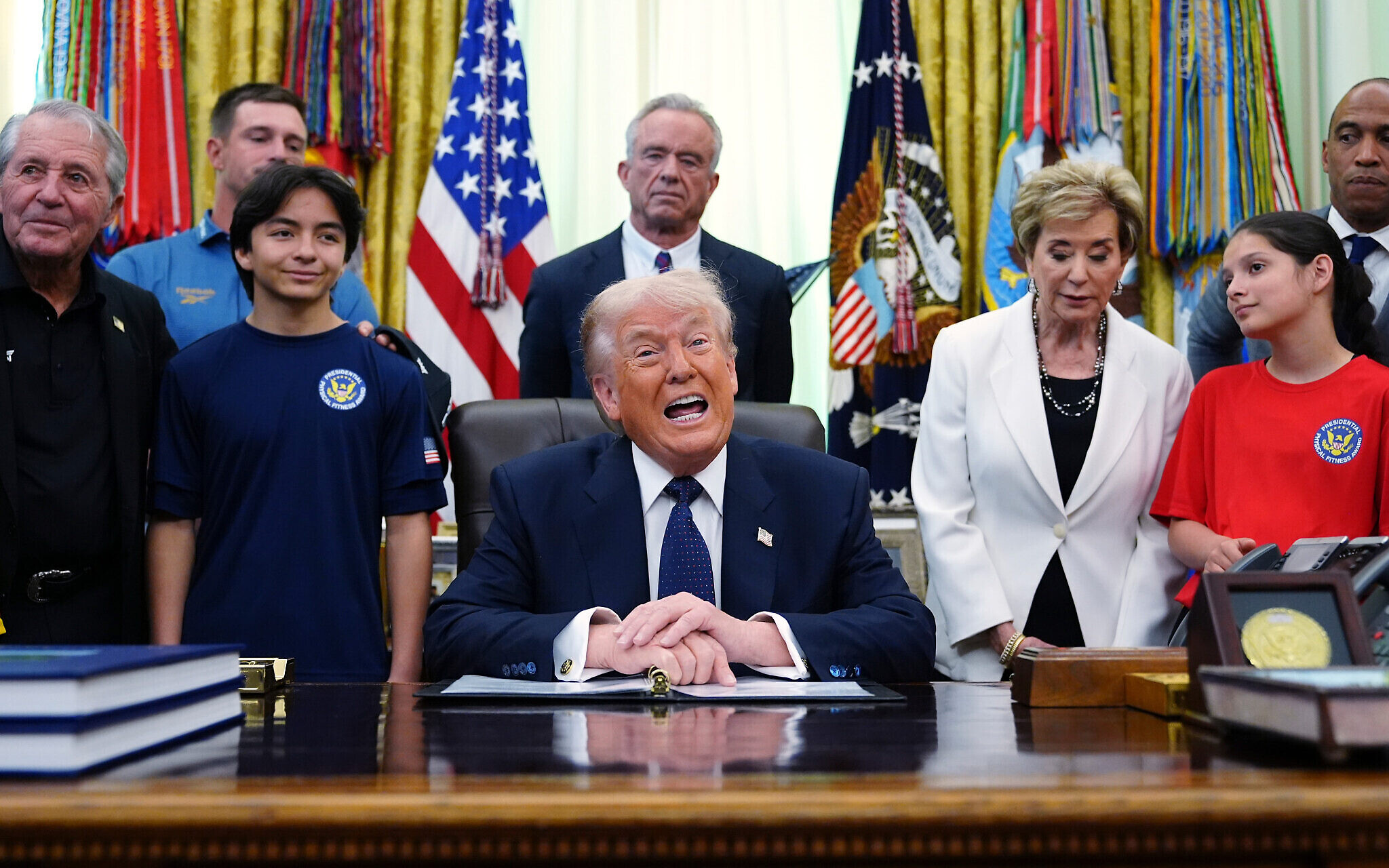
US President Donald Trump, seated, center, speaks before signing a proclamation in the Oval Office at the White House in Washington on May 5, 2026. (AP Photo/Jacquelyn Martin)
The top military leadership of Pakistan, which hosted a previous round of US-Iran talks, meanwhile called for restraint to help ease rising tensions between the US and Iran.
Army chief Field Marshal Asim Munir since last month has been in contact between the US and Iranian officials as part of Pakistan’s efforts to end the conflict.
In a statement, the country’s military said participants reviewed the evolving security environment amid Pakistan’s outreach to Washington and Tehran, adding that lasting peace depends on collective restraint, responsibility and respect for sovereignty.
Also Tuesady, French President Emmanuel Macron said Iranian President Masoud Pezeshkian asked to hold a phone conversation amid the ceasefire.
“I will be speaking with the Iranian president shortly at his request,� Macron said on Tuesday. ″France has maintained a consistent position from the start. We call for the cessation of all hostilities, the return to diplomatic negotiations, and respect for all countries in the region,� Macron said.
Pezeshkian said that Tehran remained ready for dialogue, but added, “Our problem is that, on the one hand, the United States is pursuing a policy of maximum pressure against our country and, on the other hand, they expect Iran to come to the negotiating table and ultimately capitulate to their unilateral demands.�
“But such an equation is impossible,� he said.
Saudi Arabia also called Tuesday for efforts “to reach a political solution.�
Rubio: Ten sailors have already died in Gulf, food running out
Speaking at a White House press breifing, Rubio said Tuesday that Washington decided to launch the effort to free up the strait in order to rescue the 23,000 civilians currently on ships trapped in the Persian Gulf.
“These innocent sailors and commercial crew members have been stranded out at sea because� of Iran’s blockade, said the top US diplomat, adding that those stranded for weeks are running out of food and water and that at least 10 sailors have already died.
“The goal here is to establish a transit zone protected by a bubble of US naval and air assets that allows ships to move through it and reach the market to begin to increase confidence in the ability to do so,� Rubio said.
Iran on April 17 announced the reopening of the Strait of Hormuz but proceeded to continue harassment of ships after the US said it would maintain a blockade of Iranian ports. That move was meant to hold Tehran’s feet to the fire in negotiations for a permanent end to the war.
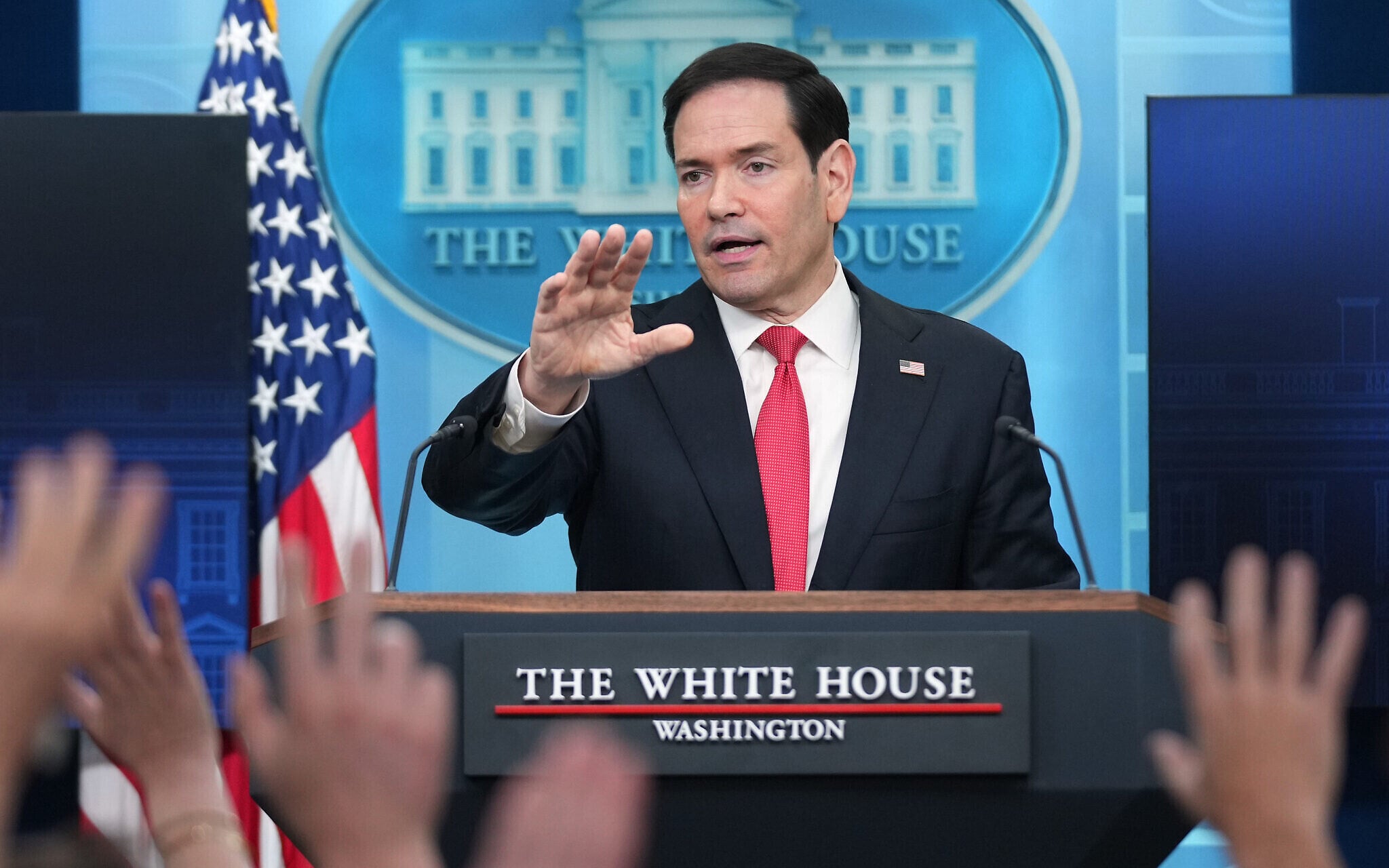
US Secretary of State Marco Rubio speaks during a press briefing in the James Brady Press Briefing Room at the White House in Washington, May 5, 2026. (AP/Mark Schiefelbein)
Rubio said many nations reached out to the US for assistance in restoring freedom of navigation in the Strait of Hormuz, leading Trump to authorize Project Freedom over the weekend.
Trump has “directed the United States military to guide these stranded ships to safety, to provide a protective bubble under which they can operate,� Rubio continued.
US officials have privately clarified that US vessels will not be physically escorting individually stranded ships.
“This is the first step toward reopening the strait and bringing this regime’s last-ditch act of economic arson to a close,� Rubio said.
The US secretary of state stressed that Project Freedom is a defensive operation, meaning American forces will not open fire unless shot at first.
He said two US-flag merchant ships have already been successfully extracted from Hormuz as a result of Project Freedom, though roughly 2,000 vessels are said to remain.
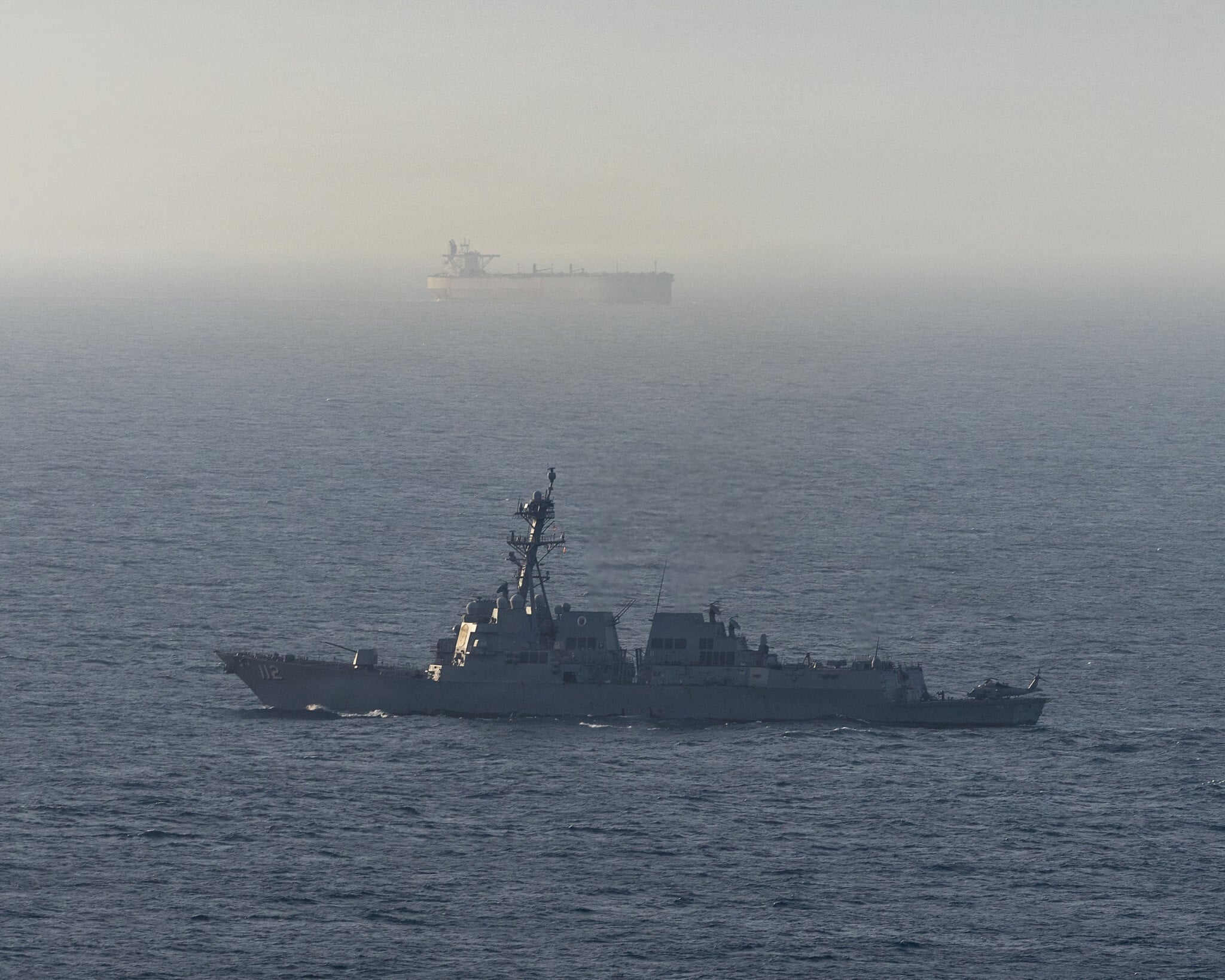
Arleigh Burke-class guided-missile destroyer USS Michael Murphy patrols the Arabian Sea during a maritime blockade against Iran, April 15, 2026. (US Navy photo)
Rubio went on to insist offensive operations against Iran had ended and that Washington is now focused on using non-kinetic means to coax Tehran to give up its nuclear ambitions.
“Operation Epic Fury has concluded. We achieved the objectives of that operation,� Rubio said during the press conference.
Pressed on how the US could claim victory if Iran has not given up its enrichment capabilities and stockpiles of highly-enriched uranium, Rubio claimed the goal of the war was to remove the “conventional shield� Iran was trying to create by using ballistic missiles to block countries from acting against its nuclear program.
While Iran’s missile program was indeed significantly damaged during the war, intelligence agencies reportedly assess that it remains intact and can recuperate.
Meanwhile, the US is still seeking a deal with Iran that addresses Tehran’s nuclear ambitions, maintaining that economic pressure can lead the Islamic Republic to capitulate after it did not do so amid six weeks of war.
“There has to be a pressure point on them that causes them to realize they cannot continue to close the straits or they’ll face crushing economic consequences and global diplomatic isolation, which they have proven in the past to be susceptible to,� Rubio asserted. “They have a high pain threshold, but they don’t have an unlimited pain threshold. Nobody does.�
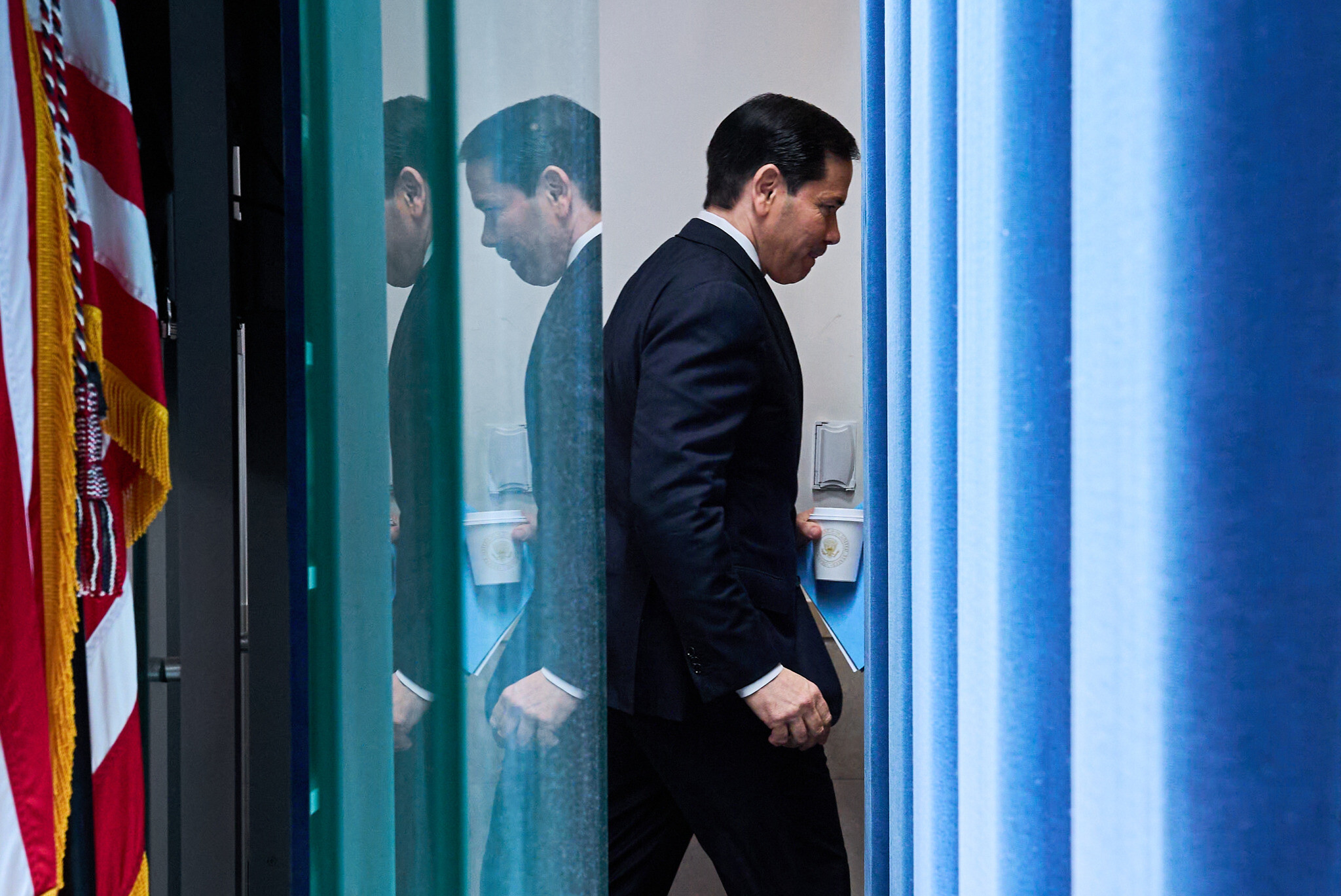
Secretary of State Marco Rubio leaves the room after speaking to the media in the James Brady Press Briefing Room of the White House, Tuesday, May 5, 2026, in Washington. (AP Photo/Jacquelyn Martin)
UAE says Iran attacked it for second straight day
The UAE said on Tuesday that Iran fired more drones and missiles at the country for the second consecutive day.
Iran fired 12 ballistic missiles, three cruise missiles, and four drones at the UAE, according to the Emirati Defense Ministry.
The UAE’s Foreign Ministry said in a statement that the attacks were a serious escalation and posed a direct threat to the state’s security, adding that the UAE reserved its “full and legitimate right� to respond.
Iran’s Khatam al-Anbiya ​joint military ‌command claimed it had not carried out attacks against the UAE in recent days. But it warned of a “crushing response� if any action is carried out by the Gulf country against Iran.
Zamir: IDF ‘closely monitoring,’ ready to ‘respond with force’
Amid the escalation in the Gulf, IDF Chief of Staff Lt. Gen. Eyal Zamir said the military wass “prepared to respond with force� if Iran targets Israel.
“Our forces are deployed across all sectors, fighting and prepared in immediate readiness for any scenario — from near and from far,� Zamir said at a handover ceremony for the chief of the Israeli Air Force.
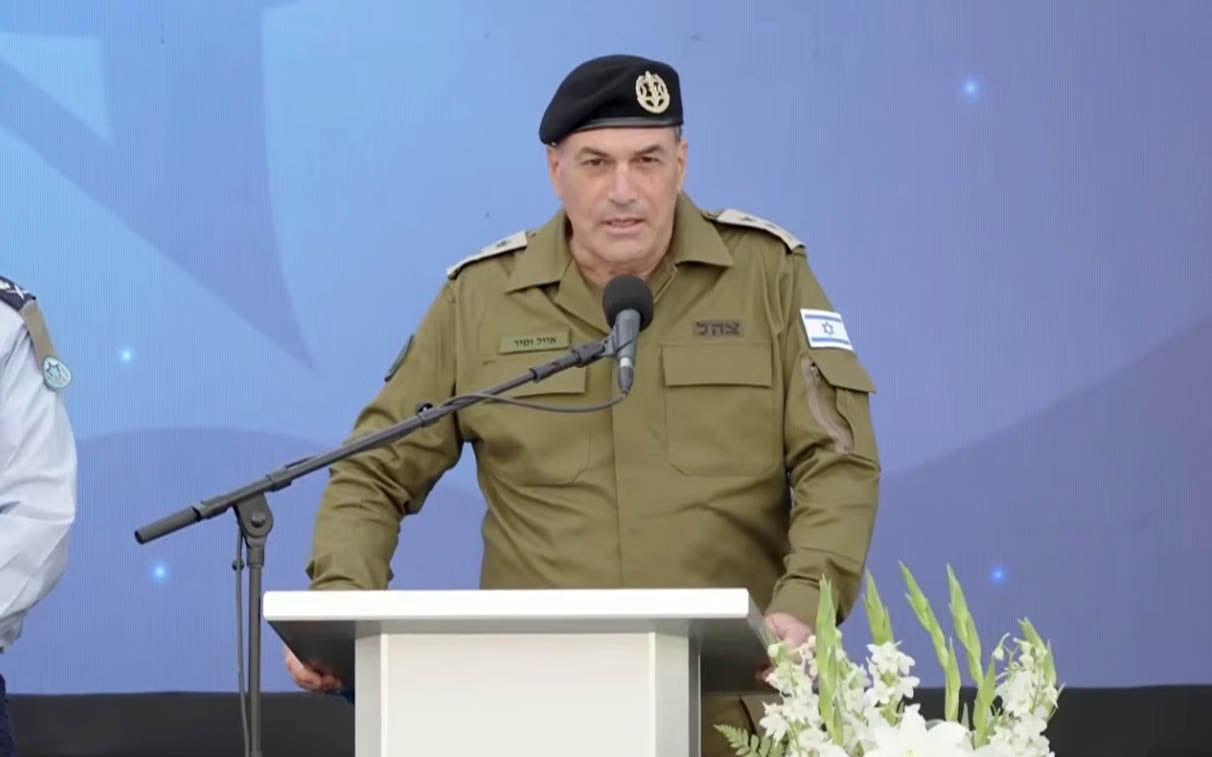
IDF Chief of Staff Lt. Gen. Eyal Zamir speaks at a handover ceremony for the chief of the Israeli Air Force, at the Tel Nof Airbase, May 5, 2026. (Screenshot/IDF)
“The IDF, in all its systems, maintains high readiness,� he said. He added that the military is “closely monitoring developments in the Persian Gulf� and is “prepared to respond with force against any attempt to harm Israel.�
Incoming Israeli Air Force chief Maj. Gen. Omer Tischler delivered a similar warning at the ceremony, saying, “We are closely monitoring what is happening in Iran, and are prepared to take the entire Air Force eastward, if we are required to do so.�