
On a clear April afternoon, I walk 14 minutes from a suburban station in Yokohama, past traffic and construction, into a quiet residential neighborhood. Children wearing randoseru backpacks drift home, passing a signboard that reads: “Help find Kaori.”
At a narrow entryway, I ring the doorbell. An elderly man opens the door.
This is Kaori’s father, Setsuji Nomura. He has lived in this house for decades. It was here 35 years ago that his youngest daughter, Kaori, then 8 years old, walked out the door and never returned.
Standing in the doorway, Nomura pauses.
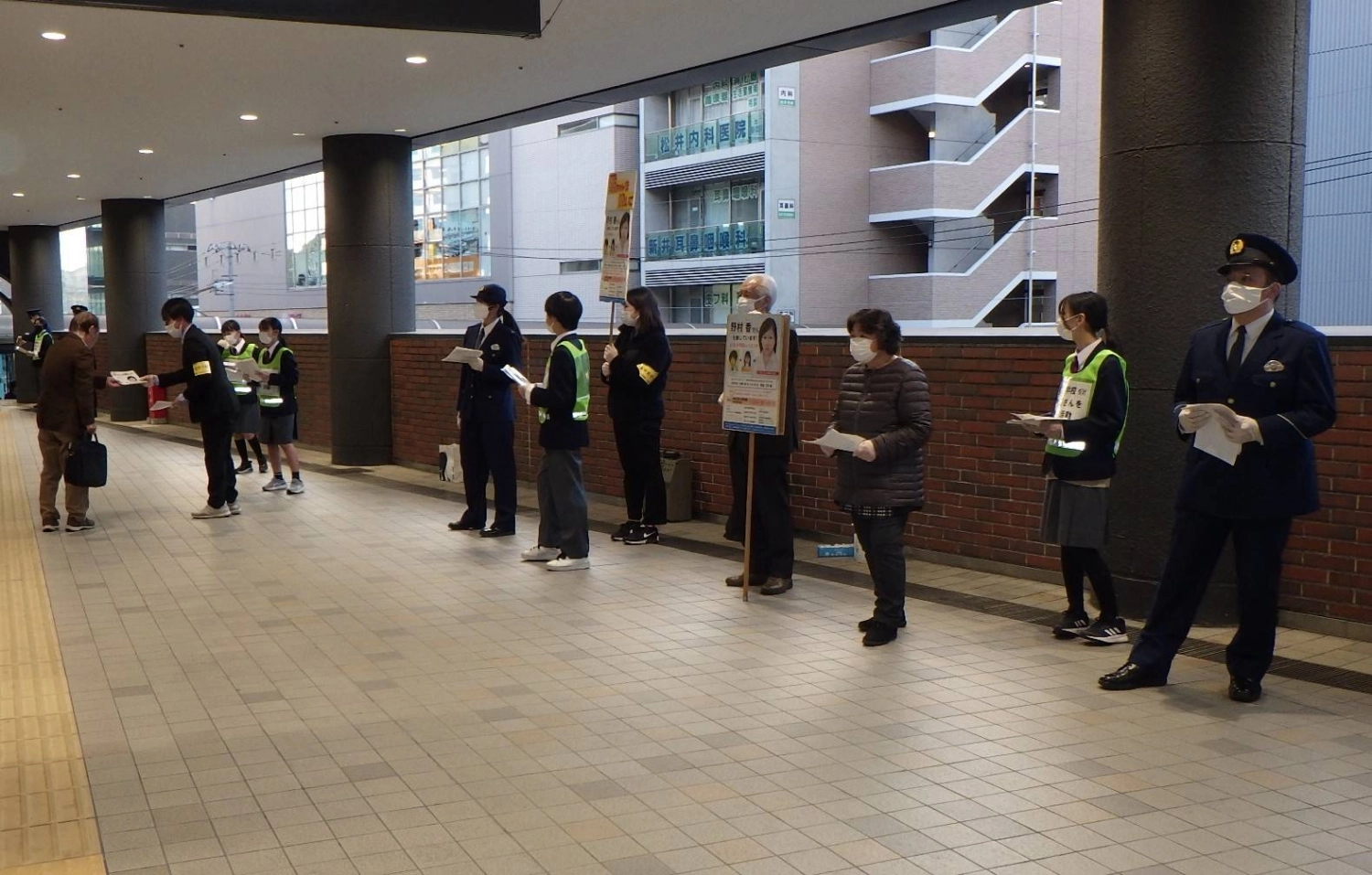
“I have nothing to say,” he says softly. “There have been no leads. I’m retired, and I live on a public pension. We still hand out flyers at the station twice a year — in March, for her birthday, and in October, when she disappeared.”
For his family, there have been no answers since, only the long passage of time back to that day in 1991. What remains is a unique form of grief without the opportunity to say goodbye.
In recent years, the number of children under 10 reported missing in Japan has hovered between 1,000 and 1,200 annually, with the figure standing at 1,035 in 2024, according to National Police Agency (NPA) data.
Among this youngest group, family problems were the leading cause of disappearances, accounting for 370 cases — more than a third of the total. School-related issues made up 37 cases (3.6%), and health-related issues, 87 cases (8.4%). But in 288 cases (27.8%), the cause remains unknown.
Most missing children are located quickly, often within hours or days, and usually within a week. In other cases, there are an array of different outcomes.
In a recent case in Kyoto Prefecture, an 11-year-old boy was missing for three weeks before his body was found in a mountainous area outside the rural city of Nantan where he lived. Police arrested his adoptive father, who has reportedly admitted to strangling him. The case shifted from uncertainty to confirmed loss, ending in a definitive and tragic resolution.
Only a small number remains unaccounted for, becoming long-term cases as public attention fades.
As of 2026, at least 10 children under the age of 10 reported missing since 1990 have still not been found, according to the NPA.
Some of the most well-known cases involve young girls. These include: 4-year-old Yukari Yokoyama, who vanished from a pachinko parlor in Gunma Prefecture in 1996; 5-year-old Yuki Onishi, who disappeared during a bamboo-shoot digging event in Kagawa Prefecture in 2005; 7-year-old Misaki Ogura, who went missing at a campsite in Yamanashi Prefecture in 2019; and Kaori Nomura, missing since 1991, who would be 43 today if she is still alive.
The first 72 hours are considered critical in cases of missing persons. If a person’s whereabouts are not quickly confirmed, police focus on reconstructing their last known movements and timeline. After that period, the likelihood of recovery decreases sharply as leads dry up and memory becomes the main source of information.
Kaori’s case followed this unfortunate pattern.
It was raining on Oct. 1, 1991. Kaori came home around 2:30 p.m. after an early school dismissal and was sitting in the living room doing her homework when her older sister Kozue returned about half an hour later.
The sisters normally leave for their afternoon activities together — but on this day, Kozue left early to buy a notebook before her electronic organ class. Kaori stayed behind, finishing her kanji workbook before heading to her 4 p.m. calligraphy lesson.
That was the last time anyone saw her.

Kaori’s calligraphy tools, umbrella and rain boots were missing from the house. She is believed to have been on her way to her calligraphy class, about 500 meters away, when she went missing.
Her mother Ikuko retraced her steps, checked with classmates, and walked the route to the calligraphy school with neighbors and school officials in an effort to locate her. By 8:30 p.m., the mother had contacted the police. Her husband, normally home around 10 p.m., rushed back immediately.
Days turned into weeks, months into years.
Even now, Kaori’s room remains untouched, her family says — her school backpack, Sylvanian Family dolls and other belongings frozen in time. She remains 8 years old in their memory.
It is this suspended state that U.S.-based family therapist Pauline Boss has termed ambiguous loss — grieving someone who may be physically gone but psychologically present, or vice versa — an idea outlined in her books, which have been translated and introduced in Japan.
“With ambiguous loss, there is no certainty of life or death,” Boss wrote in an email to The Japan Times. “The person is missing and the family has no verification of their whereabouts or whether they are alive or dead. This limbo of ambiguity and uncertainty is agonizing for the family left behind. People want to grieve but their grief is frozen.”
Boss coined the term in the 1970s while working with families of soldiers missing in action. She later expanded it to include disappearance, dementia, addiction, and estrangement — situations in which physical presence and psychological presence no longer align.
The therapist visited Japan after the 2011 Great East Japan Earthquake, a disaster that left thousands of people unaccounted for even after official searches ended, to give a lecture in Fukushima on supporting survivors coping with the uncertainty of missing loved ones.
There, ambiguity became collective rather than individual — a shared uncertainty across families and communities waiting for confirmation that may never come.

In discussing how people live with decades of uncertainty, Boss points to “both/and thinking” — a therapeutic approach that holds two opposing truths at once, such as presence and absence, rather than forcing an “either/or” conclusion.
“I do not like the term ‘closure,’” she said. “There is no closure with ambiguous loss, but is there definitive closure even with a body to bury? We remember our loved ones in our hearts and minds. This can be done with ambiguous loss as well as with a validated death.”
In Japan, unsolved cases of missing children remain formally open within police systems, even when an investigation slows over time. Families may continue to receive periodic updates or make renewed appeals years or even decades later, without resolution.
In March, police, Kaori’s parents and local volunteers distributed flyers seeking new information as they continued their search decades after her disappearance.
Kaori’s parents are now in their 70s, and her sister is a mother herself. Nearly 100,000 police investigators have been deployed in the search, with more than 3,100 tips received — yet the case remains unresolved.
Setsuji Nomura declined a formal interview but agreed to walk a short distance to the signboard calling for information on Kaori’s whereabouts. He points at it, then turns back toward the house.
“There’s a lot happening in the world,” he says. “The media should cover the war in Iran. There’s still no new information about Kaori.”