
Once upon a time, we were told books were dead. So how do you sell them in 2026?
Elizabeth Heritage loves talking about books. So she built a career of it. For 14 years, she has been working as a freelance book publicist and publishing consultant.Â
“I’m one of those weirdos who, if I see someone reading in public, I’ll be like, ‘What are you reading? What do you think? Where did you get it?’� she laughs.
“I’m just eternally interested in how people learn about books and, particularly, who they trust to tell them about books.�
Heritage has seen the book industry evolve considerably. When she started her book publishing course in 2012, everyone thought ebooks would save the world.
“There was all this dire ‘ebooks are going to replace print books’,� she says.
Martin Taylor, who runs Self-Publishing NZ, can relate. He set up his business just before the Kindle arrived: “When it did arrive, there was the sense that everything was going to change.
“I think a lot of people got carried away with the idea that print was dying, that reading was dying.�
Change did happen, but not quite in the way people predicted, Taylor says. For one thing, Kindles didn’t take over the world.Â
It wasn’t long before the pendulum started to swing back the other way and ebooks were decried for “ruining reading�, adds Heritage.
Now, the industry has entered what she calls the “third phase�, as people start to realise the pros and cons of each medium or format.
Ebooks didn’t save the world, but they did make reading more accessible, she says. Now, voracious readers can download endless novels at the touch of a button while the blind and low vision community can enlarge the print to suit their needs.
The digital age has also grown the self-publishing market. With mixed results, notes Heritage.
“Suddenly underrepresented voices could be heard, and we were tearing down the gatekeepers. And then we got to this point where there was just this flood of books… and you’d have to really weave your way through the morass.�
But the self-published market has continued to expand. “There are a lot of people who are self-publishing to a really high professional standard and they are completely indistinguishable from traditionally published books,� says Heritage.

 From left, Martin Taylor and Elizabeth Heritage both work in book publishing here in Aotearoa.On demand
Meanwhile, print on demand is changing the game for new authors.Â
“That technology is very valuable. For authors, it means any marketing effort can translate into a sale,� says Taylor.
He has spent a lot of his life covering technology and he says he can’t see much on the horizon that will impact the book industry, including AI.
“Apart from figuring out how to diminish the AI slop that will make the millions of books even more competitive.�
Selling the experience
Along with the diversification of platforms, Heritage has noticed a generational shift in how people read. Contrary to her expectations, older people seem to prefer digital and younger people like print.
“One reason older people love digital is accessibility – being able to change the font size is such a game changer.
“With the younger generation, they will read a lot of stuff on their ereader, but then they have this kind of tiered process where some things they will want to have not only in print, but in special edition.â€�Â
Heritage references Kiwi author Steffanie Holmes, who began publishing her romantasy series as ebooks only. She has since attracted a large, loyal fan base and has held crowdfunding campaigns to create limited edition hardcover print runs.Â
“There’s real appetite for print books as luxury or treasured items. But you do have to pick the right book for that treatment,� says Heritage.

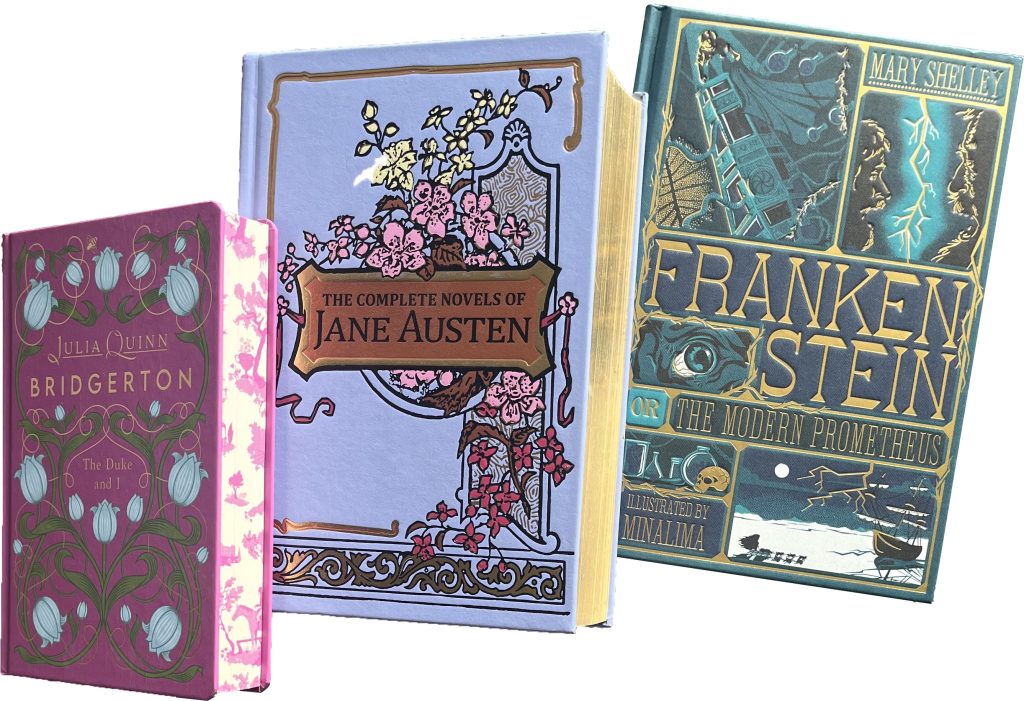 Hardcover special editions are popular at the moment.
Creating that sense of loyalty is important for authors and bookstores alike.Â
Jenna Todd is the owner of Time Out, an independent bookstore in Auckland’s Mt Eden. She says the store is lucky to already have strong brand awareness, but knows this can’t be taken for granted.Â
“No one goes into books to be a millionaire. It’s definitely a labour of love and an interesting industry because it’s actually quite expansive in terms of how you promote your brand and business.Â
“We’re also selling a product that people can get at many different places for a variety of prices. So what we really have to do is sell the experience of being in the store.�

Fortunately, this also aligns with what consumers want, says Todd. She has been with Time Out since 2010 and has seen a growing desire among customers to assert their brand loyalty.
The bookstore aims to create a “feel-good factorâ€�.Â
“You feel like you’re coming home – it feels cosy. Or you feel like you could go there by yourself and it doesn’t matter… the person behind the counter would recognise you.�
Last year, Time Out hosted a reading rave to celebrate New Zealand Bookshop Day. A phenomenon that originated in 2019 in Zurich, Switzerland, the event involves people getting together to read for a couple of hours.Â
“It was very buoyant and lovely. It felt like a real culmination of excitement, especially by the younger generations,â€� says Todd. “It feels quite nostalgic – like silent reading at school. People just came upstairs and read. We had low, ambient music playing and it felt super meditative.â€�Â
In the week leading up to the national Bookshop Day, Time Out also ran the third Auckland Bookshop Tour. People can visit the stores on the map, get a stamp and make a purchase, big or small.
“It’s just trying to get feet in the door. We had 99 maps handed in, which is really wonderful. That’s how many people were moving around the city, visiting bookstores they might not have been to before,� says Todd.
 Jenna Todd was the manager of Time Out bookstore for 16 years before becoming the owner in March 2026.
The secret is in the storytelling
Taylor says there’s one question book marketers should be asking: “How do I get to my reader?â€�Â
“Books are unusual. Unlike a typical consumer product where there aren’t that many variations, you’re competing with millions. It’s a huge marketing challenge.�
If you’re self-publishing and your product costs $5-10 for ebook and $20-30 for a paperback, you can’t spend a lot on advertising, he adds.
Even if you go through the traditional publishing route, it remains a consistently underfunded area, adds Heritage: “No one has the budget to do ads on buses, TV ads, nothing.�
Like everything else, books are a product. But their individuality makes them harder to market than grocery staples like milk, says Heritage.
“This is where we start to get into the relationship between the art, the artist and the person receiving the art: it’s incredibly personal.Â
“One of the things I think about with every single campaign is: how can I let readers know about this book? But also: how can I narrow it down to the kind of readers who, in my professional judgement, would like this book most?�
With that in mind, Time Out’s monthly newsletter is now less about the books and more about showcasing the personalities behind the pages.Â
Todd adds that the store is well known for its staff picks – and sharing stories about the faces behind the counter only help these recommendations resonate more.
“When I first started, people just came, we barely posted, our website was terrible. Now we try and tell the story of our booksellers a lot.
“I wouldn’t say that posting a book will lead to a sale of that book, but I think every post that we make is nurturing the brand awareness. We do book reviews on the radio and if people don’t come to buy that book, they’re still thinking of us,� says Todd.
Heritage used to focus on landing and writing book reviews. But few outlets still publish them.
“A lot of my publicity work now is getting my author to create content for the media organisation. Some authors thrive on it and absolutely love it. For other authors, it’s their worst nightmare.â€�Â
Taylor says word of mouth has always been one of the most powerful assets in book marketing. Social media now provides that “on steroids�, with BookTok and BookTube providing user-generated content – from reviews to fan theories – on a mass scale.
Authors are also having to put themselves out there more online. This felt like unfamiliar territory for Claire Mabey, who published her debut novel The Raven’s Eye Runaways in 2024.
“I had to grapple with having an online presence as an author. I find that really hard, to be honest. I tried to do TikTok and I just couldn’t do it,� says Mabey, who is also books editor at The Spinoff.
Instead, Allen & Unwin’s publicist took care of sharing her book with the world. They delivered it to bookshops, book reviewers, book buyers and school libraries to bookstagrammers and booktokkers.
And while she played her part, the marketing was very much driven by the Allen & Unwin teams in Aotearoa and Australia.
“Especially for the age group who I’m writing for, between eight and 12, it’s quite crucial to get the look and the appeal right.â€�Â
 Claire Mabey is an author, the books editor at The Spinoff and the founder of Verb Readers and Writers Festival in Wellington.
The algorithm
So the book industry relies on word of mouth, publicity and now algorithms.Â
“The media publicists pitch to these days are different from what they used to be. It is often the bloggers, the Instagram people, the active Goodreads reviewers. Consumer reviews are extremely important and influential,� says Taylor.
Auckland Writers Festival marketing manager Suzanne McNamara agrees. This is an area her team hopes will draw in new audiences to the 2026 event.
“TikTok didn’t exist a few years ago. Now there’s BookTok and it’s great as it encourages reading with younger digital natives.�
Encouraging younger generations to the festival is high on AWF’s list of goals: audience research shows attending literary events is already a habit among older generations, but the Gen Zs? Not so much.
“The festival is about great thinkers and new ideas. You don’t actually need to read the books. You can just go to the festival and listen to incredibly interesting conversations,� says McNamara.
“Then if you like it, there are bookstores on site.�
As well as Auckland and Wellington, writers and readers festivals are held each year, including in Hawke’s Bay, Christchurch and Dunedin.Â
McNamara says they all play a key role in promoting both books and reading.
 Suzanne McNamara is the marketing manager for the Auckland Writers Festival.Always relevant
Every year, the AWF artistic team hunt for books, writers and thinkers who can speak to “our times�: whether that’s political, climate or cultural conversations.
“They also need a mixture of fiction, nonfiction, poetry. And then they have to span a range of genres – from crime, romance to the latest one the younger people are into: romantasy. It’s a huge big jigsaw to put it all together,� says McNamara.
“The team pair the New Zealand authors with international authors and they appear on panels togther. And so there’s these cross-cultural conversations that happen – it’s a great development opportunity for New Zealand authors.�
But with around 170 events on the programme, how do they get the word out? Social media content from authors plays a big role, says McNamara.
As does PR, which helps land interviews with authors on mainstream media like the Listener and Radio New Zealand. Ticketing partners and Auckland Live are also key, she adds.
McNamara spent 19 years as the marketing manager for music and arts festival Splore, and says the main change she’s seen over time is the shift away from traditional channels to owned channels.
“You’ve got to own your channels, build your community, because festivals are a community.
“There’s also a lot of competition for eyeballs across everything. And then when you’re talking about books, there’s competition from smartphones to streaming platforms and people just don’t read as much as they used to.
“But as we know, reading builds cognitive function, stimulates your imagination, builds knowledge and encourages empathy. I’d encourage everyone to take the time to read.â€�Â