
Half
a billion inhabitants of our planet will look towards Bulgaria to
experience the start of the popular international cycling race Giro
d’Italia. They will get to know the beauty of Bulgarian nature and
remarkable cultural and historical heritage, as the country will
seize the chance to prove itself as a responsible host of world-class
events.
The
beginning is on May 6 at the Summer Theatre in Burgas, where an
official ceremony will present the teams participating in the race.
The event will be broadcast on television channels around the world.

Kamen Alipiev
PHOTO Ani Petrova
“I
assume that everyone will have their own personal impressions when it
comes to what kind of Bulgaria people around the world will see,
because the race has a huge audience,” says sports journalist
Kamen Alipiev, who will be host of the event. “A lot of work has
been done and I hope that the spectators will see a beautiful
Bulgaria with wonderful sights. Moreover, the three stages – the
first from Nessebar with a finish in Burgas, the second from Burgas
to Veliko Tarnovo and the third from Plovdiv to Sofia, show a
magnificent part of our country.”
According
to Kamen Alipiev, one of the main reasons for holding Giro d’Italia
in this country is to promote Bulgaria and to show that, although in
a slightly more remote corner of Europe, it is an integral part of it
and is ready to accept such a challenge. According to him, the
cycling tour is the biggest sporting event that has ever come to the
country and there will be viewers from all over the world.

Nessebar
PHOTO Giro d’Italia
The
actual start is on May 8, when the cyclists will set off from the
ancient Black Sea town of Nessebar, passing near two of the churches
in the Old Town – part of the UNESCO World Heritage. In Burgas, they
will ride along the famous “24th Black Sea Regiment”
street, near the Sea Garden and Chernomorets Stadium.
Around
Sozopol (founded in the 7th century BC), the competitors will make a
22-kilometer tour and will enjoy one of the most beautiful sea views
– the so-called Driver’s Beach.

The
cyclists’ route passes through numerous natural and cultural
landmarks in a number of settlements in Bulgaria to reach the central
square in Plovdiv, where a challenge awaits them in the tunnel under
the Ancient Theater and many more kilometers – all the way to Sofia’s
Tsarigradsko Shose Blvd. and the finish in front of the National
Assembly building in the Bulgarian capital.
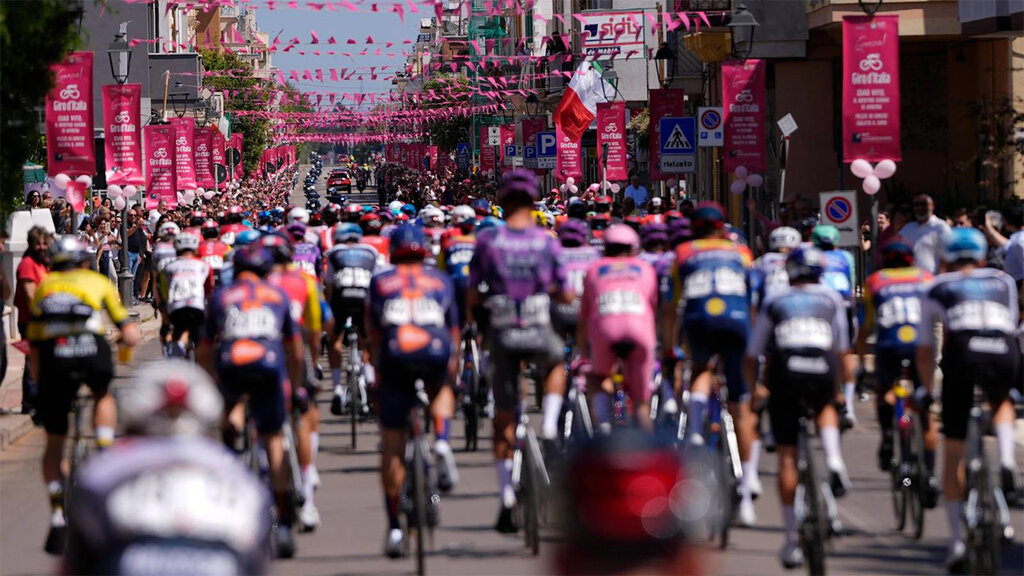
The
sports journalist warns citizens who want to see the participants in
Giro d’Italia live to stand early at the designated places and
bring water and some food, because they will have to wait a long
time. They must not cross the routes, nor try to contact the cyclists
during the race. “In other words, let’s see a polite audience
that supports the competitors and does not try to interfere in their
performance,” summarizes Kamen Alipiev in an interview with
Radio Bulgaria.

PHOTO giro2026.visitbulgaria.com
“I
sincerely believe that Bulgarian citizens will enjoy the race and
will come out to watch it,” said caretaker Minister of Sports
Dimitar Iliev at the unveiling of the clock counting down the days
until the start of Giro d’Italia. “There are many positive
effects for both sport and tourism. The tour brings with it a huge
tourist flow and will be watched in about 190 countries by millions
of spectators. By placing the clock, Bulgaria confirms its readiness
and ambition to host the start and the first three stages of the
prestigious cycling event. This is a clear sign of our country’s
commitment to the successful organization and holding of the
international race.”

What
aftertaste will this large-scale sporting event leave not only in
spectators and cycling fans, but also on the image of Bulgaria?
“I
think that the entire huge organization and the use of so many human,
financial, logistical and all sorts of other resources on the
territory of our country is for the sake of the aftertaste being like
that of a good wine – after you’ve tasted it, you discover more and
more new things,“ Kamen Alipiev says. „As someone who has always
tried to talk about sport as part of the culture of a people, it is
important that a country with good cycling traditions like Bulgaria
keeps a good image and that the competition motivates as many people
as possible to get involved in cycling and sports.”
