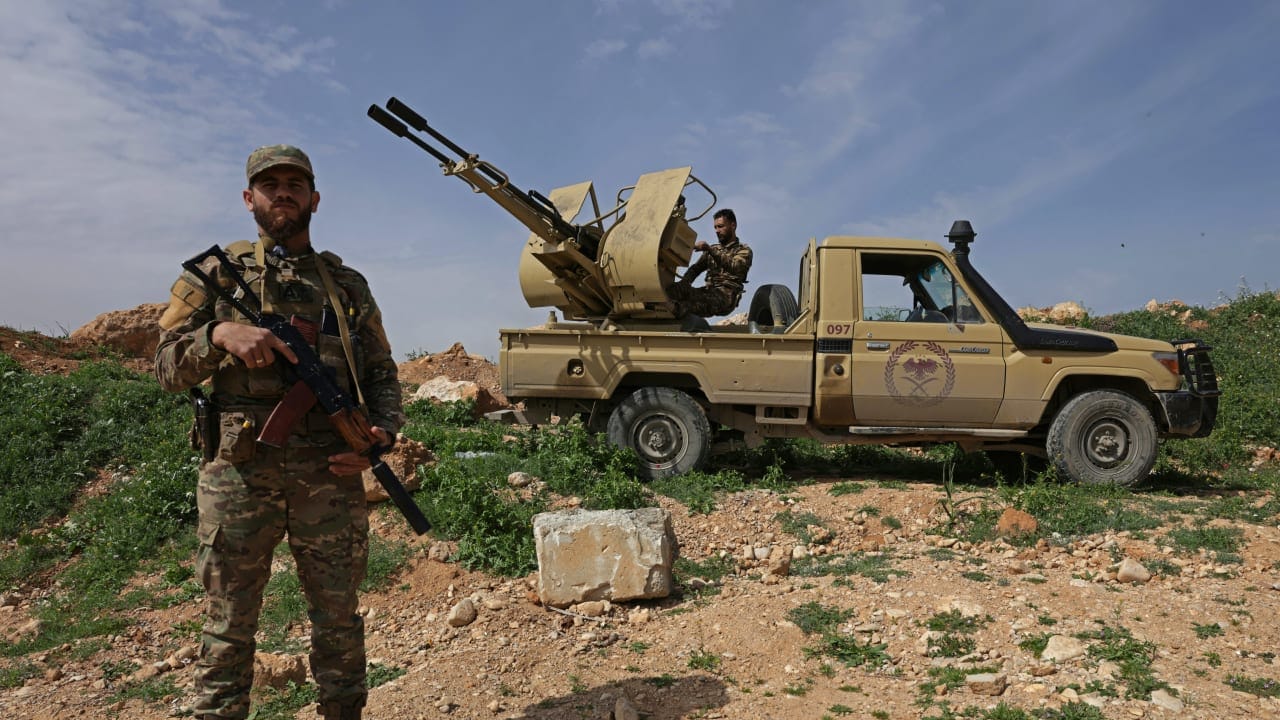
Syria’s Ministry of Interior said on May 5 that they had dismantled a Hezbollah-linked cell. Syria posted images of the raids, showing how important Damascus takes this development. Syrian statement media noted that “Syria’s Interior Ministry announced Tuesday it had foiled a large-scale terrorist plot and dismantled a cell linked to Hezbollah militia that was planning to destabilize the country.�
This is important because it further highlights Damascus‘s commitment to security. It wants to create stability and also prevent any threats from Iran or from other extremist groups. Prior to the rise of the new government in Syria, the country was a major target for Iranian expansion in the region.
Under the Assad regime, Hezbollah was invited into Syria to help aid the regime in the Syrian civil war. Hezbollah entered Syria in large numbers around 2012-2013 via the city of Qusayr, a city in western Syria near the Lebanese border.
After intervening to help Assad, Hezbollah began to develop its own networks. It worked with Iranian-backed militias, which began to flow into Syria via Albukamal on the Euphrates near the Iraqi border. Those militias built a base called Imam Ali. They also used homes in Albukamal as facilities.
Some of those areas were later targeted in airstrikes. Although no country took credit for the strikes, the militias often blamed Israel and the US. Israel launched what was called the Campaign Between the Wars in this era to reduce Iranian entrenchment in Syria.
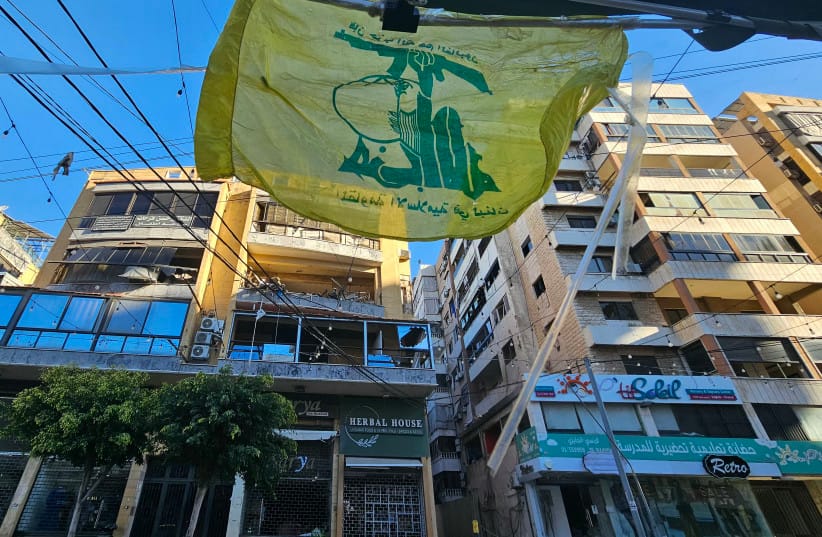 A flag of Hezbollah flutters at the site of damaged buildings following airstrikes in Beirut’s southern suburbs of Ghobeiry neighborhood, on March 5, 2026. (credit: AFP VIA GETTY IMAGES)
Hezbollah’s role in Syria was a key component of the Iranian entrenchment. In addition to bolstering the Assad regime and working with Iraqi militias, it also established networks near the Golan. This grew after the Syrian regime returned to areas near the Golan in 2018. Hezbollah cells began to bring in drones and other threats to target Israel.
When the Assad regime fell suddenly on December 8, 2024, Hezbollah was already suffering challenges. It had suffered major losses at the hands of Israel between September and November 2024. As such, it was unable to help the Assad regime when the regime suffered losses due to a Syrian rebel offensive in late November.
Hezbollah diminished in Syria since Assad’s fall
Therefore, Hezbollah’s role in Syria has been diminished since the fall of the Assad regime. It has had to go underground, working very quietly through some cells. It continues to try to smuggle weapons to Lebanon. However, the Syrian government of Ahmed al-Shara’a has done a good job of cracking down on Hezbollah.
The crackdown continues, as the May 5 raids show. The Interior Ministry “said in a statement that the specialized units, in cooperation with the General Intelligence Service, succeeded in delivering a preemptive and decisive blow to a terrorist plot that was targeting the security of the country and its symbols,� Syrian state media SANA says.
The recent raids were much larger than in the past. These include raids throughout Syria in Damascus, Aleppo, Homs, Tartus, and Latakia. This indicates a widespread Hezbollah conspiracy. The report says that the “members infiltrated Syrian territory after receiving intensive specialized training in Lebanon.�
This included the detention of a person that Syria says was involved in assassinations. “Preliminary investigations indicated the cell was preparing to carry out coordinated attacks, including assassinations targeting high-ranking government figures,� the report added.
“Authorities also seized a cache of weapons and equipment, including improvised explosive devices, RPG launchers with munitions, automatic rifles, grenades, and various ammunition, as well as surveillance and technical equipment such as specialized optics and cameras,” the report continued. “Officials said the findings indicated the cell was in an advanced stage of readiness to carry out its plans.â€�
The report comes at an important time for Syria. The country is trying to deal with several major issues. For instance, it is seeking to integrate Kurdish forces in eastern Syria. In southern Syria, the Druze-majority area of Suwayda remains self-governing. Recently, Jordan carried out several airstrikes near Suwayda, sending a message that Amman was concerned about drug smuggling in the area.
Meanwhile, Syria is also forming an election committee for the areas of Kobani and Hasakah. These are two areas that had been controlled by the US-backed Syrian Democratic Forces. The SDF is a Kurdish-led group that is supposed to integrate into the Syrian security forces under a January 29 agreement. As such, Damascus is showing that it can confront a number of threats and continue to stabilize the country.