
During his military service, Ihor “Batko� Zhaloba was not only fighting – he was also traveling on foreign missions and lecturing across Europe about the war. Now demobilized and back in academic life, he remains a tireless advocate for Ukraine on the continent, drawing on both his scholarly expertise and his firsthand experience of the front.
In the second part of a conversation with Kyiv Post, he turns his attention outward: to Europe’s unpreparedness, NATO’s uncertain future, and what Ukraine’s membership in the EU should actually look like.
Follow our coverage of the war on the @Kyivpost_official.
You have already been discharged from the army due to age, but during your service you went on foreign missions and gave lectures across the EU about the war in Ukraine. How has European awareness of Russia changed over these years? Are Europeans aware of the dangers of Russian aggression?
The majority still does not believe that this will affect them – just as many Ukrainians did not believe in full-scale invasion before February 2022. The farther people are from the front line, the calmer they feel and the less they want to disrupt their lives. That is why the attitudes in Poland, Lithuania, and Estonia differ greatly from those in Portugal or Spain.
In February 2023, when I first traveled abroad after the full-scale invasion began, there was enormous admiration for Ukraine among Europeans – admiration for the fact that Ukrainians had managed to stand their ground. To some extent, this remains true today. However, these attitudes are beginning to shift, as the war increasingly affects Europeans’ sense of comfort.

Other Topics of Interest
Coup Rumours: Putin Under Pressure From All Sides?
In the run-up to the scaled-down military parade in Moscow, the situation appears to be deteriorating for President Vladimir Putin.
Unfortunately, no real practical steps have been taken – either at the level of political elites or among the broader public – to fully comprehend the nature of this war. However, after J. D. Vance’s [US Vice President] speech at the Munich Security Conference in February 2025, Europeans – who had long assumed that the United States would always stand by them – began to realize that this might not be the case.
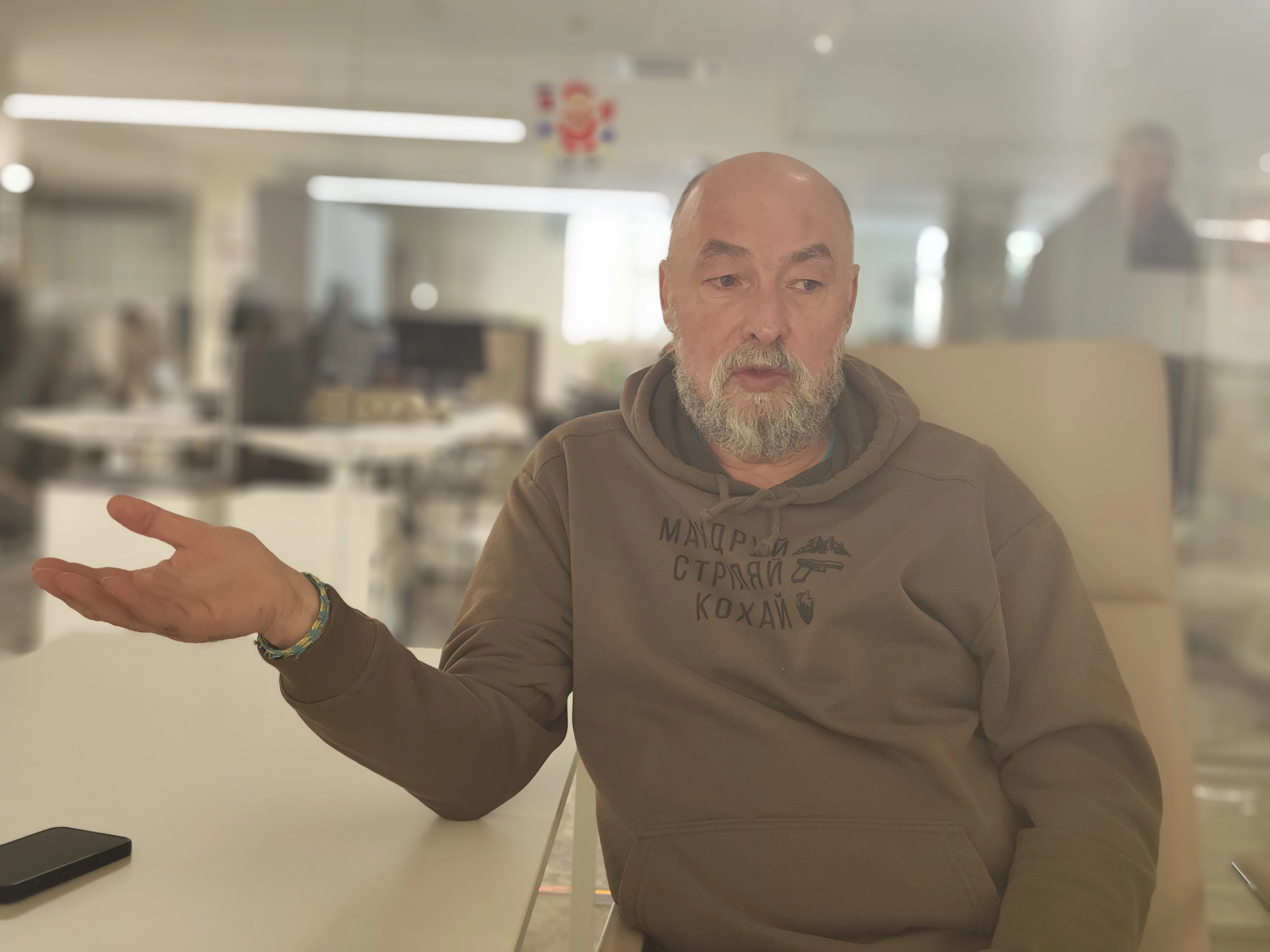 Ihor “Batko” Zhaloba speaking to Kyiv Post. (Photo by Julia Struck-Feshchenko / Kyiv Post)
At that time, I was in Germany, and I could physically feel a shift in how people perceived me. I realized that we – once seen as Europe’s outsiders, a country few had high expectations for since Aug. 24, 1991 – had become a source of hope for Europe. Because today, if you look at surveys, Ukrainians are among the few who are ready to fight and die for their country.
If we can finally move from the European tradition of talking about problems to addressing them, then I am convinced that Russia can be defeated – but only if we become significantly more technologically advanced and far more effective in governance.
We must move away from rigid hierarchical bureaucratic systems. In this regard, Europe is not prepared for war. Many still do not fully grasp the fundamentally new nature of modern warfare.
Moreover, for most Europeans, the problem is still seen as being solely about [Russian President] Vladimir Putin. Only now is there a gradual realization that Putin is not an isolated phenomenon, but rather a product of a broader imperial mindset embedded in Russian society.
As the head of Pan-Europe Ukraine, tell us about your movement. What projects are you currently working on?
We are now trying to move to a new level. I served in the Defense Forces of Ukraine for two years; our Secretary General is also currently serving, and others have stepped away during this time. After demobilization, I am now working to reassess and rebuild the organization.
We aim to become a platform for professional discussion of the challenges facing Ukraine – both domestically and in the context of its path toward European Union membership.
On March 16-17, we held the 6th Pan-European Conference in Kyiv. Before that, the fifth conference took place in Chernivtsi in October 2025. Notably, as a result of that conference, a parliamentary inter-factional association called the Pan-European Platform was established in the Verkhovna Rada.
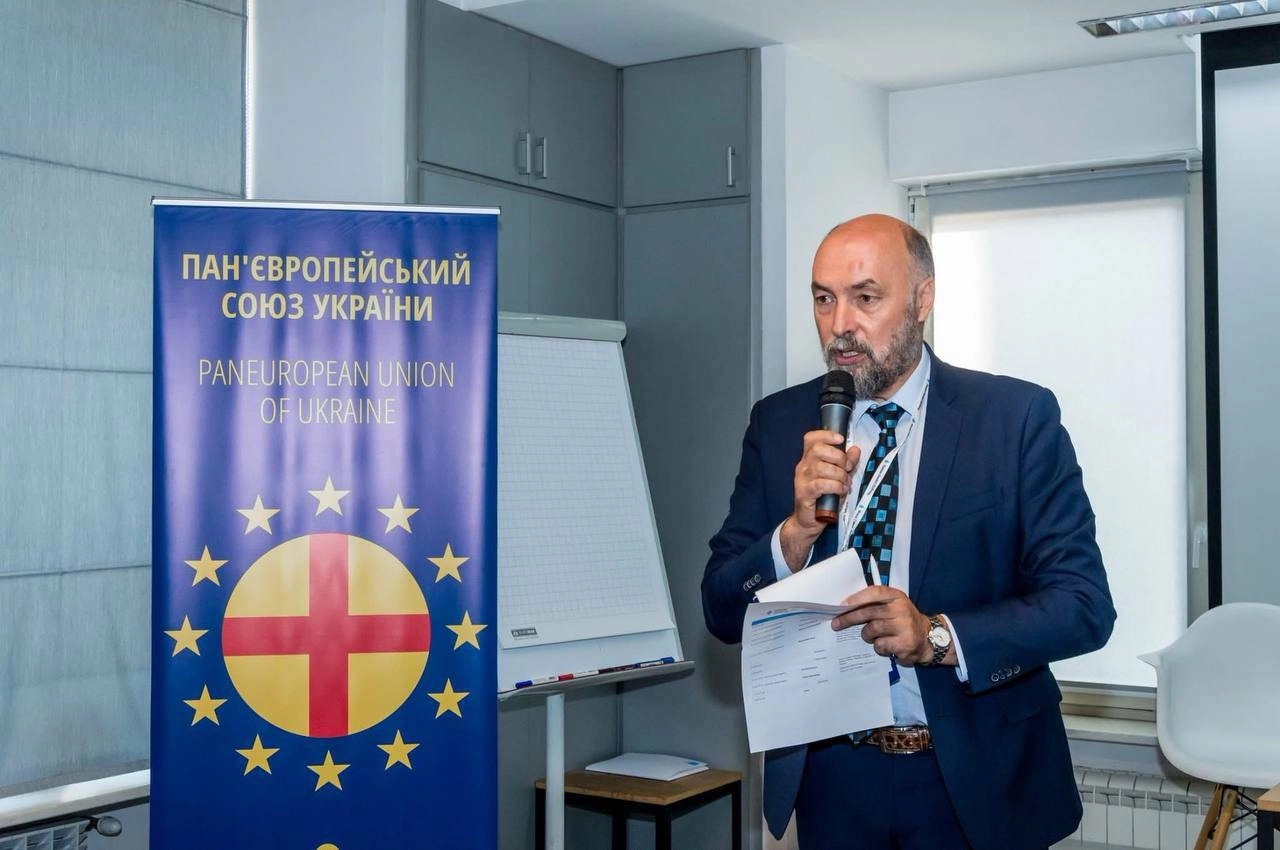 Ihor Zhaloba during a public speech (Photo provided by Ihor Zhaloba)
Regarding Ukraine’s European integration, how would you describe Ukraine’s prospects for accession?
For me, this is one of the most serious issues today. As a pan-European, I naturally support a united Europe. The question is: what kind of Europe? In its current form, the EU does not meet today’s challenges. Therefore, in my view, it makes little sense for Ukraine to join the European Union as it currently stands. If we say that Ukraine must change, then the EU must also change – because in its current form it is not viable.
Everyone is now interested in Ukraine’s military experience, technological developments, and battlefield tactics. But behind all of this lies decentralization – something that, in its current Ukrainian form, is difficult to replicate in Europe. Therefore, I strongly believe we need a professional and honest discussion about this on both sides.
Polish President Karol Nawrocki has stated that the EU is now a fading star.
Putin’s calculation that both Ukraine and the EU are weak has not been borne out in either case. The EU has enormous economic potential, and we won’t walk away from it.
That said, we as pan-Europeans have criticized the EU from the very beginning. It has remained, in essence, a coal and steel union that has not gained sufficient political – and especially geopolitical – weight. The key point is that the EU does not have its own effective mechanisms for self-defense.
And what about NATO?
Europe currently lacks a mechanism to unite European armies into a single cohesive force, because the EU has not developed one. Meanwhile, NATO – if we exclude the United States – offers the only framework that could be effective today.
Therefore, I can fully imagine NATO transforming from a transatlantic organization into a primarily European one.
I spoke in February 2025 in Bucharest, and even then, I said that NATO, in its current form, no longer exists. NATO should learn from Ukraine how to fight, because we have real combat experience and they do not. Our officers should be teaching their soldiers – not the other way around.
What challenges did you face after demobilization? Have you already adapted to civilian life?
All of us who volunteered to fight are, in a sense, caught between two worlds – mentally there, but physically here. It is frightening to open our chat groups with comrades and see many unread messages. The first thought is always: has someone died?
I have an official job, but most of my time is still devoted to the front – to victory. This is reflected in the information work I carry out, using both my pan-European contacts and academic connections.
The public events I participate in engage both academic audiences and ordinary European communities. My speeches focus on the modern history of Ukraine and, of course, the ongoing Russian-Ukrainian war. After all, many analysts and politicians initially believed the full-scale invasion would end within the well-known “three days.� Instead, we are now in the fifth year of the war.
This explains the sustained and genuine interest in Ukraine, which has become a phenomenon for many. But every phenomenon has its own explanation, and people want to understand how it works in Ukraine. When you can speak about it both as a scholar and as a direct participant, it naturally generates strong interest.
Ordinary citizens attend these public events, as do politicians at various levels and military personnel. Importantly, Ukrainians who have ended up abroad also take part. All of this has allowed me to build strong horizontal connections, reflected in the donations we receive – both to the official account of Paneuropea Ukraine and to my private accounts.
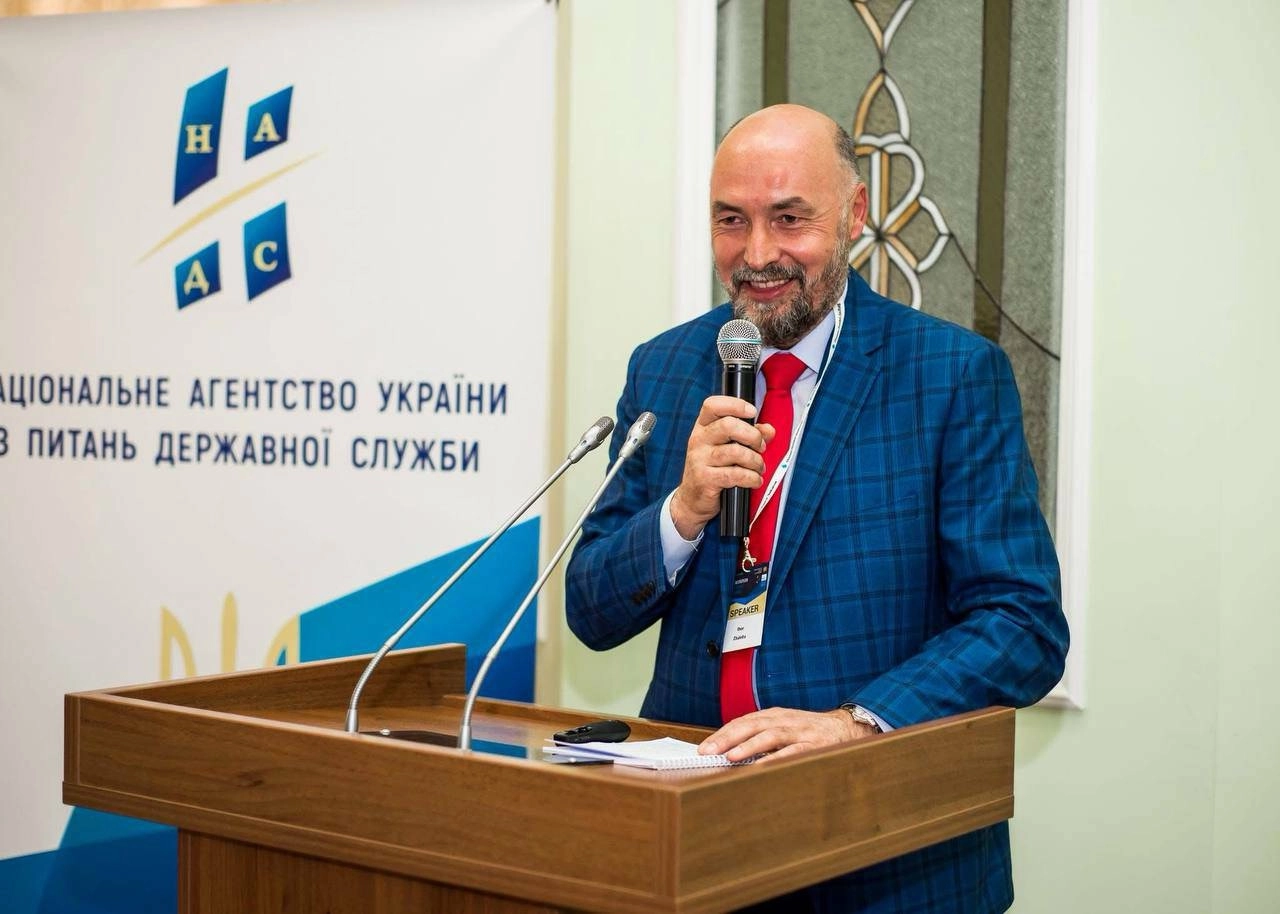 Ihor Zhaloba during a public speech (Photo provided by Ihor Zhaloba)
Since 2023, another key part of my work has been purchasing essential items for my comrades at the front, as well as supporting the wounded and the families of the fallen. Comrades often send me lists: “Batko, we need this and that.� I go, buy what is needed, and send it.
At times, exhaustion sets in, and I want it all to end. But you have no right to stop – there is responsibility to both the living and the dead. I remain part of the flow that holds the front line, that holds Ukraine.
I am very critical of my own combat experience as a soldier. But I was not afraid, I did not run away – I went to fight. In my lectures to European audiences, I always emphasize that none of us truly left the front; we remain there in one way or another.
Abroad, people often approach me with sympathy and say, “You went through so much – thank God you are no longer there.� And it tears me apart – why am I not there? What I dislike most is when people express pity that an “old professor� went to war. I am proud of what I did during those two years in the Armed Forces.
And civilian life now still includes shelling, deaths, the wounded, cold, and power outages.
I often say that, as a historian, I used to describe past events – how people created history. But now I am no longer just describing it. I am part of those creating it. I am shaping the history future generations will study.
Â
This is the second part of a 2-part interview.