
Several days ago, the many fans of Hasan Piker could watch the controversial left-wing anti-Zionist streamer for eight hours and 18 minutes straight, as he discussed the Iran war, cracks in US President Donald Trump’s voter base and, of course, Israel.
Much of the back half of the segment comprised an interview with, and rally for, Cori Bush, the anti-Israel former Democratic congresswoman from St. Louis now running to regain her seat. Pro-Israel groups spent millions to defeat Bush in 2024; on Friday, Piker told Bush supporters from the stage that Israel had worked to “subvert the democratic process.�
The next day, the New York Times published a nearly two-hour interview with Tucker Carlson, the controversial right-wing anti-Israel podcaster. The interview focused largely on his views on Israel and the Jews.
Carlson claimed that Trump was being held “hostage� by Prime Minister Benjamin Netanyahu “and by his many advocates in the United States.� He denied, as he often does, that he’s an antisemite. He also said he doesn’t know what the “Protocols of the Elders of Zion� is.
Two days before that, he posted a two-hour video of his own in which he interviewed Marjorie Taylor Greene, the anti-Israel Republican former congresswoman who once shared a video claiming “Zionist supremacists� were seeking to replace Europe’s white population with migrants. Carlson has also promoted a version of that conspiracy theory, called “The Great Replacement.�
In his own monologue, Carlson railed against “people who pushed us into regime change war with Iran.� He added, “Those same people are also the ones, literally the same people, who are pushing the United States to continue to allow the rest of the world to move here.� One of those people, he added, is Rep. Mike Lawler, “the sponsor of the Antisemitism Awareness Act, or something to that effect, a censorship bill.�
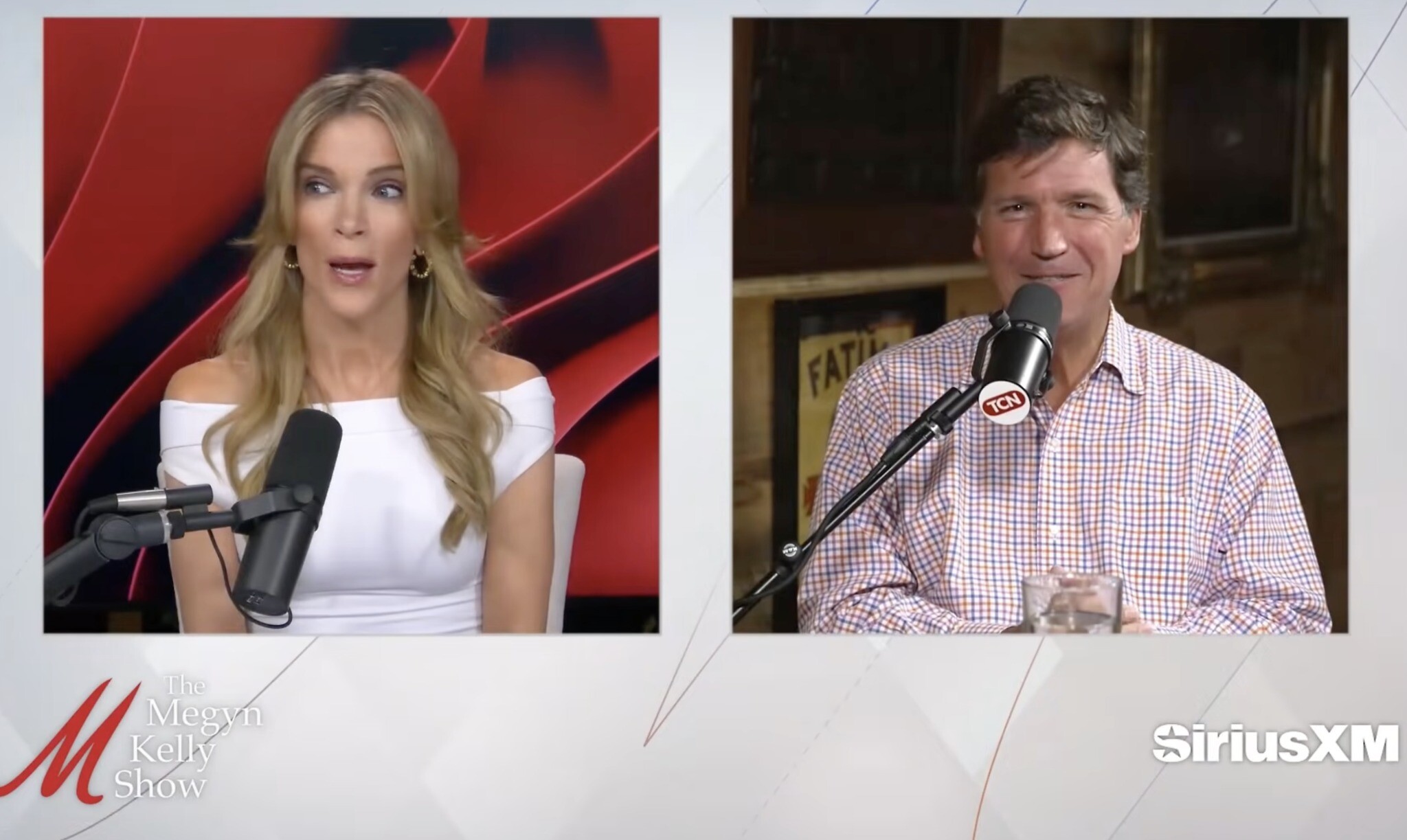
Megyn Kelly (left) interviews Tucker Carlson on her show the day before the outbreak of the war with Iran, February 27, 2026. Both former Fox News hosts, they now each run eponymous companies and have been harsh critics of Israel. (Screenshot)
If this all feels head-spinning, it is. It’s also become the norm for political commentary and discourse online, including from politicians themselves. And it’s feeding the never-ending debate in the US about Israel and Jews.
A race for attention with no guardrails
Some of the most influential commentators — Carlson, Piker, Joe Rogan, Megyn Kelly — have audiences of millions who tune in online several times a week to hear them talk, unfiltered, for hours on end.
One of their favorite ways to fill these hours is by holding forth on Israel. By now, their views on the Jewish state, its military actions since October 7, 2023, its treatment of the Palestinians, and its influence on the US are well known (with the possible exception of Rogan, who’s more eclectic).
But they keep talking about it, rehashing their almost uniformly negative opinions time and again. That, in turn, spawns a secondary round of discourse about what they said, whether it was antisemitic and how it fits into US politics today.
It’s not just because Israel is always in the news. It’s also because it’s a subject that’s easy to generate outrage over.
In today’s media economy — with seemingly infinite podcasts, streams, cable channels and publications to choose from — it’s increasingly hard to hold people’s attention.
Pundits have long kept listeners hooked by being outrageous (think Rush Limbaugh). Today, the podcasters who have built loyal audiences are often the ones who stream and post constantly — and who can punctuate their hours-long episodes with shocking or provocative things that make their followers’ ears perk up, and that generate shareable clips on social media.

Panelists, from left, Jon Lovett, of ‘Pod Save America,’ Jessica Tarlov, co-host of Fox News’ ‘The Five,’ Tim Miller, of ‘The Bulwark Podcast,’ Hasan Piker, and Symone Sanders Townsend, co-host of MSNBC’s ‘The Weeknight,’ speak during Crooked Con, November 7, 2025, in Washington. (AP Photo/Jacquelyn Martin)
“The winners of the attention wars today are typically people who said some outrageous things in the past — or are still saying them in the present,� the New York Times columnist and podcaster Ezra Klein, who himself puts out hour-long episodes every few days, wrote in a recent column defending Piker.
“When you’re dealing with podcasters or streamers who talk, unstructured and unrehearsed, for hours each week, if not every day, there’s going to be so much said that it’s almost inevitable that a dossier of dumb statements can be compiled,� he added.
“I have no obligation to ‘separate’ myself from anyone. I run my own media company and my own show.
Not too long ago, those outrageous statements were liable to get a talk show host fired. As recently as 2023, Carlson was axed from his popular nighttime spot on Fox News after a litany of offensive comments.
But the guardrails have fallen. Carlson now runs an independent, eponymous network that gets more views than his Fox show. He can no longer be fired, no matter whom he insults. Piker streams on the gaming platform Twitch, not on cable news. And their audience, listening in the privacy of their cars, homes and AirPods, face little social cost for tuning in to antisemitic or anti-Israel content.
Kelly is another former Fox News star who’s since gone independent. In a post on X last year about why she wouldn’t disavow Carlson or the far-right antisemitic influencer Candace Owens, she wrote, “I have no obligation to ‘separate’ myself from anyone. I run my own media company and my own show.�
Politicians who post
It isn’t just podcasters and streamers who are always posting. For the past decade or more, it’s also been politicians.
Trump, who has been able to understand, leverage and shape America’s media ecosystem more than almost anyone, is his own unending content stream. He posts throughout the day on Truth Social, swaying the future of the Iran war and other world events. When he isn’t doing that, it seems, he’s giving ubiquitous interviews to the media or holding press gaggles.
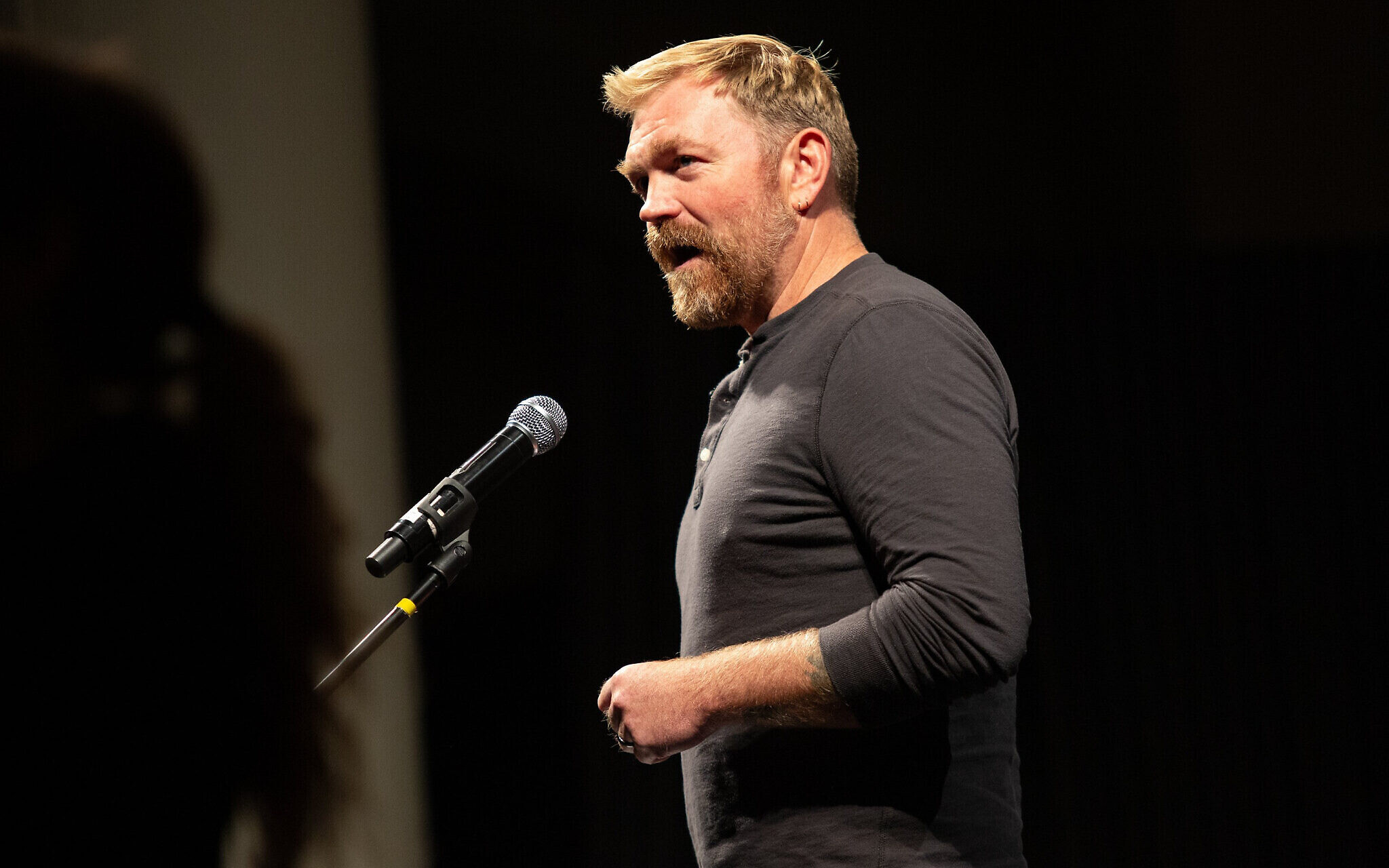
US Senate candidate Graham Platner speaks at a town hall at the Franco Center in Lewiston, Maine, on October 15, 2025. (Libby Kenny/Sun Journal via AP)
Politicians’ social media activity, past and present, has been regularly scrutinized for many years now, and the most recent person to have that spotlight shone on him is Maine Democratic Senate candidate Graham Platner, a staunch critic of Israel who has faced blowback for a Nazi tattoo, his past praise online for Hamas’s military maneuvers, and a series of controversial remarks, including one suggesting women’s choices were responsible for sexual assault they endured.
Trump won two presidential elections despite (or perhaps because of) his crude and unfiltered social media presence. And Platner’s internet history hasn’t hurt him yet; he’s now the presumptive Democratic nominee in a blue state ahead of an election expected to be a wave for his party.
In the era of nonstop posting and streaming, politicians as well as podcasters have come to each other’s defense. Some Democratic officials have disavowed Piker owing to his praise for Hamas and antisemitic statements he’s made (he has expressed regret for calling ultra-Orthodox Jews “inbred,� and says he condemns antisemitism).
But many other politicians will go on his show or, like Bush, invite him to their rallies. Carlson spoke at the 2024 Republican convention and, before a recent break with Trump, was a repeat visitor to the Oval Office.
Part of the same tribe
It isn’t surprising that Democratic-aligned commentators, like Klein or the popular show Pod Save America, have invited Piker on or defended him. They all differ in their views (including on Israel), but all are fundamentally part of the same tribe of liberal-progressive podcasters, so it makes sense that they would defend each other’s prerogative to stay on the air.

Twitch streamer Hasan Piker interviews Zohran Mamdani during his New York City mayoral campaign, April 7, 2025. (Screenshot via YouTube/ via JTA)
The same dynamic is visible on the right. Kelly has taken heat several times for refusing to condemn Carlson. And in a defense of their friendship, she pointed to one of the roots of the issue.
“I love him, we’re friends,� she said last October. “I don’t think he’s an antisemite at all. I don’t listen to all of Tucker’s shows…. I don’t have that many hours in the day.�
Pundits aren’t only defending each other, but politicians as well. Pod Save America host Jon Favreau has defended Platner on X, calling him “a good, decent man who’s struggled and grown and is always trying to do better.�
And now it is also traversing ideological boundaries — especially among people who disagree on almost every issue but agree on their opposition to Israel.
In his New York Times interview, Carlson praised Platner with an allusion to his Israel policy: “I certainly appreciate his foreign policy views,� he said. “And I appreciate how different they are from everybody else in his party.�
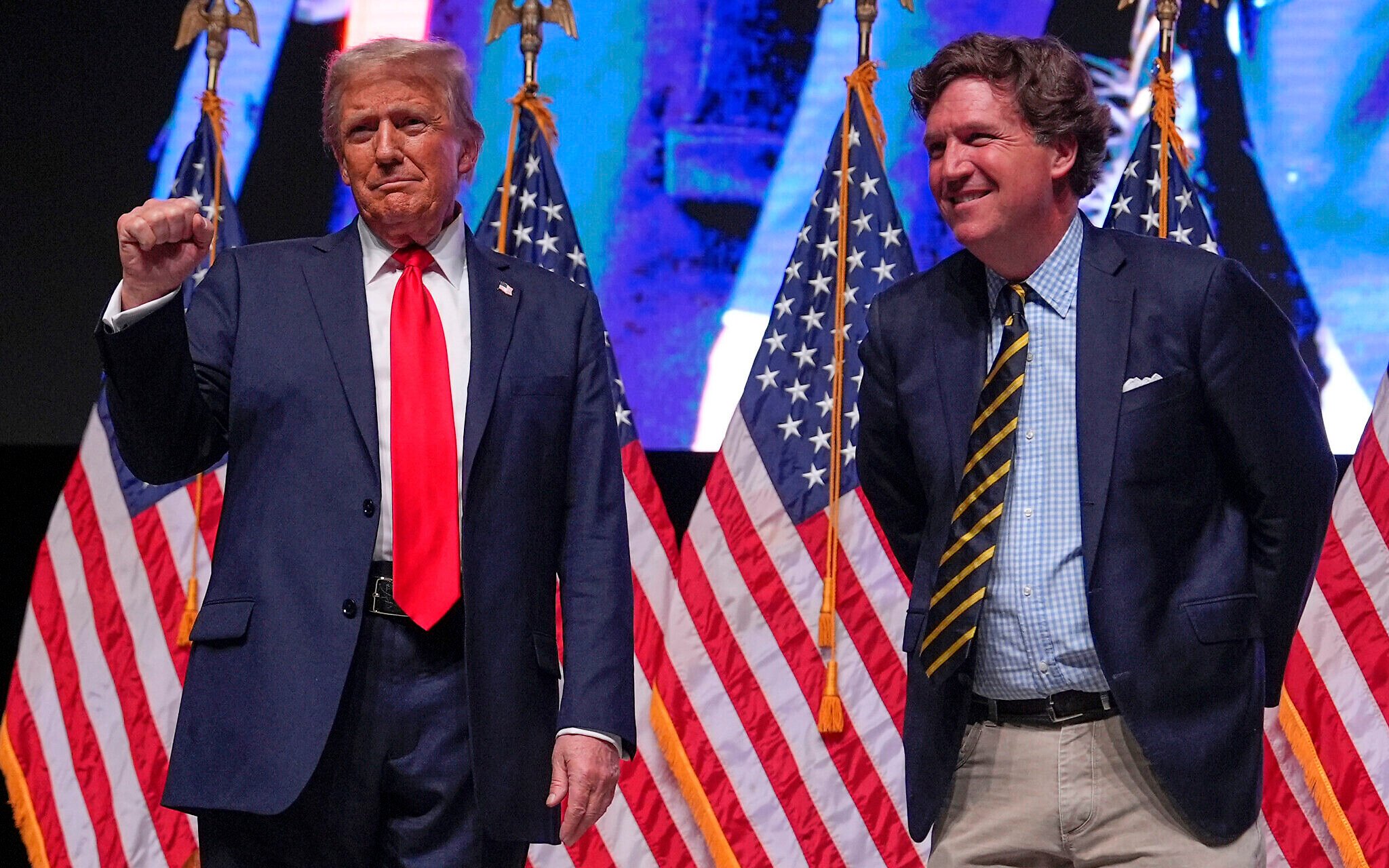
Donald Trump (left) speaks with Tucker Carlson during a Tucker Carlson Live Tour show at Desert Diamond Arena, October 31, 2024, in Glendale, Arizona. (AP Photo/Julia Demaree Nikhinson, File)
Later, Platner was asked if he’d go on Carlson’s show. “I am struggling with this one,� he said. He reciprocated Carlson’s praise, saying, “There are elements around foreign policy where there is this very serious shift happening… He came out and said he was against the war in Iran on moral grounds. That’s a stronger statement on the war in Iran than a lot of sitting Democrats.�
But he also pushed back on Carlson’s conspiratorial views.
“You should be critical of the Israeli government,� he said. “You should also recognize that the United States still retains an immense amount of power in that relationship. You should not have this kind of like, ‘Oh no, America is controlled by the Israelis’…. We can’t leave the door open for what are clearly just antisemitic conspiracy theories.�
At least one person thought Platner should sit for an interview with the far-right Carlson: Piker, the far-left streamer.
“He should absolutely do Tucker,� Piker posted. “It makes no sense not to.�