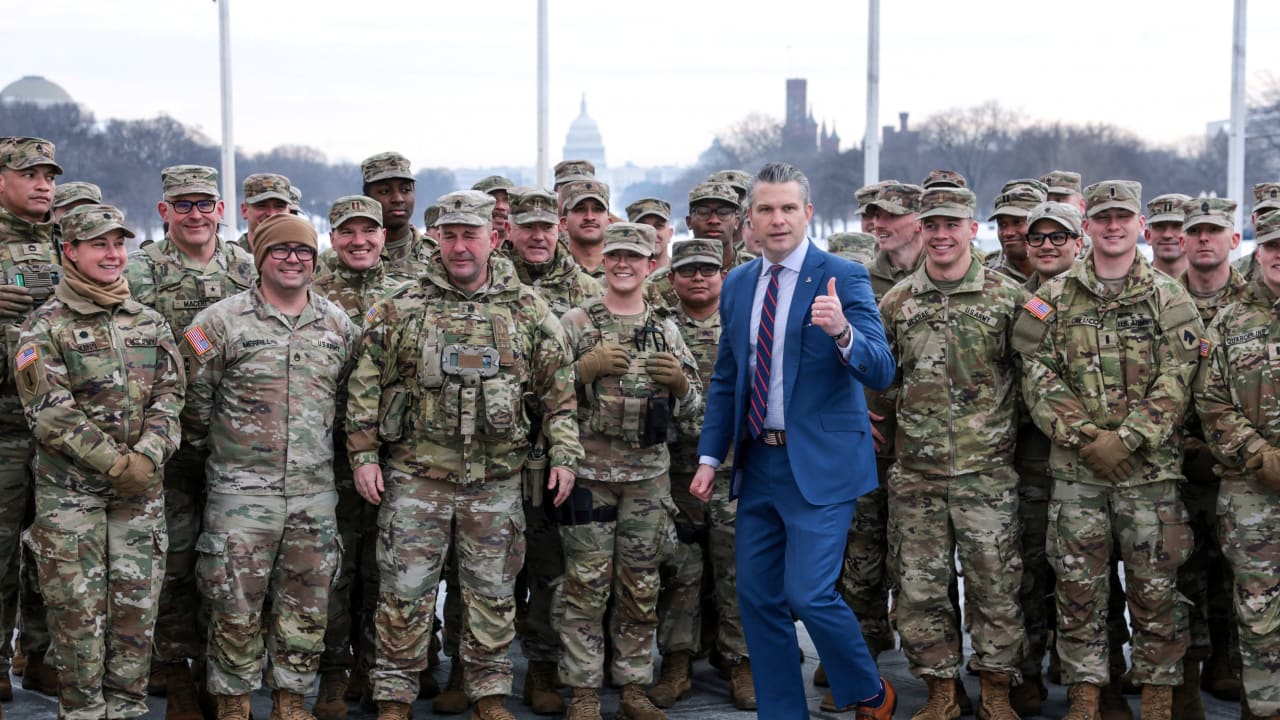
On May 1, 2026, the Pentagon announced that Secretary of War Pete Hegseth had ordered the withdrawal of some 5,000 American troops from Germany, out of roughly 36,000 US troops stationed there. Germany is the main American base of operations in Europe. This is therefore not merely a numerical reduction, but a potential blow to the logistical nerve center of US operations in Europe, the Middle East, and Africa.
US President Donald Trump did not stop there, making clear that “additional steps� would follow. This suggests that the move marks the beginning of a broader process to drastically reduce the American military presence in Europe.
Trump’s decision was naturally linked to the severe tensions that have emerged between the United States and Germany over Chancellor Merz’s remarks regarding the war. Among other things, the chancellor stated that “Germany will not take part in the United States’ war in Iran,� that “the United States has no exit strategy from the war,� and that “the US is being humiliated by Iran.� A senior administration official said that “the German rhetoric is inappropriate.�
The American presence in Europe began after World War II. Many believed that the communist threat to European states was no less serious than the threat posed by Nazi Germany, and that the “free world� had to prepare for an inevitable confrontation with the Soviet Union and its satellites. American troops were stationed, among other places, in Italy, Britain, and Spain. At the height of the Cold War, there were more than a quarter of a million American troops in Europe.
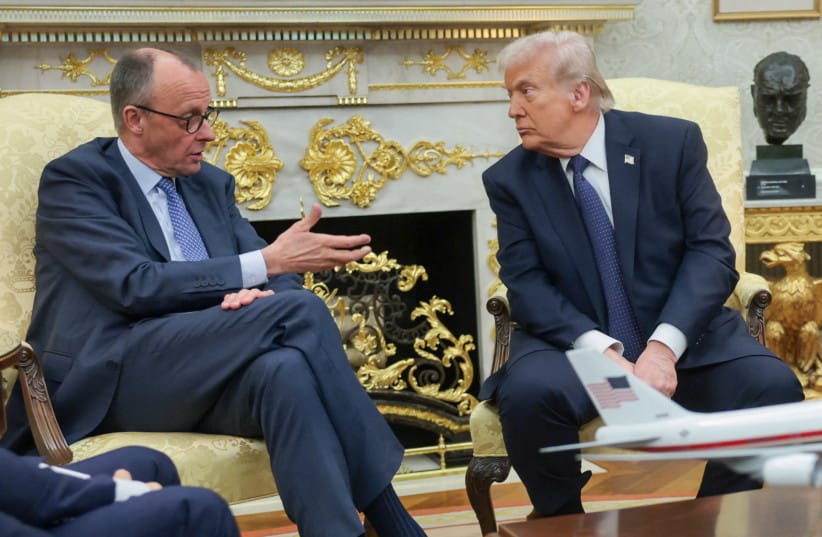 US President Donald Trump and German Chancellor Friedrich Merz meet in the Oval Office at the White House in Washington, DC, US, March 3, 2026. (credit: REUTERS/JONATHAN ERNST)The campaign against Iran is nearing its end
In our view, the American move is based on a broad strategic assessment of the challenges and risks facing the United States in the near future. From this perspective, an assessment appears to be taking shape in Washington that the campaign against Iran is nearing its end. From the American point of view, the United States will be able to conclude the bulk of its military operations once it is ensured that Iran can no longer produce nuclear weapons.
The president’s decision to “temporarily halt� naval escorts in the Strait of Hormuz, while stressing that the blockade itself remains in effect, reflects the United States’ willingness to offer a “gesture of a victorious side,� allowing Iran to accept Washington’s demands without being publicly humiliated.
At the same time, the United States views China as the greatest military and economic challenge it will face in the period ahead, until the end of Trump’s term. The upcoming meeting between President Trump and the president of China is a defining moment not only for the two powers, but for the international system as a whole. Against this backdrop, the United States is committed, for the foreseeable future, to focusing most of its resources and strength on confronting the Chinese challenge.
Alongside its process of “gradual disengagement� from its current massive involvement in the Middle East, the United States is also seeking to sharply reduce its presence and commitments in Europe. From Washington’s perspective, the war in Ukraine has demonstrated, first and foremost, Russia’s military, political, and economic weakness. After years of fighting, Moscow is still far from achieving a military victory over Ukraine. It therefore appears that the “Russian bear� remains a threatening force, but far less so than the monstrous power once attributed to it.
From the American perspective, Europe can now build up its own military strength to serve as a deterrent against Russia, freeing the United States to focus on what it now sees as the main threat before it — both militarily and economically. The possibility that China, perhaps in cooperation with North Korea, could attempt to take control of Taiwan in one way or another is keeping the Trump administration awake at night. It requires a massive show of force by Washington to deter China from taking any offensive action against a close US ally.
From Israel’s perspective, the United States’ “exit from Europe� presents far-reaching opportunities to deepen and expand strategic cooperation with European countries. Europe’s need for comprehensive military procurement will require it to maintain and deepen its defense and military ties with Israel. Germany, Slovakia, Finland, Cyprus, and Romania have already purchased advanced defense systems. Other countries are likely to follow.
Reports that Israeli soldiers are operating Iron Dome defense systems in the United Arab Emirates symbolize the profound rupture taking place in the Arab world following the war with Iran and Iran’s severe attacks on Gulf states. It can be assumed that other countries in the Islamic world in general, and in the Arab world in particular, will follow suit.
The range of opportunities now available to Israel following the campaign against Iran is unprecedentedly broad. One can only hope that Israel’s leadership will know how to fully leverage them in the service of the country’s interests.
Prof. Zaki Shalom is a senior fellow at the Misgav Institute for National Security.