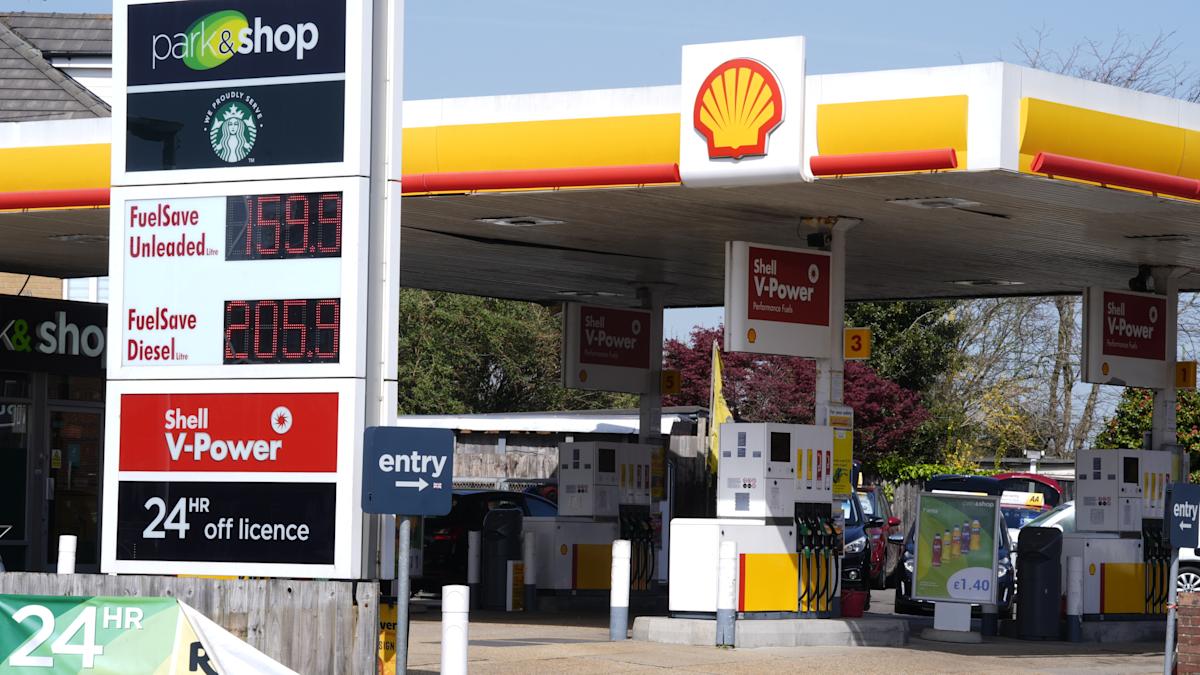
Shell has become the latest oil giant to face criticism over mammoth profits after it revealed a bumper earnings haul thanks to rocketing oil prices caused by the Iran war.
The FTSE 100 firm reported underlying earnings of 6.92 billion US dollars (£5.09 billion), more than double the result in the previous three months and 24% higher on a year ago.
Most analysts had expected the group to report profits of 6.36 billion US dollars (£4.67 billion).
Campaigners took aim at the group over its “outrageous” profits at a time when households and businesses are suffering from painful price rises at the fuel pumps and facing soaring costs across the board caused by the war.
Shell said the higher cost of crude had boosted its oil trading business, with the wider chemicals and products division seeing underlying earnings more than quadruple to 1.93 billion dollars (£1.41 billion) from 449 million dollars (£330 million) a year earlier.
But shares in the firm fell 2% as it pared back returns for shareholders, with quarterly share buy backs cut to three billion dollars (£2.2 billion) from 3.5 billion dollars (£2.6 billion), though it unveiled a 5% increase in its dividend payout.
Rival BP also came under attack last week after it reported far better than expected results, with first quarter profits more than doubling to 3.2 billion US dollars (£2.35 billion) as its traders were able to capitalise on highly volatile oil prices.
Simon Francis, coordinator of the End Fuel Poverty Coalition, said: “Shell’s outrageous results prove what every household knows: that the Middle East conflict is driving profits for energy firms while families across Britain dread the next bill landing on their doormat.
“But while the profits of North Sea oil and gas giants soar and the cost of living keeps rising, these same companies are actively lobbying against windfall taxes and calling for tax cuts.”

BP came under fire last week (PA) · Peter Byrne
Brent crude oil, jet fuel and gas prices have all surged after production was hit by attacks in the region, and the important Strait of Hormuz shipping corridor remains heavily disrupted.
The price of crude reached 126 dollars a barrel last week, the highest level in four years, before falling back amid hopes of a peace deal, but still remains close to 100 dollars a barrel.
Danny Gross, climate campaigner at Friends of the Earth, added: “The answer is clear – strengthen the windfall tax on these indefensible profits and break our dependence on fossil fuels by powering our economy with homegrown renewables.”
Shell’s chief financial officer, Sinead Gorman, said: “We fully understand how energy prices affect people and businesses.
